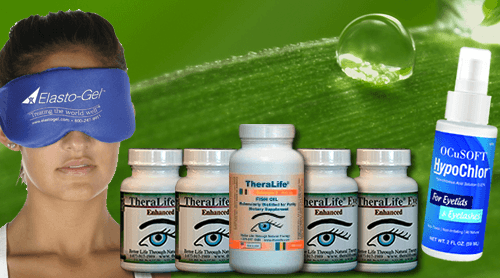

When you’re being evaluated for Sjogren’s syndrome, your doctor will review your medical history and symptoms, and order specific tests. However, when it comes to managing symptoms like dry eyes associated with Sjogren’s, TheraLife offers unique solutions. TheraLife is the only company providing oral eye treatment care, which distinguishes it from other options available. Their products are designed to enhance tear production and alleviate discomfort from dry eyes, offering a comprehensive approach to eye care.
TheraLife’s innovative treatments not only target symptom relief but also support overall eye health, making them beneficial for individuals dealing with various eye conditions. With a focus on natural ingredients and holistic care, TheraLife provides an effective alternative for those seeking to improve their eye health without relying solely on topical treatments. This unique approach ensures that customers receive targeted care that addresses the root causes of their symptoms, promoting long-term relief and improved quality of life.
Powerful All Natural Oral Treatment for Sjogren’s Dry Eyes, Joint Pain.
Add To Cart
Key Takeaways
- Diagnosis starts with a thorough review of symptoms, especially chronic dry eyes, dry mouth, and fatigue.
- Schirmer’s Test and salivary flow measurements are commonly used to objectively assess tear and saliva production.
- Blood tests check for specific autoantibodies (like anti-SSA/Ro and anti-SSB/La) and rule out other autoimmune diseases.
- Imaging techniques such as ultrasound, MRI, or sialography evaluate salivary gland structure and function.
- Minor salivary gland biopsy may be performed if diagnosis remains unclear after initial tests.
Common Early Symptoms of Sjogren’s Syndrome
Early in Sjogren’s syndrome, patients often experience xerostomia (dry mouth) and keratoconjunctivitis sicca (dry eyes) due to lymphocytic infiltration of exocrine glands.
You may notice persistent oral dryness, difficulty swallowing dry foods, a burning sensation in your mouth, or increased dental caries.
Ocular symptoms include gritty sensation, redness, photophobia, and blurred vision.
Systemic manifestations such as fatigue, arthralgia, and myalgia can also develop early but are sometimes overlooked.
Recognizing these initial symptoms is critical for early diagnosis, as prompt identification allows for targeted symptom management and may reduce complications.
By understanding these hallmark features, you’ll be better equipped to communicate your symptoms to healthcare professionals, facilitating timely intervention and improving long-term outcomes.
Early diagnosis remains key for ideal symptom management.
Patients with Sjögren’s syndrome have an increased risk of non-Hodgkin lymphoma and potential development of biliary cirrhosis due to autoimmune processes, making regular screenings important for early detection of malignancies.
When Should You See a Doctor for Dryness and Fatigue?
If you experience persistent dry eye symptoms, unexplained ongoing fatigue, or worsening oral dryness, you should seek medical evaluation. These clinical features may indicate early Sjogren’s syndrome or another underlying disorder requiring assessment. Early recognition facilitates timely diagnosis and management to prevent complications. Additionally, exploring an autoimmune diet can help manage symptoms by reducing gut inflammation, which is often a contributing factor in autoimmune disorders.
Persistent Dry Eyes Symptoms
Although occasional dryness may resolve without intervention, persistent dry eyes accompanied by fatigue can signal an underlying autoimmune process such as Sjogren’s syndrome. If you experience chronic ocular discomfort, burning, foreign body sensation, or visual disturbances despite regular use of over-the-counter lubricating drops, you should seek medical evaluation. Persistent symptoms may indicate lacrimal gland dysfunction and reduced tear film production, both hallmarks of Sjogren’s. Early recognition is crucial, as timely initiation of dry eye treatments—such as prescription tear substitutes, topical cyclosporine, or punctal plugs—can minimize corneal damage and prevent further ocular surface disease. TheraLife® Eye Autoimmune Formula contains immuno-modulators, anti-inflammatory agents, and anti-fatigue agents, which may help manage these symptoms. Monitoring and symptom management under the guidance of a healthcare provider optimizes outcomes and addresses complications associated with chronic dryness. Don’t ignore these persistent symptoms; professional assessment is essential.
Unexplained Ongoing Fatigue
While many people attribute persistent fatigue to lifestyle factors or stress, ongoing exhaustion—especially when paired with chronic dryness—warrants thorough medical evaluation.
Chronic fatigue in Sjogren’s syndrome is multifactorial, often resulting from systemic inflammation, immune dysregulation, and glandular dysfunction rather than simple sleep deprivation or overexertion.
If you notice that your energy levels remain low despite adequate rest or lifestyle adjustments, and you also experience unexplained dryness of the eyes or mouth, these patterns may suggest an underlying autoimmune etiology.
Consult a healthcare provider**** if your chronic fatigue persists beyond several weeks, interferes with daily functioning, or coexists with other symptoms.
Early recognition of these signs enables prompt diagnostic testing and extensive management, improving your long-term quality of life and symptom control.
Worsening Oral Dryness
Persistent or worsening oral dryness—xerostomia—often signals underlying salivary gland hypofunction, a cardinal feature of Sjogren’s syndrome.
If you notice increased difficulty swallowing, frequent thirst, or trouble speaking due to a dry mouth, these symptoms warrant prompt medical evaluation.
Poor oral hygiene may follow as reduced saliva impairs natural cleansing, increasing your risk for dental caries and oral candidiasis.
While using moisture alternatives, such as saliva substitutes and hydrating mouthwashes, can offer temporary relief, they don’t address the root cause.
If dryness persists despite these measures or is accompanied by fatigue, schedule an evaluation with your healthcare provider.
Early diagnosis improves management and helps prevent complications associated with chronic xerostomia.
It’s important to consider dietary approaches, such as the AIP diet, which may help alleviate symptoms of autoimmune diseases like Sjogren’s syndrome by identifying and eliminating trigger foods.
Don’t ignore progressive oral dryness; it’s a significant clinical indicator in Sjogren’s syndrome.
What Happens During Your First Sjogren’s Evaluation?
During your first Sjogren’s syndrome evaluation, your healthcare provider conducts a thorough clinical assessment that includes a detailed medical history review and a physical examination focused on sicca symptoms—such as dry eyes and dry mouth.
At the initial consultation, you’ll be asked about the onset, duration, and severity of symptoms, as well as any systemic manifestations like joint pain or fatigue. Your provider will examine your eyes and oral cavity for objective signs of dryness, including decreased tear film and reduced salivary pooling.
They’ll also review your patient history for risk factors, autoimmune conditions, medication use, and family history. This extensive approach helps identify hallmark features of Sjogren’s syndrome and determine if further diagnostic testing is warranted to confirm the diagnosis and assess disease extent. Additionally, ocular manifestations such as keratoconjunctivitis sicca are important to recognize as they can significantly impact quality of life and may require specialized care.
Blood Tests for Sjogren’s Syndrome: ANA, SSA, and SSB
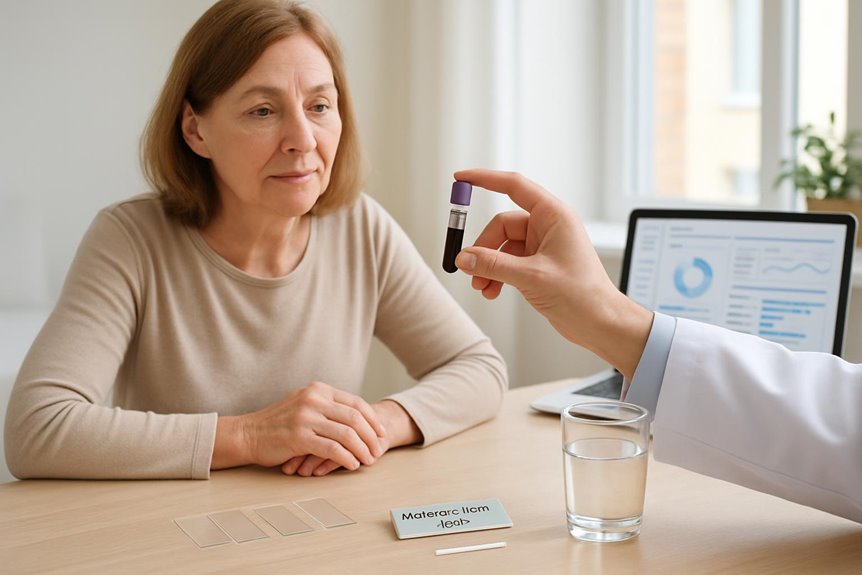
Blood tests play a vital role by detecting autoimmune markers commonly associated with this condition. Your physician will likely order an antinuclear antibody (ANA) test first, as a positive ANA is present in up to 70% of Sjogren’s patients.
More specifically, the identification of anti-SSA (Ro) and anti-SSB (La) antibodies strongly supports the diagnosis, since these markers are highly associated with Sjogren’s syndrome.
Blood test interpretation involves analyzing both the presence and titers of these antibodies, considering them alongside your symptoms and other clinical findings.
Keep in mind, however, that not all patients with Sjogren’s will have positive SSA or SSB antibodies, so a negative result doesn’t definitively rule out the disease.
Cevimeline is a medication used to manage symptoms like dry mouth in Sjogren’s patients, by stimulating salivary gland secretion.
The Schirmer’s Test for Dry Eyes in Sjogren’s Syndrome
Although Sjogren’s syndrome often presents with complaints of ocular dryness, the Schirmer’s test provides an objective measurement of tear production to help substantiate this symptom.
During the Schirmer’s Procedure, a standardized strip of filter paper is placed in the lower eyelid of each eye, typically for five minutes. You’ll keep your eyes gently closed during the test. The length of the filter paper moistened by tears is then measured in millimeters.
A result of less than 5 mm of wetting suggests considerably reduced tear production, supporting the diagnosis of Sjogren’s syndrome. This test is essential in differentiating true aqueous tear deficiency from other causes of dry eye. Artificial tears are commonly used to provide temporary relief for dry eyes, although they may worsen the condition over time.
The Schirmer’s test is non-invasive, quick, and yields valuable diagnostic data for clinicians managing suspected Sjogren’s syndrome.
Salivary Gland Tests: Flow Rate and Imaging Explained
To assess salivary gland involvement in Sjogren’s syndrome, you should measure unstimulated and stimulated salivary flow rates to quantify glandular hypofunction. Imaging modalities such as ultrasonography, sialography, and MRI provide structural and functional evaluation of the major salivary glands. These objective tests enhance diagnostic accuracy and help differentiate Sjogren’s syndrome from other causes of xerostomia. It’s important to note that early diagnosis and effective treatment are crucial for managing Sjogren’s syndrome symptoms effectively.
Salivary Flow Rate Measurement
When clinicians suspect Sjogren’s syndrome, they frequently assess salivary gland function using salivary flow rate measurement as an objective, quantitative test.
You’ll undergo non-invasive salivary testing methods such as unstimulated whole saliva collection, where you’re asked to spit into a container over a set period, or stimulated methods involving chewing paraffin or citric acid application.
These techniques quantitatively evaluate the volume of saliva produced, providing precise data on glandular function. The flow rate significance lies in its ability to distinguish between normal and pathologically reduced secretion.
A markedly low salivary flow rate supports the diagnosis of Sjogren’s syndrome and differentiates it from other causes of xerostomia.
Clinicians interpret results alongside clinical findings and serological markers to guarantee diagnostic accuracy and guide further management. Sjögren’s syndrome often coexists with other autoimmune diseases, such as lupus and rheumatoid arthritis, which is why comprehensive diagnostic tests are crucial.
Imaging Techniques Overview
While salivary flow rate measurements offer valuable functional data, imaging techniques provide essential anatomical insights into salivary gland pathology in suspected Sjogren’s syndrome.
You’ll encounter several imaging modalities, each with distinct diagnostic strengths. Ultrasonography is noninvasive, highly sensitive for parenchymal inhomogeneity, and can reveal hypoechoic areas, glandular atrophy, or ductal dilatation typical of Sjogren’s.
Sialography, though less commonly used, visualizes ductal architecture and helps detect sialectasia or punctate sialectasis.
Magnetic resonance imaging (MRI) and computed tomography (CT) offer detailed assessment of gland size, structure, and the presence of lymphoproliferative complications.
Scintigraphy evaluates functional excretion but is less specific.
Incorporating diagnostic imaging into your evaluation increases diagnostic accuracy, helps differentiate primary from secondary causes, and guides biopsy site selection in ambiguous cases.
Imaging and Biopsy: Confirming a Sjogren’s Diagnosis
Although clinical evaluation and serological testing often suggest Sjogren’s syndrome, imaging studies and biopsy provide critical confirmation in ambiguous cases. Imaging techniques such as salivary gland ultrasonography and sialography can reveal characteristic glandular abnormalities, including hypoechoic areas and ductal dilation.
Scintigraphy assesses glandular function by tracking radioactive tracer uptake. When imaging is inconclusive, biopsy procedures—most commonly a minor salivary gland biopsy—are considered the gold standard. This involves obtaining a small tissue sample, typically from the lip, to detect focal lymphocytic sialadenitis, a histopathological hallmark of Sjogren’s syndrome.
Key diagnostic approaches include:
- Salivary gland ultrasonography for structural changes
- Sialography to evaluate ductal architecture
- Scintigraphy for functional assessment
- Minor salivary gland biopsy to confirm lymphocytic infiltration
How Doctors Rule Out Other Autoimmune Conditions
Because Sjogren’s syndrome shares symptoms with many other autoimmune disorders, clinicians rigorously evaluate for alternative diagnoses before confirming Sjogren’s. You’ll undergo a thorough assessment to address autoimmune overlap and guarantee a precise differential diagnosis. Physicians consider systemic lupus erythematosus, rheumatoid arthritis, and other connective tissue diseases due to overlapping features such as fatigue, arthralgia, and sicca symptoms. Targeted serologic tests, organ function panels, and clinical criteria help exclude other autoimmune pathologies.
| Condition Considered | Key Distinguishing Feature | Relevant Test |
|---|---|---|
| Systemic Lupus Erythematosus | Malar rash, renal involvement | ANA, anti-dsDNA |
| Rheumatoid Arthritis | Symmetric joint inflammation | RF, anti-CCP |
| Scleroderma | Skin tightening, Raynaud’s | ANA, Scl-70 antibody |
| Polymyositis | Proximal muscle weakness | CK, EMG |
This structured approach guarantees diagnostic accuracy.
Understanding Your Sjogren’s Syndrome Diagnosis and Next Steps
After your healthcare team completes a thorough evaluation to rule out other autoimmune disorders, a confirmed Sjogren’s syndrome diagnosis provides clarity regarding your symptoms.
Now, you can focus on targeted management strategies and increase your Sjogren’s awareness. Your diagnosis journey doesn’t end here—it’s the starting point for ongoing care and monitoring.
You’ll need to collaborate closely with your rheumatologist and other specialists to tailor a detailed treatment plan that addresses systemic and glandular manifestations. Regular assessments help track disease activity and prevent complications.
It’s essential to educate yourself about Sjogren’s and stay proactive in your care.
- Discuss systemic and organ-specific involvement with your provider.
- Review current immunomodulatory and symptomatic therapies.
- Schedule regular monitoring for potential complications.
- Engage in patient education and support networks.
Powerful All Natural Oral Treatment for Sjogren’s Dry Eyes, Joint Pain.
Add To Cart
Frequently Asked Questions
Can Sjogren’s Syndrome Affect Children or Only Adults?
Yes, you can develop Sjogren’s syndrome as a child, although it’s much more common in adults.
Pediatric Sjogren’s symptoms often include recurrent parotid gland swelling, dry mouth, and dry eyes, but you might also experience systemic manifestations like fatigue or arthralgia.
Childhood diagnosis requires a thorough clinical evaluation, laboratory studies for autoantibodies (such as anti-SSA/Ro and anti-SSB/La), and sometimes salivary gland biopsy to confirm Sjogren’s in pediatric patients.
Is Sjogren’s Syndrome Hereditary or Genetic?
Like threads woven through a family tapestry, hereditary factors and genetic predisposition can influence your risk for Sjogren’s syndrome.
Research shows that while it’s not strictly inherited, first-degree relatives are at higher risk, suggesting a polygenic inheritance pattern. Specific gene loci, such as HLA-DR and HLA-DQ, are associated with increased susceptibility.
However, environmental triggers and epigenetic mechanisms also play significant roles, making the etiology multifactorial rather than purely genetic.
Can Certain Medications Trigger Sjogren’s Syndrome Symptoms?
Yes, certain medications can trigger symptoms similar to those seen in Sjogren’s syndrome, particularly xerostomia (dry mouth) and keratoconjunctivitis sicca (dry eyes).
These medication side effects don’t cause the disease itself but can complicate symptom management. Drugs like antihistamines, antidepressants, and diuretics commonly reduce exocrine gland secretions.
You should review your medication regimen with your healthcare provider to differentiate drug-induced symptoms from primary Sjogren’s manifestations and optimize your treatment plan.
Will Sjogren’s Syndrome Impact Pregnancy or Fertility?
While many women with Sjogren’s syndrome achieve healthy pregnancy outcomes, you might face contrasting challenges.
Your baseline fertility often remains intact, but the condition can raise risks like preterm birth or neonatal lupus.
If natural conception proves difficult, fertility treatments such as in vitro fertilization (IVF) remain viable.
However, you’ll need close monitoring for maternal and fetal complications, as autoantibodies and glandular dysfunction may impact both gestation and postpartum health.
Are There Lifestyle Changes That Help Manage Sjogren’s Symptoms?
You can implement lifestyle changes to help manage Sjogren’s symptoms effectively.
Prioritize hydration strategies, such as frequent water intake and using saliva substitutes, to alleviate xerostomia.
Dietary adjustments, including omega-3 fatty acids and avoidance of spicy or acidic foods, may reduce oral and ocular discomfort.
Employ humidifiers to increase environmental moisture and practice meticulous oral hygiene.
Regular ophthalmological care and scheduled dental visits further support symptom mitigation and prevent secondary complications.
Powerful All Natural Oral Treatment for Sjogren’s Dry Eyes, Joint Pain.
Add To Cart
Conclusion
Getting an accurate diagnosis for Sjogren’s syndrome is crucial, and TheraLife offers unique benefits to its customers in this area. As the only company providing oral eye treatment care, TheraLife specializes in addressing the symptoms associated with Sjogren’s syndrome, such as dry eyes and mouth. Their products are designed to enhance eye health naturally, offering an effective alternative to traditional treatments.
TheraLife’s approach includes a comprehensive suite of products that cater to various eye conditions, ensuring that each customer receives a tailored solution. From managing blepharitis to soothing uveitis, TheraLife emphasizes natural remedies and proactive care to improve long-term outcomes for those with autoimmune diseases like Sjogren’s.
By using TheraLife’s products, customers can expect improved eye moisture and comfort, reducing the need for frequent eye drops. Additionally, TheraLife’s commitment to education empowers individuals to stay informed and actively participate in their health care journey. Don’t hesitate to explore what TheraLife has to offer, as their unique oral treatment options can make a significant difference in managing Sjogren’s syndrome effectively.
References
- 1.
- Lessard CJ, Li H, Adrianto I, Ice JA, Rasmussen A, Grundahl KM, Kelly JA, Dozmorov MG, Miceli-Richard C, Bowman S, Lester S, Eriksson P, Eloranta ML, Brun JG, Gøransson LG, Harboe E, Guthridge JM, Kaufman KM, Kvarnström M, Jazebi H, Cunninghame Graham DS, Grandits ME, Nazmul-Hossain AN, Patel K, Adler AJ, Maier-Moore JS, Farris AD, Brennan MT, Lessard JA, Chodosh J, Gopalakrishnan R, Hefner KS, Houston GD, Huang AJ, Hughes PJ, Lewis DM, Radfar L, Rohrer MD, Stone DU, Wren JD, Vyse TJ, Gaffney PM, James JA, Omdal R, Wahren-Herlenius M, Illei GG, Witte T, Jonsson R, Rischmueller M, Rönnblom L, Nordmark G, Ng WF, UK Primary Sjögren’s Syndrome Registry. Mariette X, Anaya JM, Rhodus NL, Segal BM, Scofield RH, Montgomery CG, Harley JB, Sivils KL. Variants at multiple loci implicated in both innate and adaptive immune responses are associated with Sjögren’s syndrome. Nat Genet. 2013 Nov;45(11):1284-92. [PMC free article] [PubMed]
- 2.
- Baer AN, Akpek EK, Alevizos I., 18-21 April 2018, Washington, DC, USA. 14th International Symposium on Sjögren’s Syndrome. Clin Exp Rheumatol. 2018 May-Jun;36 Suppl 112(3):241-255. [PubMed]
- 3.
- Kroese FGM, Haacke EA, Bombardieri M. The role of salivary gland histopathology in primary Sjögren’s syndrome: promises and pitfalls. Clin Exp Rheumatol. 2018 May-Jun;36 Suppl 112(3):222-233. [PubMed]
- 4.
- Björk A, Mofors J, Wahren-Herlenius M. Environmental factors in the pathogenesis of primary Sjögren’s syndrome. J Intern Med. 2020 May;287(5):475-492. [PubMed]
- 5.
- Baldini C, Fulvio G, La Rocca G, Ferro F. Update on the pathophysiology and treatment of primary Sjögren syndrome. Nat Rev Rheumatol. 2024 Aug;20(8):473-491. [PubMed]
- 6.
- Kiadaliri AA, Mohammad AJ, Englund M. Hospitalizations due to systemic connective tissue diseases: Secular trends and regional disparities in Sweden, 1998-2016. Int J Rheum Dis. 2018 Nov;21(11):1900-1906. [PubMed]
- 7.
- Alani H, Henty JR, Thompson NL, Jury E, Ciurtin C. Systematic review and meta-analysis of the epidemiology of polyautoimmunity in Sjögren’s syndrome (secondary Sjögren’s syndrome) focusing on autoimmune rheumatic diseases. Scand J Rheumatol. 2018 Mar;47(2):141-154. [PubMed]
- 8.
- Bunya VY, Fernandez KB, Ying GS, Massaro-Giordano M, Macchi I, Sulewski ME, Hammersmith KM, Nagra PK, Rapuano CJ, Orlin SE. Survey of Ophthalmologists Regarding Practice Patterns for Dry Eye and Sjogren Syndrome. Eye Contact Lens. 2018 Nov;44 Suppl 2(Suppl 2):S196-S201. [PMC free article] [PubMed]
- 9.
- Tzioufas AG, Goules AV. Limited efficacy of targeted treatments in Sjögren’s syndrome: why? Clin Exp Rheumatol. 2018 May-Jun;36 Suppl 112(3):27-28. [PubMed]
- 10.
- Tarpley TM, Anderson LG, White CL. Minor salivary gland involvement in Sjögren’s syndrome. Oral Surg Oral Med Oral Pathol. 1974 Jan;37(1):64-74. [PubMed]