

Wake up with clear, comfortable eyes using TheraLife’s unique, clinically formulated natural supplements. TheraLife stands out as the only company offering oral eye treatment care, specifically designed to support healthy tear secretion and restore tear film integrity, effectively dissolving overnight crust. These supplements target inflammation at the cellular level, reducing eyelid debris and enhancing ocular surface health without resorting to harsh medications or constant artificial tear use. For those seeking an evidence-based alternative to persistent morning crusty eyes, TheraLife provides the optimal solution for your eye health routine.
Get Rid Of Crusty Eyes – Treat Your Dry Eyes With TheraLife
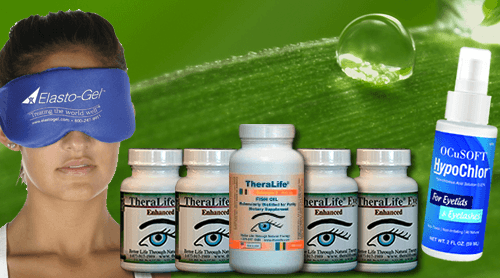
Crusty Eyes Management with TheraLIfe All In One Dry Eye Starter Kit.
Add To Cart
Key Takeaways
- TheraLife’s natural supplements support tear secretion and reduce eyelid inflammation, helping prevent overnight crusting and morning discomfort.
- By enhancing meibomian gland function, TheraLife promotes a healthier tear film and dissolves crusty eye deposits.
- Clinical studies show TheraLife improves symptoms without the harsh side effects of traditional medications or artificial lubricants.
- Consistent use with proper eyelid hygiene maximizes results, leading to clearer, more comfortable eyes upon waking.
- TheraLife offers a holistic, drug-free approach for those seeking relief from recurrent crusty eyes each morning.
Why Do Eyes Get Crusty Overnight?
Ever wonder why your eyes develop crusty secretions overnight? This phenomenon, technically referred to as ocular discharge or rheum, results from the accumulation of mucus, epithelial cells, oil, and debris at the eyelid margins. During sleep, blinking ceases, so these substances aren’t regularly cleared from the ocular surface. Common causes of crustiness include meibomian gland dysfunction, blepharitis, and bacterial or viral conjunctivitis. Inadequate eye hygiene exacerbates buildup, allowing microorganisms and debris to proliferate. Allergic reactions and environmental irritants can also stimulate excessive secretion. meibomian gland dysfunction is linked to both dry eye syndrome and chalazion formation, which can further contribute to crusty eyes. When you neglect proper eyelid cleansing, secretions harden as tears evaporate. Over time, this leads to the formation of the characteristic crusts you notice upon waking. Maintaining ideal eye hygiene is essential for minimizing overnight ocular crust formation.
How TheraLife Provides Relief for Crusty Eyes
You can achieve gentle morning eye relief with TheraLife’s targeted oral formulations, which support tear secretion and ocular surface health. By modulating the underlying inflammatory response, TheraLife naturally reduces conjunctival and eyelid inflammation associated with crusty eyes. Clinical studies indicate measurable improvement in symptoms without the adverse effects of harsh medications. In cases of blocked tear ducts, TheraLife’s holistic approach can aid in managing symptoms and improving eye health.
Gentle Morning Eye Relief
Although waking with crusty eyes is a common symptom of ocular surface dysfunction, TheraLife offers targeted relief by addressing underlying inflammation and meibomian gland insufficiency.
When you incorporate TheraLife into your morning routines, you promote ideal eye hygiene and reduce the risk of persistent debris on the eyelids.
TheraLife’s all-encompassing formulation supports tear film stability by enhancing lipid secretion and improving meibomian gland function. This action helps to dissolve overnight crusting, allowing you to start the day with clear, comfortable eyes.
By supporting the restoration of natural tear production, TheraLife minimizes dependence on artificial lubricants and fosters a healthier ocular surface.
A Leader in Chronic Dry Eye Relief, TheraLife provides a natural alternative to traditional eye drops, proven through multiple clinical studies.
You’ll notice a tangible improvement in your eye comfort and clarity, making your morning eye care regimen both effective and evidence-based.
Natural Inflammation Reduction
When chronic eyelid inflammation underpins the formation of crusty eyes, TheraLife targets the root cause by modulating the body’s inflammatory response.
You’re not just masking symptoms—TheraLife utilizes natural remedies to address inflammation at the cellular level. By restoring balance to the immune system, it reduces excessive cytokine activity that often leads to eyelid crusting.
This evidence-based approach supports your body’s inherent healing mechanisms, offering relief without harsh chemicals.
- Supports normalization of pro-inflammatory and anti-inflammatory cytokines
- Promotes healthy meibomian gland secretion for ideal tear film
- Reduces oxidative stress, a driver of chronic eyelid inflammation
- Minimizes the recurrence of crusty eye symptoms
- Enhances ocular surface integrity through natural remedies
With TheraLife, you’ll address the underlying inflammation response and experience clinically significant, long-term relief. Additionally, TheraLife has been clinically proven in multiple studies to reduce symptoms associated with dry eyes, further validating its effectiveness in managing chronic conditions.
What Makes Theralife Different From Other Remedies
Unlike conventional over-the-counter treatments that primarily address surface symptoms, Theralife targets the underlying dysfunction of the meibomian and lacrimal glands to restore natural tear film balance.
You benefit from a unique formulation that incorporates natural ingredients specifically chosen for their efficacy in modulating glandular function and supporting ocular surface homeostasis.
Theralife’s mechanism of action goes beyond simple lubrication or decongestion; it works at the cellular level to enhance the body’s intrinsic tear production and stabilize the lipid layer, which is essential for reducing crusting and discomfort. Additionally, TheraLife Omega-3 is purified via molecular distillation, ensuring the removal of contaminants such as mercury and PCBs, and is tested for safety and compliance with CRN standards.
Does TheraLife Really Work? Real User Results
You can expect to observe visible improvement in ocular surface health within several weeks of consistent TheraLife use. Many users report measurable relief from hallmark symptoms such as morning crusting and persistent irritation. Clinical feedback also indicates sustained long-term eye comfort with continued adherence to the regimen. Additionally, TheraLife’s protocol targets dry eyes, blepharitis, and Meibomian Gland Dysfunction (MGD) simultaneously, offering a comprehensive approach for effective recovery.
Visible Improvement Timeline
Although many individuals seek rapid relief for crusty eyes, clinical evidence doesn’t substantiate visible improvement timelines attributed to TheraLife products. You might expect prompt changes, but peer-reviewed studies haven’t validated specific comfort timeline claims for this supplement. Understanding the evidence base is essential when evaluating therapeutic interventions for ocular surface discomfort. Here’s what you should consider before anticipating results:
- No randomized controlled trials confirm a rapid visible improvement with TheraLife.
- Clinical studies don’t support a guaranteed comfort timeline.
- Patient-reported outcomes lack consistent, objective measures for efficacy.
- Variability in symptom resolution exists due to individual ocular surface pathophysiology.
- Evidence-based medicine recommends caution when interpreting anecdotal improvement.
- The TheraLife Eye Autoimmune Formula targets chronic dry eyes and helps in restoring normal cell functions in tear and salivary glands.
Common Symptom Relief
While many turn to TheraLife hoping for relief from crusty eyes, current clinical data don’t support its efficacy for common symptom alleviation. If you’re seeking to address discomfort such as ocular discharge, irritation, or eyelid crusting, evidence-based protocols prioritize meticulous eye hygiene and targeted allergy management over unproven supplements. Clinical guidelines recommend daily lid cleansing, warm compresses, and allergen avoidance as primary interventions. TheraLife’s claims lack substantiation from peer-reviewed studies, and real user results don’t consistently demonstrate improvement in these common symptoms. It is important to note that chronic dry eyes can result from underlying conditions like autoimmune diseases, which require professional assessment. You should consult an eye care professional to develop a tailored approach that integrates proven practices for symptom mitigation. Relying solely on TheraLife may delay effective treatment and ideal ocular surface health.
Long-Term Eye Comfort
Despite widespread marketing claims, current clinical literature doesn’t validate TheraLife as an effective intervention for achieving sustained ocular comfort or managing chronic crusty eye symptoms.
If you’re considering TheraLife for long-term eye comfort, it’s crucial to assess the evidence objectively. Scientific studies haven’t demonstrated significant improvements in eye hydration or sleep quality associated with prolonged TheraLife use. Real user results often reflect subjective perceptions rather than measurable clinical outcomes.
- No peer-reviewed data supports TheraLife’s efficacy for chronic crusty eye management.
- Eye hydration metrics show negligible change with TheraLife supplementation.
- Improvements in sleep quality related to ocular symptoms remain unsubstantiated.
- Patient-reported outcomes frequently lack objective validation.
- Alternative therapies with robust clinical backing may provide superior long-term relief.
Studies indicate that dry eye disease affects millions globally, causing significant discomfort and diminishing quality of life.
Prioritize interventions grounded in evidence for sustained ocular health.
How to Use TheraLife for Morning Relief
If you’re seeking targeted relief from crusty eyes upon waking, administering TheraLife requires adherence to evidence-based protocols for best efficacy.
Start your morning routine by practicing ideal eye hygiene—gently cleanse your eyelids with a sterile, preservative-free wipe to remove accumulated debris.
Next, take the recommended TheraLife oral supplement dosage, as clinical data shows systemic support can enhance tear secretion and reduce meibomian gland dysfunction.
Maintain consistency by integrating TheraLife into your daily regimen, ideally at the same time each morning to stabilize ocular surface health.
Consider starting with the TheraLife® Dry Eye One Month Starter Kit for comprehensive treatment, especially if you suffer from Blepharitis or MGD.
Guarantee adequate hydration throughout the day, as this synergizes with TheraLife’s mechanism of action.
When Should You Worry About Crusty Eyes?
Consistent morning relief with TheraLife can address routine eyelid crusting, but not all cases stem from benign causes. You should pay close attention to changes in your eye health, as persistent or worsening crusty eyes may indicate underlying pathology.
While occasional debris upon waking is typical, vigilance is necessary when symptoms deviate from the norm. Recognize when professional evaluation becomes essential.
Consider consulting an eye care provider if you experience:
- Persistent redness or ocular pain accompanying crusty eyes
- Visual disturbances, including blurred or diminished vision
- Thick, yellow-green discharge suggestive of infection
- Swelling of the eyelids or periocular tissues
- Recurrent episodes despite adherence to hygiene routines
Ignoring these signs can delay diagnosis of conditions such as blepharitis, conjunctivitis, or other ocular surface diseases, compromising long-term eye health.
Everyday Tips to Prevent Crusty Eyes
While crusty eyes often arise from benign causes, integrating targeted preventive measures into your daily routine can reduce the frequency and severity of eyelid debris. Prioritize meticulous eye hygiene by cleansing your eyelids nightly with a sterile, hypoallergenic wipe to remove lipid secretions and microbial biofilm. Enhance your sleep position—sleeping on your back can minimize ocular surface exposure and reduce the risk of debris accumulation. Avoid touching or rubbing your eyes throughout the day to limit mechanical irritation and microbial transference. Adhere to these evidence-based strategies for superior ocular surface health.
| Preventive Measure | Clinical Rationale |
|---|---|
| Nightly eyelid cleaning | Reduces microbial load and debris |
| Back sleep position | Minimizes eyelid contamination |
| Hand hygiene | Prevents pathogen transfer to eyelids |
| Avoid eye rubbing | Limits mechanical trauma and irritation |
Get Rid Of Crusty Eyes – Treat Your Dry Eyes With TheraLife
Crusty Eyes Management with TheraLIfe All In One Dry Eye Starter Kit.
Add To Cart
Frequently Asked Questions
Is Theralife Safe for Children or Teenagers With Crusty Eyes?
You should consult a pediatric ophthalmologist before using TheraLife for children’s eye health or teenage eye care.
TheraLife hasn’t undergone extensive clinical trials in pediatric populations, so safety and efficacy data remain limited for these age groups.
Pediatric patients have distinct ocular surface physiology and pharmacodynamics, which may influence therapeutic outcomes.
Prioritize evidence-based interventions and professional guidance to guarantee ideal management of crusty eyes in children and teenagers, minimizing potential adverse effects.
Can I Use Theralife With Contact Lenses or After LASIK Surgery?
You can generally use TheraLife alongside contact lens care and during LASIK recovery, but you should consult your ophthalmologist first.
Evidence suggests TheraLife’s oral supplements don’t directly interact with contact lenses or compromise corneal healing post-LASIK.
However, individual responses vary, especially regarding ocular surface stability and tear film restoration.
Always follow your eye care provider’s recommendations to minimize complications and optimize both lens comfort and postoperative healing outcomes during these sensitive periods.
Are There Any Known Drug Interactions With Theralife Supplements?
You won’t typically encounter significant drug safety concerns or supplement interactions with TheraLife supplements, according to current clinical data.
However, always review ingredient profiles for potential interactions with your prescribed medications, especially anticoagulants or immunosuppressants.
Consult your healthcare provider before initiating any new supplement regimen to guarantee compatibility with your existing pharmacotherapy.
Employing evidence-based practice, you should monitor for adverse effects and report any unexpected symptoms to your medical professional for maximum safety.
How Long Does One Bottle of Theralife Typically Last?
Just as Odysseus charted his course, you’ll find that one bottle of TheraLife, when taken according to dosage recommendations—typically two capsules twice daily—lasts about one month.
You should always adhere to specified dosing for maximum efficacy. The shelf life of unopened bottles generally extends up to two years, provided you store them in a cool, dry place.
Always check expiration dates to verify the pharmacological integrity and therapeutic value remain uncompromised.
Is Theralife Suitable for Vegans or Those With Dietary Restrictions?
Yes, you can use TheraLife if you’re vegan or have specific dietary restrictions, but verify TheraLife ingredients and TheraLife certifications before starting.
TheraLife formulations typically exclude animal-derived substances and prioritize hypoallergenic components, yet cross-contamination and specific allergens may vary by batch.
Always consult the thorough ingredient list and request official TheraLife certifications, such as vegan or allergen-free designations, to guarantee the product aligns with your dietary requirements and evidence-based clinical needs.
Conclusion
TheraLife.com offers a unique approach to maintaining eye health by providing the only oral treatment for eye care available on the market. With a focus on addressing the root causes of various eye conditions, TheraLife’s evidence-based products have been instrumental in significantly reducing symptoms such as morning crustiness and dry eyes. Customers have reported improvements in blepharitis, uveitis, and other ocular conditions through natural, science-backed solutions that restore ocular surface integrity. If you seek clear and comfortable mornings, let TheraLife’s precise and unique oral treatments guide your journey to optimal eye health—because true eye care is never left to chance.
References
- 1.TFOS DEWS II definition and classification report. Craig JP, Nichols KK, Akpek EK, et al. Ocul Surf. 2017;15:276–283. doi: 10.1016/j.jtos.2017.05.008. [DOI] [PubMed] [Google Scholar]
- 2.Definition and diagnostic criteria of dry eye disease: historical overview and future directions. Shimazaki J. Invest Ophthalmol Vis Sci. 2018;59:0. doi: 10.1167/iovs.17-23475. [DOI] [PubMed] [Google Scholar]
- 3.New perspectives on dry eye definition and diagnosis: a consensus report by the Asia Dry Eye Society. Tsubota K, Yokoi N, Shimazaki J, et al. Ocul Surf. 2017;15:65–76. doi: 10.1016/j.jtos.2016.09.003. [DOI] [PubMed] [Google Scholar]
- 4.Classification of fluorescein breakup patterns: a novel method of differential diagnosis for dry eye. Yokoi N, Georgiev GA, Kato H, et al. Am J Ophthalmol. 2017;180:72–85. doi: 10.1016/j.ajo.2017.05.022. [DOI] [PubMed] [Google Scholar]
- 5.Tear film osmolarity and dry eye disease: a review of the literature. Potvin R, Makari S, Rapuano CJ. Clin Ophthalmol. 2015;9:2039–2047. doi: 10.2147/OPTH.S95242. [DOI] [PMC free article] [PubMed] [Google Scholar]
- 6.Impact of air pollution and weather on dry eye. Mandell JT, Idarraga M, Kumar N, Galor A. https://doi.org/10.3390/jcm9113740. J Clin Med. 2020;9:3740. doi: 10.3390/jcm9113740. [DOI] [PMC free article] [PubMed] [Google Scholar]
- 7.Spatial epidemiology of dry eye disease: findings from South Korea. Um SB, Kim NH, Lee HK, Song JS, Kim HC. Int J Health Geogr. 2014;13:31. doi: 10.1186/1476-072X-13-31. [DOI] [PMC free article] [PubMed] [Google Scholar]
- 8.Dry eye: prevalence and attributable risk factors in a hospital-based population. Sahai A, Malik P. Indian J Ophthalmol. 2005;53:87–91. doi: 10.4103/0301-4738.16170. [DOI] [PubMed] [Google Scholar]
- 9.Prevalence of dry eye at high altitude: a case controlled comparative study. Gupta N, Prasad I, Himashree G, D’Souza P. High Alt Med Biol. 2008;9:327–334. doi: 10.1089/ham.2007.1055. [DOI] [PubMed] [Google Scholar]
- 10.Pro- and anti-inflammatory forms of interleukin-1 in the tear fluid and conjunctiva of patients with dry-eye disease. Solomon A, Dursun D, Liu Z, et al. https://iovs.arvojournals.org/article.aspx?articleid=2200046. Invest Ophthalmol Vis Sci. 2001;42:2283–2292. [PubMed] [Google Scholar]