
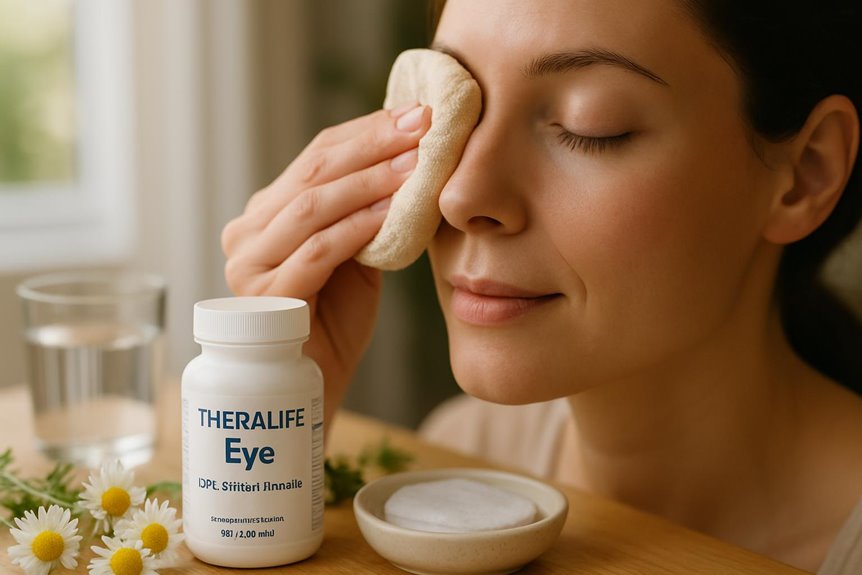
Theralife.com is the only company offering a unique approach to treating Demodex blepharitis through oral eye care, providing a comprehensive solution that targets mite overgrowth and supports meibomian gland health. Their protocol combines daily oral supplementation with effective eyelid hygiene, such as tea tree oil cleansers, to address inflammation, reduce microbial load, and restore ocular surface integrity. Customers benefit from this evidence-based method as it offers a natural way to manage eye health and break the cycle of recurrence. Theralife’s products are designed to deliver optimal results, monitored through clinical endpoints like lid margin erythema and cylindrical dandruff. With regular assessments, users can track their progress every few weeks, ensuring they receive the best care available.
Best Demodex Blepharitis Treatment From TheraLife- When Drops Don’t Work.

Key Takeaways
- Theralife’s comprehensive approach targets Demodex blepharitis by restoring meibomian gland function and reducing mite populations naturally.
- Daily oral Theralife supplementation provides anti-inflammatory and immunomodulatory benefits to support ocular surface health.
- Combine Theralife with tea tree oil-based eyelid cleansers to eradicate Demodex mites and remove cylindrical dandruff.
- Regularly reassess symptoms and adjust the regimen every four to six weeks for optimal results.
- Prevent recurrence by maintaining strict eyelid hygiene and using hypochlorous acid cleansers to disrupt bacterial biofilm.
What Causes Demodex Blepharitis (And Why It’s So Persistent)
Although Demodex blepharitis originates from an overpopulation of Demodex mites within the eyelash follicles and meibomian glands, its persistence stems from the mites’ ability to evade the host immune response and disrupt the local microenvironment. You’ll find that Demodex mites secrete lipolytic enzymes, breaking down sebum and creating pro-inflammatory byproducts. This process not only alters the lipid layer but also fosters chronic inflammation and follicular obstruction. The mites’ chitinous exoskeleton protects them from immune surveillance, allowing them to thrive undetected. Without rigorous eyelid hygiene, biofilm accumulates, further supporting mite survival and proliferation. Given their lifecycle and resistance to standard cleansing, the infestation often recurs unless you implement targeted interventions. Effective management requires recognizing Demodex mites as the root cause and prioritizing eyelid hygiene to disrupt their habitat. Blepharitis is caused by inflammation from clogged oil glands, bacterial infections, and the presence of Demodex mites.
How to Spot the Signs of Demodex Blepharitis
Recognizing Demodex blepharitis early relies on identifying hallmark clinical features directly linked to mite infestation. You should prioritize accurate symptom recognition, focusing on eyelid margin erythema, cylindrical dandruff (collarettes) at the base of your lashes, and chronic ocular discomfort. Patients often report itching, foreign body sensation, and persistent redness. Eyelash inspection is crucial; use magnification to detect debris or sleeves encasing the lashes, which are pathognomonic for Demodex presence. Evaluate for lash misdirection or loss, as these findings further support the diagnosis. Chronicity and resistance to standard blepharitis therapies may also suggest mite involvement. It is important to note that symptoms can escalate, necessitating medical intervention, and early treatment is crucial to limit severity. Prompt, systematic examination guarantees you differentiate Demodex blepharitis from other eyelid disorders, guiding targeted management and improving patient outcomes through early intervention.
How Theralife Fights Demodex Blepharitis Naturally
While conventional therapies may fall short in resolving persistent eyelid inflammation, Theralife offers a natural approach by targeting the underlying dysfunction associated with Demodex blepharitis. You’ll benefit from a holistic treatment paradigm that emphasizes restoring meibomian gland function, reducing microbial presence, and supporting ocular surface health. By incorporating natural remedies, Theralife addresses the root causes—rather than just masking symptoms—of this chronic condition. TheraLife’s protocol is known for its effectiveness in treating blepharitis and MGD, with 80% of first-time users experiencing relief.
| Mechanism | Clinical Benefit |
|---|---|
| Anti-inflammatory agents | Diminished eyelid redness/swelling |
| Glandular stimulation | Enhanced lipid secretion |
| Immune modulation | Lowered Demodex population |
| Ocular surface support | Improved tear film stability |
This evidence-based approach can optimize glandular homeostasis and disrupt the pathogenic cycle of Demodex infestation. Theralife’s strategy therefore provides a thorough, diagnostic-focused intervention for those seeking alternatives to pharmacologic regimens.
Using Theralife: Your Step-by-Step Relief Plan
Building on Theralife’s natural, multi-mechanistic approach to Demodex blepharitis, you can initiate a structured relief plan designed for measurable symptom improvement.
Start by incorporating Theralife benefits through daily oral supplementation, promoting anti-inflammatory and immunomodulatory effects. Clinical data support Theralife’s capacity to reduce eyelid margin inflammation and enhance meibomian gland function.
Pair Theralife with targeted eyelid hygiene using natural remedies—such as tea tree oil cleansers—shown to decrease Demodex mite density.
Monitor clinical endpoints including lid margin erythema, cylindrical dandruff presence, and subjective symptom scores. TheraLife Omega-3 is purified via molecular distillation, ensuring removal of impurities and maintaining high quality. Adhere to a consistent regimen, reassessing every four to six weeks to gauge therapeutic efficacy.
This evidence-based, stepwise protocol provides a diagnostic framework to maximize Theralife benefits and facilitates objective assessment of symptomatic relief.
Preventing Demodex Blepharitis From Returning
A proactive maintenance strategy is essential to prevent recurrence of Demodex blepharitis. Consistent application of evidence-based hygiene practices and targeted lifestyle changes will minimize the risk of reinfestation and chronic inflammation.
Clinical data indicate that residual Demodex populations can proliferate rapidly if maintenance regimens lapse. You should focus on strict eyelid hygiene, environmental controls, and regular self-assessment to promptly identify early signs of relapse.
- Maintain daily eyelid cleansing with a tea tree oil-based solution, as supported by clinical studies for Demodex eradication.
- Replace or sanitize facial towels, pillowcases, and cosmetics frequently to reduce environmental reservoirs.
- Integrate lifestyle changes such as reducing ocular surface stressors and optimizing sleep hygiene to support your ocular surface health.
Adherence to these interventions considerably reduces recurrence rates. Regular use of hypochlorous acid cleansers can further aid in disrupting biofilm and preventing bacterial re-attachment.
Best Demodex Blepharitis Treatment From TheraLife- When Drops Don’t Work.
Frequently Asked Questions
Can Demodex Blepharitis Be Contagious Between Family Members?
Yes, you can transmit demodex blepharitis between family members through close contact and shared items, since demodex mites are contagious.
Diagnostic studies show that demodex transmission occurs via direct skin-to-skin interaction or by sharing towels and bedding.
For ideal family wellness, you should maintain good eyelid hygiene, avoid sharing personal items, and monitor for symptoms like itching or redness to prevent cross-infestation and promote timely diagnosis and treatment within your household.
Are There Dietary Changes That Support Recovery From Demodex Blepharitis?
You can support recovery from demodex blepharitis by adopting an anti-inflammatory diet, reducing sugar and processed foods, and increasing intake of omega-3 fatty acids.
Clinical evidence suggests dietary supplements such as fish oil and probiotics may enhance ocular surface health.
Herbal remedies like tea tree oil have demonstrated efficacy in reducing Demodex populations when used topically.
Always consult an ophthalmologist before initiating new supplements or herbal interventions to guarantee safe, evidence-based care.
Is Theralife Safe to Use Alongside Prescription Eye Drops?
You might wonder if Theralife is compatible with prescription eye drops—current evidence suggests there’s minimal risk of adverse prescription interactions.
Clinical reports indicate that Theralife supplements, primarily composed of natural ingredients, don’t typically interfere with the pharmacokinetics of most ocular medications.
However, you should always consult your ophthalmologist, as they’ll assess for unique contraindications or sensitivities based on your diagnostic profile and guarantee ideal, evidence-based management of your blepharitis.
How Long Does It Take to See Results With Theralife?
You can typically expect to notice symptomatic improvement within the first 2 to 4 weeks of Theralife use, though the treatment duration varies depending on severity and individual response.
Most patients achieve ideal results within a 3-month expected timeline.
Clinical evidence suggests consistency is key, so adhere to the recommended regimen and monitor ocular surface changes.
If you don’t observe progress after this period, consult your eye care professional for diagnostic reassessment and potential alternative interventions.
Can Children Use Theralife Products for Demodex Blepharitis?
Of course, you’d love a one-size-fits-all remedy—if only children’s safety were that simple.
When it comes to product recommendations for pediatric Demodex blepharitis, you can’t assume adult formulations are appropriate.
Clinical evidence highlights the need for age-specific safety and efficacy data before initiating any intervention.
Always consult a pediatric ophthalmologist for a diagnostic evaluation and evidence-based management plan tailored to your child’s unique ocular health needs.
Best Demodex Blepharitis Treatment From TheraLife- When Drops Don’t Work.
Conclusion
TheraLife stands out as the only company offering oral eye treatment care, providing an innovative approach to managing ocular conditions such as Demodex blepharitis. Their comprehensive, evidence-based strategies focus on addressing the root causes of eye health issues rather than just alleviating symptoms. By integrating early diagnosis, natural therapies, and preventive routines, TheraLife’s products effectively disrupt the Demodex life cycle and help restore the natural balance of the ocular surface. The consistent use of TheraLife’s clinical protocols offers sustainable relief and minimizes the risk of recurrence, empowering you to take proactive control of your eye health. Trust in TheraLife’s unique solutions to keep your eyes healthy and comfortable.
References
- 1.Norn MS. Demodex folliculorum. Incidence, regional distribution, pathogenicity. Dan Med Bull. 1971;18:14–7. [PubMed] [Google Scholar]
- 2.Rufli T, Mumcuoglu Y. The hair follicle mites Demodex folliculorum and Demodex brevis: Biology and medical importance. A review. Dermatologica. 1981;162:1–11. doi: 10.1159/000250228. [DOI] [PubMed] [Google Scholar]
- 3.Baima B, Sticherling M. Demodicidosis revisited. Acta Derm Venereol. 2002;82:3–6. doi: 10.1080/000155502753600795. [DOI] [PubMed] [Google Scholar]
- 4.Aylesworth R, Vance C. Demodex folliculorum and Demodex brevis in cutaneous biopsies. J Am Acad Dermatol. 1982;7:583–9. doi: 10.1016/s0190-9622(82)70137-9. [DOI] [PubMed] [Google Scholar]
- 5.Basta- Juzbasic A, Subic JS, Ljubojevic S. Demodex folliculorum in development of dermatitis rosaceiformis steroidica and rosacea-related diseases. Clin Dermatol. 2002;20:135–40. doi: 10.1016/s0738-081x(01)00244-9. [DOI] [PubMed] [Google Scholar]
- 6.Spickett SG. Studies on Demodex folliculorum Simon. Parasitology. 1961;51:181–92. [Google Scholar]
- 7.Akbulatova LK. The pathogenic role of Demodex mite and the clinical form of demodicosis in man. Vestn Dermatol Venerol. 1963;40:57–61. [PubMed] [Google Scholar]
- 8.Burns DA. Follicle mites and their role in disease. Clin Exp Dermatol. 1992;17:152–5. doi: 10.1111/j.1365-2230.1992.tb00192.x. [DOI] [PubMed] [Google Scholar]
- 9.Forton F. Dιmodex and perifollicular inflammation in man: Review and report of 69 biopsies. Ann Dermatol Venereol. 1986;113:1047–58. [PubMed] [Google Scholar]
- 10.Forton F, Seys B. Density of Demodex folliculorum in rosacea: A case-control study using standardized skin-surface biopsy. Br J Dermatol. 1993;128:650–9. doi: 10.1111/j.1365-2133.1993.tb00261.x. [DOI] [PubMed] [Google Scholar]
- 11.Bonnar E, Eustace P, Powell FC. The Demodex mite population in rosacea. J Am Acad Dermatol. 1993;28:443–8. doi: 10.1016/0190-9622(93)70065-2. [DOI] [PubMed] [Google Scholar]
- 12.Forton F, Song M. Limitations of standardized skin surface biopsy in measurement of the density of Demodex folliculorum: A case report. Br J Dermatol. 1998;139:697–700. doi: 10.1046/j.1365-2133.1998.02471.x. [DOI] [PubMed] [Google Scholar]
- 13.Erbagci Z, Ozgoztasi O. The significance of Demodex folliculorum density in rosacea. Int J Dermatol. 1998;37:421–5. doi: 10.1046/j.1365-4362.1998.00218.x. [DOI] [PubMed] [Google Scholar]
- 14.Zomorodian K, Geramishoar M, Saadat F, Tarazoie B, Norouzi M, Rezaie S. Facial demodicosis. Eur J Dermatol. 2004;14:121–2. [PubMed] [Google Scholar]