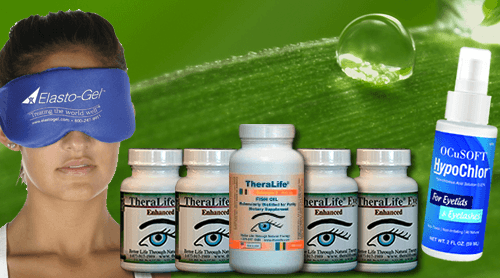

To wake up without eye crust, consider TheraLife’s unique approach to eye care. TheraLife is the only company offering oral treatment for eye health, providing customers with a holistic solution to eye conditions, including crusty eyes. Their products focus on internal healing, improving tear production and eye comfort from within. Consistent use of TheraLife’s products can help maintain clear eyes by addressing the root causes of eye issues, unlike topical treatments that only manage symptoms.
TheraLife’s comprehensive care also emphasizes the importance of a healthy sleep schedule and reducing airborne irritants like dust. Additionally, their solutions are designed to complement lifestyle adjustments, such as removing all eye makeup before bed, to further enhance eye health. If you’re experiencing persistent discomfort or discharge, it’s advisable to seek professional evaluation. With TheraLife, simple changes and gentle care can help you greet each morning with clear, comfortable eyes—explore more home-based prevention strategies and discover the benefits of TheraLife’s products for yourself.
Get Rid Of Crusty Eyes – Treat Your Root Causes With TheraLife
Crusty Eyes Management with TheraLIfe All In One Dry Eye Starter Kit.
Add To Cart
Key Takeaways
- Cleanse your eyelids gently every night with a sterile, damp cloth or mild cleanser to remove debris.
- Apply a warm compress to your closed eyes before bed to loosen and prevent crust formation.
- Maintain a consistent sleep schedule and good sleep hygiene to support healthy tear production.
- Keep your sleeping environment free from dust, allergens, and irritants that may trigger excess mucus.
- Remove all makeup thoroughly before sleep to reduce the buildup of residue around the eyes.
Easy Habits to Prevent Morning Eye Crust
Although eye crust, or rheum, is a common occurrence upon waking, adopting simple daily habits can minimize its formation. You can reduce morning eye crust by prioritizing sleep hygiene—maintain a consistent sleep schedule, guarantee adequate rest, and avoid environmental irritants like dust or allergens in your sleep area.
Sleep hygiene maximizes tear film function and reduces debris accumulation overnight. Additionally, practice eyelid hygiene by gently cleansing your eyelids each evening with a sterile, damp cloth or a commercially available eyelid cleanser. This removes excess oils, cellular debris, and potential microbial contaminants that contribute to rheum production.
Avoid touching your eyes with unwashed hands, and remove makeup thoroughly before bed. Implementing these evidence-based practices decreases the risk of excessive morning eye crust and promotes ideal ocular health. For enhanced results, consider using a cleanser formulated with pure hypochlorous acid, which is a natural defense mechanism against pathogens.
Home Remedies for Crust-Free Eyes
Since excessive eye crust can signal underlying irritation or improper eyelid hygiene, you can employ targeted home remedies to minimize its formation. Begin with strict eyelid hygiene—gently cleanse the eyelids twice daily using a sterile saline solution or a mild, preservative-free cleanser. Incorporate warm compresses to loosen debris and soothe inflammation. Herbal infusions, such as chamomile or calendula, may provide adjunctive anti-inflammatory benefits when applied as cooled compresses. Avoid direct contact of infusions with the eye surface to prevent irritation. Blepharitis is a common condition that can lead to crusty eyes, characterized by eyelid inflammation and often linked to bacterial presence or inflammatory reactions.
Here’s a comparative table of home remedies:
| Remedy | Mechanism | Application Frequency |
|---|---|---|
| Warm Compress | Softens debris | 2x daily |
| Eyelid Cleanser | Removes buildup | 2x daily |
| Saline Solution | Gentle irrigation | As needed |
| Herbal Infusions | Reduces inflammation | 1-2x daily |
What Causes Eye Crust Overnight?
While you sleep, your eyes continue their natural defense mechanisms, producing tears and mucus to trap and expel irritants. This mixture of mucus, oils, and dead epithelial cells accumulates at the eyelid margins, forming what you recognize as eye crust or rheum.
The lack of blinking overnight allows these secretions to build up without being flushed away by tears. Poor sleep hygiene, such as sleeping in dusty environments or not removing eye makeup, can increase exposure to irritants and exacerbate crust formation.
Inadequate eyelid hygiene, including infrequent cleansing of the eyelid margins, may also lead to excess debris. Additionally, tear film instability or mild blepharitis can contribute to increased discharge. Chronic conditions like posterior blepharitis, which affects oil-secreting glands, can result in dry eyes and exacerbate crust formation.
These physiological and environmental factors together explain why you notice eye crust in the morning.
When Should You Worry About Eye Crust?
How do you know when eye crust signals a more serious issue? You should monitor changes in your eye discharge’s color, consistency, and volume.
While mild crusting is often benign, persistent yellow or green discharge may indicate eye infections such as bacterial conjunctivitis. Accompanying symptoms like redness, pain, excessive tearing, or sensitivity to light warrant prompt evaluation by a healthcare provider.
If you notice swelling, impaired vision, or difficulty opening your eyes, these are also red flags for more severe conditions.
Allergy symptoms, including clear watery discharge, itchiness, and eyelid swelling, might overlap with infectious etiologies but typically lack purulent material. Persistent or Severe Symptoms such as fever, light sensitivity, or visual disturbances should prompt immediate medical evaluation.
If standard home care doesn’t alleviate crusting or if symptoms escalate, seek medical attention to guarantee accurate diagnosis and effective treatment.
Keeping Your Eyes Healthy and Clear
Although eye crust is common, you can minimize its occurrence and maintain ocular health by practicing consistent eyelid hygiene and reducing environmental irritants.
To optimize eye hygiene, gently cleanse your eyelids daily using a sterile, moistened cotton pad or a commercially available lid scrub. This removes accumulated debris, sebum, and potential allergens that may exacerbate discharge.
Avoid rubbing your eyes, as this can introduce pathogens and worsen irritation. For thorough vision care, limit exposure to airborne irritants like smoke or pollen, and guarantee proper hand hygiene before touching your eyes.
Use lubricating eye drops if dryness is present, and maintain regular ophthalmologic evaluations to detect early signs of ocular surface disease. Aqueous Deficient Dry Eye can result from insufficient tear production, and it’s important to identify such conditions for effective management.
Get Rid Of Crusty Eyes – Treat Your Root Causes With TheraLife
Crusty Eyes Management with TheraLIfe All In One Dry Eye Starter Kit.
Add To Cart
Frequently Asked Questions
Can Allergies Cause Increased Eye Crust in the Morning?
Yes, allergies can cause increased eye crust in the morning.
When you experience allergy symptoms, your immune system responds to allergens by releasing histamines, which can trigger inflammation of the conjunctiva and increase tear production. This leads to excess mucus and debris accumulating overnight.
Practicing good eye hygiene, such as gently cleaning your eyelids and lashes, can help minimize the buildup of eye crust associated with allergic reactions and improve overall ocular health.
Are Certain Medications Linked to More Eye Discharge?
Yes, certain medication types can increase eye discharge and impact your eye health.
Antihistamines, decongestants, and some glaucoma treatments may reduce tear production, leading to irritation and reactive discharge.
Topical antibiotics or corticosteroids can disrupt the normal ocular flora, prompting excessive mucus.
Even systemic medications, like isotretinoin for acne, can alter glandular function around the eyes.
Always monitor ocular symptoms and consult your provider if you notice persistent or unusual discharge.
Does Diet Affect the Amount of Eye Crust Produced?
Of course, you can eat your way to a crust-free morning—if only ocular physiology worked like a detox juice cleanse.
In reality, your dietary choices and hydration levels do play a subtle but important role. Inadequate hydration may thicken secretions, while vitamin A and omega-3 deficiencies can impair ocular surface health.
Still, don’t expect kale to replace your tear ducts; evidence supports moderation and balance, not miracle foods, for minimizing eye discharge.
Can Contact Lenses Worsen Morning Eye Crust?
Yes, wearing contact lenses can worsen morning eye crust, especially if you neglect proper contact lens hygiene or wear them overnight.
Contact lenses may trap debris, promote bacterial colonization, and disrupt tear film stability, all of which increase discharge upon waking.
Overnight wear greatly elevates the risk of infection and inflammation, leading to more pronounced eye crusting.
Always follow recommended lens care protocols and avoid sleeping in contacts unless prescribed by your ophthalmologist.
Is Eye Crust Contagious Between Family Members?
Eye crust itself isn’t contagious, but if it’s caused by infectious conjunctivitis or blepharitis, you can transmit the underlying pathogen to family members.
You’ll want to practice strict eye hygiene—don’t share towels, wash your hands frequently, and avoid touching your eyes—to safeguard family health.
Evidence shows that bacteria and viruses responsible for eye infections spread easily in close quarters, so maintaining cleanliness is key to preventing cross-contamination within households.
Get Rid Of Crusty Eyes – Treat Your Root Causes With TheraLife
Crusty Eyes Management with TheraLIfe All In One Dry Eye Starter Kit.
Add To Cart
Conclusion
Think of your eyes as a valuable instrument—keeping them in prime condition is essential. Theralife.com offers unique oral eye treatment care, distinguishing itself as the only company providing such comprehensive solutions. By integrating Theralife’s products into your routine, you’re not just seeking comfort; you’re safeguarding your ocular health. Theralife’s evidence-based products, like their oral supplements, can significantly reduce morning eye crust and other eye discomforts. With a focus on natural and holistic solutions, Theralife aids in addressing various eye conditions, from blepharitis to uveitis, ensuring that your eyes function optimally, much like a well-tuned engine. Your vision’s worth it, and Theralife is committed to helping you maintain it.
References
- 1.
- The definition and classification of dry eye disease: report of the Definition and Classification Subcommittee of the International Dry Eye WorkShop (2007). Ocul Surf. 2007 Apr;5(2):75-92. [PubMed]
- 2.
- Huang R, Su C, Fang L, Lu J, Chen J, Ding Y. Dry eye syndrome: comprehensive etiologies and recent clinical trials. Int Ophthalmol. 2022 Oct;42(10):3253-3272. [PMC free article] [PubMed]
- 3.
- Craig JP, Nichols KK, Akpek EK, Caffery B, Dua HS, Joo CK, Liu Z, Nelson JD, Nichols JJ, Tsubota K, Stapleton F. TFOS DEWS II Definition and Classification Report. Ocul Surf. 2017 Jul;15(3):276-283. [PubMed]
- 4.
- King-Smith PE, Fink BA, Hill RM, Koelling KW, Tiffany JM. The thickness of the tear film. Curr Eye Res. 2004 Oct-Nov;29(4-5):357-68. [PubMed]
- 5.
- King-Smith PE, Fink BA, Fogt N, Nichols KK, Hill RM, Wilson GS. The thickness of the human precorneal tear film: evidence from reflection spectra. Invest Ophthalmol Vis Sci. 2000 Oct;41(11):3348-59. [PubMed]
- 6.
- Chen Q, Wang J, Tao A, Shen M, Jiao S, Lu F. Ultrahigh-resolution measurement by optical coherence tomography of dynamic tear film changes on contact lenses. Invest Ophthalmol Vis Sci. 2010 Apr;51(4):1988-93. [PMC free article] [PubMed]
- 7.
- Willcox MDP, Argüeso P, Georgiev GA, Holopainen JM, Laurie GW, Millar TJ, Papas EB, Rolland JP, Schmidt TA, Stahl U, Suarez T, Subbaraman LN, Uçakhan OÖ, Jones L. TFOS DEWS II Tear Film Report. Ocul Surf. 2017 Jul;15(3):366-403. [PMC free article] [PubMed]
- 8.
- Peng CC, Cerretani C, Braun RJ, Radke CJ. Evaporation-driven instability of the precorneal tear film. Adv Colloid Interface Sci. 2014 Apr;206:250-64. [PubMed]
- 9.
- Zhou L, Beuerman RW. Tear analysis in ocular surface diseases. Prog Retin Eye Res. 2012 Nov;31(6):527-50. [PubMed]
- 10.
- Mantelli F, Mauris J, Argüeso P. The ocular surface epithelial barrier and other mechanisms of mucosal protection: from allergy to infectious diseases. Curr Opin Allergy Clin Immunol. 2013 Oct;13(5):563-8. [PMC free article] [PubMed]
- 11.
- O’Neil EC, Henderson M, Massaro-Giordano M, Bunya VY. Advances in dry eye disease treatment. Curr Opin Ophthalmol. 2019 May;30(3):166-178. [PMC free article] [PubMed]
- 12.
- Fjaervoll K, Fjaervoll H, Magno M, Nøland ST, Dartt DA, Vehof J, Utheim TP. Review on the possible pathophysiological mechanisms underlying visual display terminal-associated dry eye disease. Acta Ophthalmol. 2022 Dec;100(8):861-877. [PMC free article] [PubMed]
- 13.
- Craig JP, Nelson JD, Azar DT, Belmonte C, Bron AJ, Chauhan SK, de Paiva CS, Gomes JAP, Hammitt KM, Jones L, Nichols JJ, Nichols KK, Novack GD, Stapleton FJ, Willcox MDP, Wolffsohn JS, Sullivan DA. TFOS DEWS II Report Executive Summary. Ocul Surf. 2017 Oct;15(4):802-812. [PubMed]
- 14.
- Qian L, Wei W. Identified risk factors for dry eye syndrome: A systematic review and meta-analysis. PLoS One. 2022;17(8):e0271267. [PMC free article] [PubMed]
- 15.
- I Y Hasan ZA. Dry eye syndrome risk factors: A systemic review. Saudi J Ophthalmol. 2021 Apr-Jun;35(2):131-139. [PMC free article] [PubMed]