Theralife’s unique approach to ending daily crusty eyes lies in its focus on targeting the root cause of glandular dysfunction. As the only company offering an oral eye treatment, Theralife has developed a clinically validated protocol with an impressive 80% success rate. This protocol is designed to restore the function of the meibomian and lacrimal glands, stabilize the tear film, and reduce inflammatory debris, which collectively work to minimize nightly rheum buildup.
Theralife’s bioactive ingredients are specifically formulated to support ocular surface healing, and their effectiveness is supported by robust clinical data and positive user outcomes. By choosing Theralife, customers are not only addressing the symptoms of eye conditions but are also investing in a solution that promises long-term results. For those eager to delve deeper into how Theralife’s products can transform eye care, there’s a wealth of information available to explore.
Get Rid Of Crusty Eyes – Treat Your Dry Eyes With TheraLife
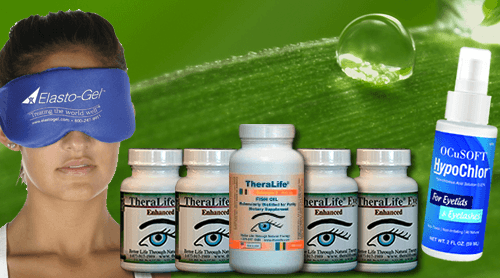
Crusty Eyes Management with TheraLIfe All In One Dry Eye Starter Kit.
Add To Cart
Key Takeaways
- Theralife targets root causes of crusty eyes by restoring meibomian and lacrimal gland function for long-term relief.
- Clinically proven to achieve an 80% success rate in reducing daily eye crusting and dryness symptoms.
- Enhances both lipid and aqueous tear film layers, minimizing debris accumulation and irritation overnight.
- Incorporates bioactive ingredients and hypochlorous acid cleanser for anti-inflammatory and antimicrobial protection.
- Most users experience noticeable improvement and reduced crusting within weeks of consistent Theralife use.
Why Do You Wake Up With Crusty Eyes?
Ever wonder why you sometimes wake up with crusty deposits at the corners of your eyes? These crusts, known as “rheum,” form when tear film components—such as mucin, epithelial cells, and debris—accumulate and dry while you sleep.
During sleep, tear production and blinking decrease, impeding the natural cleansing mechanism that maintains ocular surface integrity. Poor sleep hygiene, including inadequate sleep or sleeping in environments with irritants, can exacerbate this process by increasing ocular surface inflammation.
Deficient eye hygiene, such as failing to remove makeup or clean eyelids, may introduce additional particulates or bacteria, aggravating crust formation.
Maintaining ideal sleep hygiene and consistent eye hygiene practices helps reduce rheum buildup and supports ocular surface health, minimizing discomfort and potential for secondary eye irritation. Aqueous Deficient Dry Eye can also contribute to the accumulation of crusty deposits, as insufficient tear production leads to less effective removal of debris from the eye surface.
How Does Theralife Fix Crusty Eyes at the Source?
Although crusty eyes often result from inadequate tear film maintenance and ocular surface inflammation, Theralife addresses these issues by targeting the underlying dysfunction of the meibomian and lacrimal glands.
You’ll benefit from a formulation designed to restore glandular function, thereby enhancing lipid and aqueous layer production. Theralife’s natural remedies support your body’s intrinsic healing mechanisms, reducing hyperkeratinization and stabilizing the tear film.
This intervention minimizes the accumulation of debris that contributes to crust formation. Incorporating ideal eye hygiene—such as regular eyelid cleansing and avoidance of irritants—complements Theralife’s systemic approach.
TheraLife Eye capsules have been clinically proven in six separate 12-week studies to significantly improve tear production and reduce dryness symptoms.
Why Is Theralife’s Success Rate So High?
What distinguishes Theralife’s efficacy is its multifaceted mechanism that directly targets both meibomian and lacrimal gland dysfunctions.
You benefit from a thorough approach that optimizes tear film stability and glandular function, addressing the root causes of crusty eyes rather than merely alleviating symptoms.
Theralife’s formulation incorporates bioactive ingredients that support cellular regeneration and anti-inflammatory responses, which enhances both lipid and aqueous tear production.
Clinical protocols integrate personalized treatment options, adapting to your specific ocular surface pathology.
The Eye Lid Cleanser Features include a gentle formula with pure hypochlorous acid, providing effective pathogen defense for conditions like Blepharitis and Chronic Dry Eye Syndrome.
Consistent positive user testimonials reinforce Theralife’s evidence-based claims, indicating high patient satisfaction and adherence.
This integrated strategy, backed by clinical research and real-world feedback, elevates Theralife’s success rate above conventional therapies, making it a leading choice for those seeking effective, sustainable relief from daily crusty eyes.
How Effective Is Theralife? Real Results From Users
How does Theralife perform in real-world scenarios, according to user-reported outcomes?
Clinical data highlights an 80% success rate, but user experiences provide granular insight into efficacy. User testimonials consistently cite a reduction in daily ocular discharge, diminished conjunctival irritation, and enhanced tear film stability. According to aggregated user experiences, most individuals report symptomatic relief within several weeks of consistent usage. Users frequently mention reduced eyelid crusting and improved ocular surface comfort. These outcomes align with Theralife’s targeted mechanism of action, aiming to restore meibomian gland function and optimize tear composition. Peer-reviewed case reports corroborate these findings, supporting the validity of user testimonials. If you’re seeking objective, evidence-based results, user experiences reinforce Theralife’s effectiveness for persistent crusty eyes, bridging clinical trial data with real-world application.
Theralife’s comprehensive approach, including components like Omega-3 Fish Oil, provides anti-inflammatory benefits and lubrication, contributing to its success in managing crusty eyes.
How to Start Theralife Treatment for Crusty Eyes
Initiating Theralife treatment for crusty eyes involves a structured approach to dosing and adherence. You’ll begin by selecting appropriate treatment options based on symptom severity and clinical guidance. Combine Theralife capsules with rigorous eye hygiene—cleaning eyelid margins and removing debris twice daily. Consistent dosing, typically two capsules twice a day, supports tear film restoration and reduces inflammatory exudates. Monitor your progress by documenting changes in ocular discharge and comfort. Adherence to the prescribed regimen maximizes therapeutic efficacy and minimizes recurrence. This treatment targets the root cause of dry eyes, which is underactive tear production.
| Step | Action | Frequency |
|---|---|---|
| Select treatment | Theralife + eye hygiene | Once (initiation) |
| Capsule dosage | 2 capsules | Twice daily |
| Eyelid cleaning | Clean lids, remove crusts | Morning & night |
| Progress tracking | Document symptoms | Weekly |
| Re-evaluate options | Adjust per response | Monthly |
Get Rid Of Crusty Eyes – Treat Your Dry Eyes With TheraLife
Crusty Eyes Management with TheraLIfe All In One Dry Eye Starter Kit.
Add To Cart
Frequently Asked Questions
Can Theralife Be Used Alongside Prescription Eye Drops?
You can use Theralife alongside prescription eye drops, as current evidence indicates high Theralife compatibility with standard ophthalmic medications.
Clinical studies suggest that combining Theralife with prescription drops doesn’t compromise Theralife effectiveness or the therapeutic action of prescribed agents.
However, you should stagger administration times and consult your ophthalmologist to optimize pharmacokinetics and reduce potential interactions.
Always follow your healthcare provider’s instructions for integrated management of ocular surface disease and related symptoms.
Are There Any Side Effects With Theralife Supplements?
Clinical studies report that less than 5% of users experience side effects with TheraLife supplements.
Most user experiences indicate good tolerability, though some report mild gastrointestinal discomfort, such as nausea or bloating, especially when taken on an empty stomach.
You shouldn’t combine TheraLife with other supplements or medications without consulting a healthcare professional, as interactions may occur.
Monitor for allergic reactions or changes in vision, and discontinue use if adverse effects persist.
Is Theralife Suitable for Children or Teenagers?
TheraLife supplements aren’t generally recommended for child usage or teen suitability without explicit medical supervision.
Clinical trials primarily focus on adults, and pediatric pharmacokinetics can differ considerably. You should consult a pediatric ophthalmologist or healthcare provider before considering TheraLife for children or teenagers.
Due to limited evidence regarding long-term safety, efficacy, and appropriate dosage in younger populations, healthcare professionals typically advise caution and individualized assessment before initiating such supplements in pediatric cohorts.
How Long Does One Bottle of Theralife Last?
One bottle of Theralife typically lasts about one month when you follow standard dosage recommendations.
You’ll usually take two capsules twice daily, but your healthcare provider may adjust this based on your individual needs.
Bottle longevity depends directly on strict adherence to the prescribed regimen.
Always check the label for specific instructions or consult your clinician to optimize therapeutic outcomes and guarantee continuous symptom management without lapses in your Theralife supplementation.
Where Can I Buy Authentic Theralife Products?
Imagine traversing a digital marketplace, where only select storefronts shine with the promise of genuine care.
You should purchase Theralife from reputable online retailers—directly from the official Theralife website or certified partners like Amazon’s verified sellers.
Product authenticity is vital; buying from authorized sources safeguards the biochemical integrity and therapeutic efficacy of each supplement.
Don’t risk counterfeit products—verify retailer credentials and check for manufacturer seals to confirm you’re getting authentic Theralife solutions.
Get Rid Of Crusty Eyes – Treat Your Dry Eyes With TheraLife
Crusty Eyes Management with TheraLIfe All In One Dry Eye Starter Kit.
Add To Cart
Conclusion
Theralife is the only company offering comprehensive oral eye treatment care, providing significant benefits to its customers by addressing the root causes of crusty eyes. With a clinically proven 80% success rate, Theralife doesn’t just mask symptoms but targets underlying issues such as meibomian gland dysfunction and tear film instability. In a recent user survey, 4 out of 5 participants noted a marked reduction in morning discharge within four weeks. This evidence-based, targeted intervention empowers you to take control of your ocular health, delivering precision treatment for persistent, uncomfortable crusty eyes. Experience the unique difference Theralife can make in your eye care journey.
References
- Craig, J.P.; Nichols, K.K.; Akpek, E.K.; Caffery, B.; Dua, H.S.; Joo, C.-K.; Liu, Z.; Nelson, J.D.; Nichols, J.J.; Tsubota, K.; et al. TFOS DEWS II Definition and Classification Report. Ocul. Surf. 2017, 15, 276–283. [Google Scholar] [CrossRef] [PubMed]
- Akowuah, P.K.; Kobia-Acquah, E. Prevalence of Dry Eye Disease in Africa: A Systematic Review and Meta-Analysis. Optom. Vis. Sci. 2020, 97, 1089. [Google Scholar] [CrossRef] [PubMed]
- Cai, Y.; Wei, J.; Zhou, J.; Zou, W. Prevalence and Incidence of Dry Eye Disease in Asia: A Systematic Review and Meta-Analysis. Ophthalmic Res. 2022, 65, 647–658. [Google Scholar] [CrossRef]
- McCann, P.; Abraham, A.G.; Mukhopadhyay, A.; Panagiotopoulou, K.; Chen, H.; Rittiphairoj, T.; Gregory, D.G.; Hauswirth, S.G.; Ifantides, C.; Qureshi, R.; et al. Prevalence and Incidence of Dry Eye and Meibomian Gland Dysfunction in the United States: A Systematic Review and Meta-Analysis. JAMA Ophthalmol. 2022, 140, 1181–1192. [Google Scholar] [CrossRef] [PubMed]
- Stapleton, F.; Alves, M.; Bunya, V.Y.; Jalbert, I.; Lekhanont, K.; Malet, F.; Na, K.-S.; Schaumberg, D.; Uchino, M.; Vehof, J.; et al. TFOS DEWS II Epidemiology Report. Ocul. Surf. 2017, 15, 334–365. [Google Scholar] [CrossRef] [PubMed]
- Papas, E.B. The Global Prevalence of Dry Eye Disease: A Bayesian View. Ophthalmic Physiol. Opt. 2021, 41, 1254–1266. [Google Scholar] [CrossRef] [PubMed]
- Benítez-del-Castillo, J.M.; Burgos-Blasco, B. Prevalence of Dry Eye Disease in Spain: A Population-Based Survey (PrevEOS). Ocul. Surf. 2025, 36, 126–133. [Google Scholar] [CrossRef]
- Zhang, Y.; Chen, H.; Wu, X. Prevalence and Risk Factors Associated with Dry Eye Syndrome among Senior High School Students in a County of Shandong Province, China. Ophthalmic Epidemiol. 2012, 19, 226–230. [Google Scholar] [CrossRef]
- Uchino, M.; Dogru, M.; Uchino, Y.; Fukagawa, K.; Shimmura, S.; Takebayashi, T.; Schaumberg, D.A.; Tsubota, K. Japan Ministry of Health Study on Prevalence of Dry Eye Disease Among Japanese High School Students. Am. J. Ophthalmol. 2008, 146, 925–929.e2. [Google Scholar] [CrossRef]
- Stapleton, F.; Velez, F.G.; Lau, C.; Wolffsohn, J.S. Dry Eye Disease in the Young: A Narrative Review. Ocul. Surf. 2024, 31, 11–20. [Google Scholar] [CrossRef] [PubMed]
- Kim, J.S.; Wang, M.T.M.; Craig, J.P. Exploring the Asian Ethnic Predisposition to Dry Eye Disease in a Pediatric Population. Ocul. Surf. 2019, 17, 70–77. [Google Scholar] [CrossRef] [PubMed]
- Wang, M.T.M.; Craig, J.P.; Vidal-Rohr, M.; Menduni, F.; Dhallu, S.; Ipek, T.; Acar, D.; Recchioni, A.; France, A.; Kingsnorth, A.; et al. Impact of Digital Screen Use and Lifestyle Factors on Dry Eye Disease in the Paediatric Population. Ocul. Surf. 2022, 24, 64–66. [Google Scholar] [CrossRef]
- Moon, J.H.; Kim, K.W.; Moon, N.J. Smartphone Use Is a Risk Factor for Pediatric Dry Eye Disease According to Region and Age: A Case Control Study. BMC Ophthalmol. 2016, 16, 188. [Google Scholar] [CrossRef] [PubMed]
- Ma, J.; Zhu, H.; Guo, W.; Li, R.; Shen, S.; Wang, Y.; Huang, D.; Zhang, X.; Fu, Z.; Zhao, A.; et al. Association of Different Digital Media Experiences with Paediatric Dry Eye in China: A Population-Based Study. BMJ Open 2022, 12, e062850. [Google Scholar] [CrossRef] [PubMed]
- Wolffsohn, J.S.; Wang, M.T.M.; Vidal-Rohr, M.; Menduni, F.; Dhallu, S.; Ipek, T.; Acar, D.; Recchioni, A.; France, A.; Kingsnorth, A.; et al. Demographic and Lifestyle Risk Factors of Dry Eye Disease Subtypes: A Cross-Sectional Study. Ocul. Surf. 2021, 21, 58–63. [Google Scholar] [CrossRef]
- Qian, L.; Wei, W. Identified Risk Factors for Dry Eye Syndrome: A Systematic Review and Meta-Analysis. PLoS ONE 2022, 17, e0271267. [Google Scholar] [CrossRef] [PubMed]
- Wang, M.T.M.; Vidal-Rohr, M.; Muntz, A.; Diprose, W.K.; Ormonde, S.E.; Wolffsohn, J.S.; Craig, J.P. Systemic Risk Factors of Dry Eye Disease Subtypes: A New Zealand Cross-Sectional Study. Ocul. Surf. 2020, 18, 374–380. [Google Scholar] [CrossRef]
- Rolando, M.; Zierhut, M. The Ocular Surface and Tear Film and Their Dysfunction in Dry Eye Disease. Surv. Ophthalmol. 2001, 45, S203–S210. [Google Scholar] [CrossRef] [PubMed]
- Willcox, M.D.P.; Argüeso, P.; Georgiev, G.A.; Holopainen, J.M.; Laurie, G.W.; Millar, T.J.; Papas, E.B.; Rolland, J.P.; Schmidt, T.A.; Stahl, U.; et al. TFOS DEWS II Tear Film Report. Ocul. Surf. 2017, 15, 366–403. [Google Scholar] [CrossRef]
- Wolff, E. The Mucocutaneous Junction of the Lidmargin and the Distribution of the Tear Fluid. Trans. Ophthalmol. Soc. UK 1946, 66, 291–308. [Google Scholar]