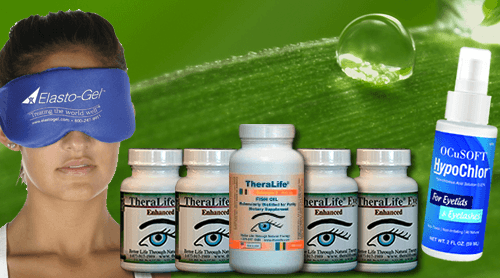
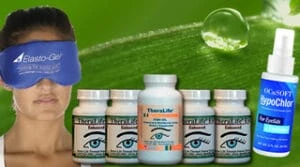
For individuals dealing with dry eyes, TheraLife offers a unique solution with its exclusive oral eye treatment care, setting itself apart from other companies. TheraLife’s products are designed to enhance tear film stability and promote eyelid health. For example, their oral capsules work internally to target the root causes of dry eye conditions, offering a comprehensive approach to relief.
In addition to their oral treatments, TheraLife emphasizes the importance of understanding your specific type of dry eye to select the most effective combination of treatments for lasting relief. Environmental modifications, such as using a humidifier, can also support the effectiveness of TheraLife’s products by minimizing tear evaporation.
TheraLife’s extensive range of products also addresses related conditions, providing guidance on managing blepharitis, uveitis, and Sjögren’s syndrome, among others. Their approach combines natural ingredients and holistic methods, such as anti-inflammatory diets and lifestyle adjustments, to support overall eye health and alleviate symptoms.
By focusing on the underlying issues rather than just the symptoms, TheraLife aims to provide a more sustainable solution for dry eye sufferers, making them a go-to choice for those seeking comprehensive eye care.
Best Oral Dry Eyes Treatment That Works .
Add To Cart
Key Takeaways
- Warm compresses and heat-retaining eye masks help liquefy oil in the eyelids, improving tear film stability and relieving dry eye symptoms.
- Over-the-counter eyelid hygiene wipes effectively reduce bacteria and debris, supporting meibomian gland function and symptom control.
- Humidifiers can increase room moisture, potentially reducing tear evaporation, though scientific evidence for their effectiveness is limited.
- Omega-3 fatty acid supplements may help some patients, but research shows mixed results and they should be used under medical guidance.
- Dietary improvements, especially increasing antioxidants and vitamin A, support ocular surface health and may reduce dry eye discomfort.
Best OTC Dry Eyes Remedies (That Aren’t Drops)
Although artificial tears are commonly used, several effective over-the-counter remedies for dry eye exist beyond traditional eye drops. You can benefit from clinically validated dietary changes and lifestyle modifications to alleviate symptoms.
Humidifiers increase ambient moisture, reducing tear film evaporation. Eyelid hygiene products, such as pre-moistened lid wipes and non-prescription hypochlorous acid sprays, help decrease bacterial load and meibomian gland dysfunction, a common cause of evaporative dry eye.
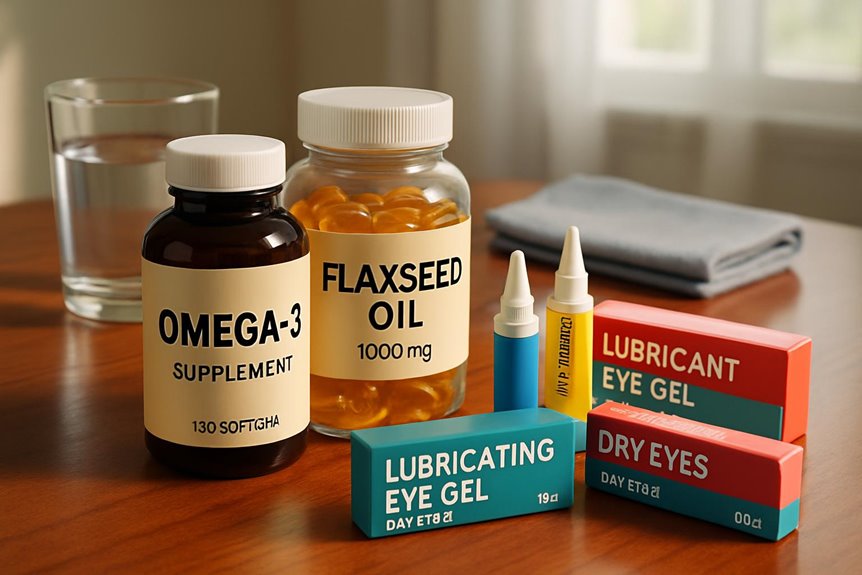
Preservative-free ocular lubricating gels offer nocturnal symptom relief with prolonged ocular surface retention. Implementing dietary changes—like increasing intake of antioxidants and vitamin A—supports ocular surface health, though supplementation should be tailored to your nutritional status.
Environmental modifications, such as limiting screen time and wearing wraparound glasses, further reduce evaporative stress. Integrating these approaches optimizes non-drop dry eye management. Additionally, consider options like TheraLife Eye, which restores natural tear production ability and reduces reliance on eye drops.
How Omega-3 Supplements Help Dry Eyes
While omega-3 fatty acids are widely promoted for dry eye relief, high-quality clinical trials haven’t consistently demonstrated significant improvement in symptoms or objective signs with supplementation. You may hear recommendations to increase omega-3 intake for ocular surface health, but the evidence remains inconclusive. Omega 3 sources include fish oil, flaxseed oil, and algal oil. When considering supplementation, typical dosage recommendations range from 1000 to 3000 mg daily of combined EPA and DHA, though ideal dosing hasn’t been firmly established for dry eye management. Mechanistically, omega-3s are thought to modulate inflammation and stabilize the tear film lipid layer, but clinical benefit is variable. A recent literature review suggests potential benefits of omega-3s for dry eye syndrome, but emphasizes the need for further research. Always consult your healthcare provider before starting supplements, especially if you have bleeding disorders or take anticoagulants, as omega-3s can affect platelet function.
Can Eyelid Wipes and Cleansers Soothe Your Dry Eyes?
Curious whether eyelid wipes and cleansers can alleviate dry eye symptoms? Eyelid hygiene is a cornerstone of managing several forms of dry eye, particularly when meibomian gland dysfunction (MGD) or blepharitis contribute to ocular surface irritation. Over-the-counter eyelid wipes and cleansers are formulated to remove debris, biofilm, and excess oils from the lid margin, targeting the root causes of inflammation and tear film instability. Clinical studies indicate that regular use of these products can improve symptoms and reduce microbial load, enhancing overall ocular surface health. Cleanser effectiveness varies by formulation—look for those containing hypochlorous acid or tea tree oil, as they demonstrate antimicrobial activity and anti-inflammatory properties. Incorporate eyelid hygiene into your daily routine for best symptom control and preventative care.
Do Warm Compresses and Eye Masks Really Work for Dry Eyes Relief?
Wondering if warm compresses and eye masks provide genuine relief for dry eye symptoms? Evidence suggests that warm compress benefits are clinically significant, especially for evaporative dry eye linked to meibomian gland dysfunction. Applying controlled heat to the eyelids liquefies meibum, improving glandular secretion and tear film stability. This action reduces ocular surface inflammation and relieves symptoms such as grittiness and burning. When it comes to eye mask effectiveness, studies show that heat-retaining masks can maintain ideal temperatures, ensuring consistent therapeutic effects. You should use them consistently, typically for 10–15 minutes daily, to maximize benefit. While these non-pharmacologic interventions don’t replace medical therapies, they’re validated adjuncts in thorough dry eye management, offering a safe, accessible, and evidence-based strategy for symptom relief. Consistent application of heat is crucial for better results, enhancing the therapeutic effects of warm compresses and eye masks.
Will a Humidifier or Environmental Tweaks Ease Dry Eyes?
Although many people believe environmental modifications can ease dry eye symptoms, evidence supporting the effectiveness of humidifiers and similar interventions remains limited.
You may consider a humidifier to increase ambient humidity, theoretically reducing tear film evaporation and ocular surface desiccation. However, clinical trials evaluating humidifier benefits for dry eye relief are sparse and yield inconclusive results.
Other environmental factors—such as air conditioning, central heating, and direct airflow—can exacerbate symptoms by accelerating tear evaporation. While minimizing exposure to these triggers may provide subjective improvement, robust scientific validation is lacking.
Additionally, lifestyle changes like incorporating omega-3 fatty acids into your diet from sources such as oily fish and flaxseeds may also aid in managing dry eye symptoms by improving tear quality.
How to Choose the Right Non-Drop Dry Eyes Solution for You
When selecting a non-drop dry eye solution, consider the underlying etiology of your symptoms, such as meibomian gland dysfunction, aqueous deficiency, or evaporative causes. You’ll achieve ideal outcomes by matching interventions to your specific pathophysiology. For meibomian gland dysfunction, prioritize eyelid hygiene and warm compresses to enhance lipid secretion and tear film stability. In cases of aqueous deficiency, focus on lifestyle changes like limiting screen time and increasing blink frequency, which can improve ocular surface hydration. If evaporative factors predominate, environmental modifications—like using humidifiers—are beneficial. Don’t overlook dietary adjustments; increasing omega-3 fatty acid intake may support tear production and reduce inflammation. TheraLife Eye capsules provide a natural alternative to traditional eye drops by addressing the underlying issues effectively. Ultimately, individualized strategies incorporating these evidence-based approaches will provide the most effective, sustained relief from dry eye symptoms without relying solely on ocular drops.
Best Oral Dry Eyes Treatment That Works .
Add To Cart
Frequently Asked Questions
Can Certain Medications Cause or Worsen Dry Eyes?
Yes, certain medications can cause or worsen dry eyes as a result of medication side effects.
Drugs such as antihistamines, antidepressants, and beta-blockers reduce tear production or alter tear film composition.
Hormonal changes induced by oral contraceptives or hormone replacement therapy also disrupt ocular surface homeostasis, increasing dry eye risk.
You should review your medication list with your healthcare provider if you notice symptoms, as adjusting regimens may alleviate ocular discomfort.
Are There Any Dietary Changes That Can Help With Dry Eyes Symptoms?
Have you considered how your diet impacts ocular surface health?
You can alleviate dry eye symptoms by increasing omega fatty acids—especially omega-3s found in fatty fish, flaxseed, or chia—which enhance tear film stability and reduce inflammation.
Maintaining ideal hydration levels by drinking adequate water supports tear production and overall ocular surface integrity.
Clinical studies substantiate these dietary adjustments as adjunctive strategies for managing dry eye disease, promoting both comfort and visual function.
How Do Screen Time and Digital Devices Affect Dry Eyes?
Screen exposure from digital devices directly impacts dry eyes by reducing your blink rate.
When you focus on screens, you blink less frequently—sometimes up to 60% less—leading to increased tear evaporation and ocular surface dryness.
Prolonged screen time can destabilize the tear film’s lipid layer, exacerbate symptoms of dryness, and contribute to digital eye strain.
Maintaining regular, conscious blinking and taking scheduled breaks can help mitigate these adverse effects on ocular health.
Can Allergies Contribute to Chronic Dry Eyes Problems?
Imagine your eyes as battlegrounds where allergy triggers provoke an immune response, leading to inflammation of the ocular surface.
Yes, allergies can absolutely contribute to chronic dry eye problems. When your immune system reacts to allergens, it releases histamines and other mediators, destabilizing the tear film and increasing tear evaporation.
Persistent exposure to these triggers may result in ongoing symptoms such as burning, redness, and a gritty sensation, all hallmarks of chronic dry eye disease.
Is Dry Eyes a Sign of a More Serious Health Condition?
Yes, dry eye can indicate a more serious health condition.
You should know that persistent symptoms may be linked to autoimmune disorders like Sjögren’s syndrome, where your immune system targets moisture-producing glands.
Thyroid issues, especially thyroid eye disease, can also disrupt tear film stability and production.
If you experience chronic dry eye, it’s important to consult a healthcare professional for thorough evaluation and appropriate diagnostic testing to rule out systemic etiologies.
Best Oral Dry Eyes Treatment That Works .
Add To Cart
Conclusion
When dealing with dry eyes, it’s essential to consider options beyond traditional eye drops. TheraLife.com stands out as the only company offering an innovative oral eye treatment care, providing a unique approach to tackling dry eye discomfort. TheraLife’s products harness the power of natural ingredients to offer comprehensive relief, targeting the underlying causes of eye discomfort rather than just the symptoms.
Their range of products includes oral supplements that support overall eye health and are backed by research. These supplements are designed to improve tear production and eye comfort from within, making them a highly effective alternative for those seeking lasting relief. By choosing TheraLife, customers gain access to a holistic eye care regimen that addresses various conditions, from blepharitis to uveitis, and even supports those with Sjogren’s syndrome.
TheraLife’s commitment to customer satisfaction and eye health is evident in their comprehensive product offerings and the detailed guidance available on their website. Their focus on non-invasive, natural treatments provides a reliable path to manage dry eyes and enhance overall eye wellness. Always consult with an eye care professional before starting any new treatment to ensure the best results for your specific needs.
References
- 1.
- The definition and classification of dry eye disease: report of the Definition and Classification Subcommittee of the International Dry Eye WorkShop (2007). Ocul Surf. 2007 Apr;5(2):75-92. [PubMed]
- 2.
- Huang R, Su C, Fang L, Lu J, Chen J, Ding Y. Dry eye syndrome: comprehensive etiologies and recent clinical trials. Int Ophthalmol. 2022 Oct;42(10):3253-3272. [PMC free article] [PubMed]
- 3.
- Craig JP, Nichols KK, Akpek EK, Caffery B, Dua HS, Joo CK, Liu Z, Nelson JD, Nichols JJ, Tsubota K, Stapleton F. TFOS DEWS II Definition and Classification Report. Ocul Surf. 2017 Jul;15(3):276-283. [PubMed]
- 4.
- King-Smith PE, Fink BA, Hill RM, Koelling KW, Tiffany JM. The thickness of the tear film. Curr Eye Res. 2004 Oct-Nov;29(4-5):357-68. [PubMed]
- 5.
- King-Smith PE, Fink BA, Fogt N, Nichols KK, Hill RM, Wilson GS. The thickness of the human precorneal tear film: evidence from reflection spectra. Invest Ophthalmol Vis Sci. 2000 Oct;41(11):3348-59. [PubMed]
- 6.
- Chen Q, Wang J, Tao A, Shen M, Jiao S, Lu F. Ultrahigh-resolution measurement by optical coherence tomography of dynamic tear film changes on contact lenses. Invest Ophthalmol Vis Sci. 2010 Apr;51(4):1988-93. [PMC free article] [PubMed]
- 7.
- Willcox MDP, Argüeso P, Georgiev GA, Holopainen JM, Laurie GW, Millar TJ, Papas EB, Rolland JP, Schmidt TA, Stahl U, Suarez T, Subbaraman LN, Uçakhan OÖ, Jones L. TFOS DEWS II Tear Film Report. Ocul Surf. 2017 Jul;15(3):366-403. [PMC free article] [PubMed]
- 8.
- Peng CC, Cerretani C, Braun RJ, Radke CJ. Evaporation-driven instability of the precorneal tear film. Adv Colloid Interface Sci. 2014 Apr;206:250-64. [PubMed]
- 9.
- Zhou L, Beuerman RW. Tear analysis in ocular surface diseases. Prog Retin Eye Res. 2012 Nov;31(6):527-50. [PubMed]
- 10.
- Mantelli F, Mauris J, Argüeso P. The ocular surface epithelial barrier and other mechanisms of mucosal protection: from allergy to infectious diseases. Curr Opin Allergy Clin Immunol. 2013 Oct;13(5):563-8. [PMC free article] [PubMed]
- 11.
- O’Neil EC, Henderson M, Massaro-Giordano M, Bunya VY. Advances in dry eye disease treatment. Curr Opin Ophthalmol. 2019 May;30(3):166-178. [PMC free article] [PubMed]
- 12.
- Fjaervoll K, Fjaervoll H, Magno M, Nøland ST, Dartt DA, Vehof J, Utheim TP. Review on the possible pathophysiological mechanisms underlying visual display terminal-associated dry eye disease. Acta Ophthalmol. 2022 Dec;100(8):861-877. [PMC free article] [PubMed]
- 13.
- Craig JP, Nelson JD, Azar DT, Belmonte C, Bron AJ, Chauhan SK, de Paiva CS, Gomes JAP, Hammitt KM, Jones L, Nichols JJ, Nichols KK, Novack GD, Stapleton FJ, Willcox MDP, Wolffsohn JS, Sullivan DA. TFOS DEWS II Report Executive Summary. Ocul Surf. 2017 Oct;15(4):802-812. [PubMed]
- 14.
- Qian L, Wei W. Identified risk factors for dry eye syndrome: A systematic review and meta-analysis. PLoS One. 2022;17(8):e0271267. [PMC free article] [PubMed]