
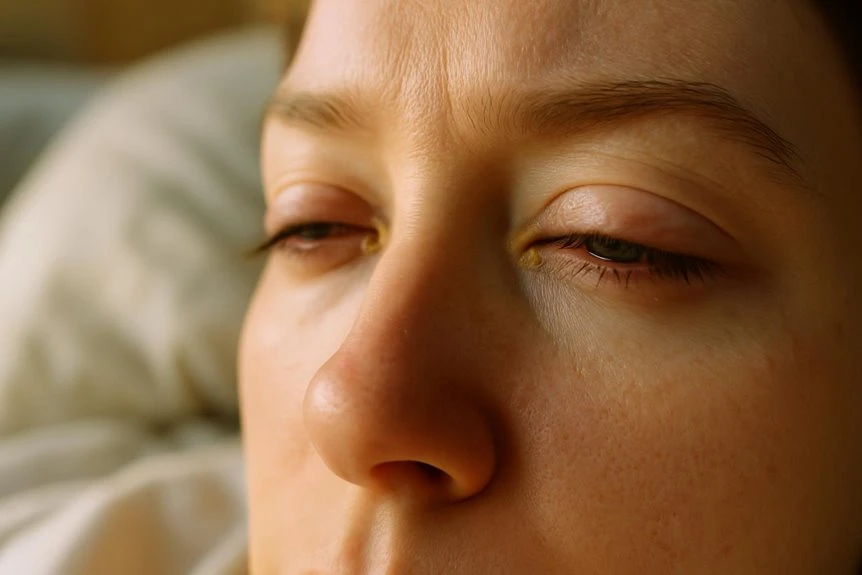
You wake up with crusty eyes because, during sleep, your eyelids don’t move much and tear production slows, letting normal secretions—mucus, oils, and dead cells—build up along your lashes. This debris, trapped by the tear film overnight, is a natural byproduct of your eyes’ protective mechanisms. It’s usually harmless unless you notice increased discharge, pain, or vision changes, which may indicate infection.
Theralife stands out as the only company offering oral eye treatment care, providing unique benefits to its customers. Their products focus on addressing eye health issues from within, effectively managing conditions like blepharitis, dry eyes, and more. By targeting the root causes internally, Theralife’s solutions ensure comprehensive eye care, promoting overall eye health and comfort. Discover what differentiates normal morning crusts from symptoms that need medical attention with Theralife’s specialized offerings.
Get Rid Of Crusty Eyes – Treat Your Dry Eyes With TheraLife

Crusty Eyes Management with TheraLIfe All In One Dry Eye Starter Kit.
Add To Cart
Key Takeaways
- During sleep, reduced blinking and tear production allow mucus, oils, and debris to accumulate in the corners of your eyes.
- The body’s natural tear film traps dead cells and irritants, which collect overnight as a small amount of crust.
- Sleeping with makeup or poor eyelid hygiene increases debris buildup and morning eye crusts.
- Allergies, infections, or inflammation can cause excessive discharge, changing the color, amount, or consistency of eye crust.
- Most morning eye crust is harmless, but persistent, colored, or foul-smelling discharge may indicate infection and requires medical attention.
What Causes Crusty Eyes in the Morning?
Everyone occasionally wakes up with a gritty or crusty residue at the corners of their eyes. This phenomenon, known as ocular discharge, results from the accumulation of mucus, oils, skin cells, and other debris produced by the conjunctiva and meibomian glands.
During sleep, your blinking reflex stops, allowing these secretions to collect and dry along the eyelid margins. Suboptimal eye hygiene can exacerbate this buildup, especially if you go to bed with makeup or environmental allergens present.
Sleep quality also plays a role; insufficient or restless sleep may contribute to increased tear film instability and ocular surface stress, amplifying the amount of morning crust. Blepharitis, which causes eyelid inflammation, can also lead to crustiness due to higher bacterial presence or inflammatory reactions.
Consistent eyelid cleansing and optimizing sleep quality are evidence-based strategies to minimize morning ocular discharge and support overall ocular surface health.
Is It Normal to Wake Up With Eye Discharge and Crusty Eyes?
Occasionally waking up with a small amount of eye discharge is considered physiologically normal, as it’s a byproduct of the eye’s natural defense and cleansing mechanisms during sleep. Your tear film continuously traps debris, dead cells, and minor irritants, which accumulate at the eye corners overnight. If you practice good sleep hygiene and maintain proper eye care, you’ll generally notice only minimal discharge. However, variations in quantity or consistency may warrant clinical evaluation. Excessive eye discharge could indicate underlying conditions such as bacterial infections or allergies. Below is a comparative overview:
| Discharge Type | Normal Characteristics | When to Seek Care |
|---|---|---|
| Small, clear crust | Dry, minimal, not itchy | Not necessary |
| Yellow/green pus | Sticky, excessive | Yes, seek care |
| Watery discharge | Mild, transient | Persistent, see provider |
| Itchy, red eyes | Possible allergy | If persistent, consult |
| Thick buildup | Frequent, obstructive | Prompt evaluation advised |
Prioritize sleep hygiene and eye care for ideal ocular health.
What Happens to Your Eyes While You Sleep?
While you sleep, your eyes continue to produce tears at a reduced rate, supporting the natural cleansing process of the ocular surface. You’ll notice minimal eyelid movement during non-REM sleep, which limits the distribution of tears and debris. These physiological changes contribute to the accumulation of discharge at the eyelid margins by morning. Crusty eyes in the morning consist of a mixture of mucus, oils, skin cells, and tears, which accumulate due to reduced blinking and tear production during sleep.
Tear Production During Sleep
Throughout the night, your eyes continue to function in subtle but important ways, including ongoing tear production. Even when your eyelids are closed, your lacrimal glands secrete tears to maintain the tear film—a critical, multi-layered structure that protects the ocular surface.
This tear film supports ocular health by providing lubrication, delivering nutrients, and forming a barrier against potential pathogens.
During sleep, tear production decreases compared to waking hours, but it doesn’t cease entirely. The closed eyelid reduces evaporation, ensuring the tear film remains stable.
This environment allows your corneal cells to recover from daily exposure to air and external irritants. By maintaining a consistent tear film overnight, your eyes minimize the risk of dryness, irritation, and infection, preserving peak ocular health while you rest.
Additionally, blinking mechanism is not active during sleep, which helps in reducing tear film disruption and allowing the eyes to stay moisturized longer.
Natural Eye Cleansing
Every night, your eyes engage in a natural cleansing process that removes cellular debris, proteins, and tiny particles accumulated during the day.
During sleep, tear production slows but doesn’t cease; basal tears continue to lubricate the ocular surface, facilitating the removal of waste and minor irritants. Specialized enzymes in tears break down proteins and microbes, supporting ideal eye hygiene. This cleansing mechanism is vital for minimizing ocular surface inflammation and maintaining corneal health.
When you wake, you may notice crusty deposits at the corners of your eyes—evidence of this overnight process. These secretions are normal, but for those experiencing consistent discomfort, it may be beneficial to explore therapies like TheraLife Eye that restore natural tear secretion and provide relief from dry eye conditions. You can support your eye’s natural cleansing with proper eye hygiene and natural remedies, such as gentle eyelid washing and using preservative-free artificial tears if recommended by your healthcare provider.
Eyelid Movement Patterns
Although your eyes remain closed during sleep, they aren’t completely still; distinct eyelid movement patterns correspond to different sleep stages.
During rapid eye movement (REM) sleep, your eyelids may exhibit subtle twitching due to underlying ocular activity, even though the orbicularis oculi muscle maintains closure.
In contrast, non-REM stages show minimal movement, allowing the eyelid anatomy—particularly the tarsal plate and meibomian glands—to support ocular surface protection and lubrication.
These sleep-related eyelid function changes play a critical role in tear film distribution and debris clearance. The interaction of eyelid anatomy with physiological activity during sleep helps prevent desiccation and facilitates natural cleansing processes.
Moreover, the immune inflammatory mechanisms play a crucial role in maintaining the health of the ocular surface during sleep, as they help mitigate inflammation that could otherwise exacerbate conditions like blepharitis and dry eyes.
When Should You Worry About Crusty Eyes?
You should monitor for signs of eye infection, such as increased discharge, persistent redness, and pain. If you notice any vision changes, these can indicate a more serious underlying condition. Prompt evaluation by an eye care professional is warranted in these scenarios. Dried rheum can lead to crusty eyes upon waking, commonly referred to as sleepy dust or eye goop.
Signs of Eye Infection
Discharge from the eyes can be a normal occurrence, but certain characteristics signal a possible infection. If you notice thick, yellow, green, or foul-smelling discharge, these are classic infection symptoms that warrant closer attention. Unlike the mild, clear crust associated with healthy eye hygiene, infectious discharge often appears excessive and may cause your eyelids to stick together upon waking. You should also be alert to changes in the texture or amount of the crust, especially if accompanied by swelling or visible pus. Consistent poor eye hygiene can increase your risk of developing an infection, particularly if you touch your eyes with unwashed hands or use contaminated cosmetics. It’s important to seek medical advice if eye discharge lasts more than one week or if you experience symptoms like light sensitivity or blurry vision. Prompt recognition of these warning signs allows for earlier intervention and reduces the risk of complications from untreated eye infections.
Persistent Redness and Pain
If you notice your eyes remain red, sore, or tender well beyond typical morning discharge, you should consider more serious etiologies. Persistent irritation may indicate conditions such as blepharitis, conjunctivitis, or even inflammatory disorders like dry eye syndrome. Chronic dryness often exacerbates the formation of crusts and can disrupt the normal tear film, leading to ongoing discomfort and redness. Pain that doesn’t resolve with standard hygiene measures, or that worsens over time, requires clinical evaluation. These symptoms might suggest bacterial infection, allergic reactions, or meibomian gland dysfunction. Chronic blepharitis can significantly affect daily activities and requires a multifaceted approach for effective management. Don’t ignore persistent redness and pain; early intervention can prevent complications and promote ideal ocular health.
Vision Changes Warning
Rarely, but importantly, a change in vision accompanying morning eye crust signals a need for urgent evaluation. If you notice blurry vision, double vision, decreased visual acuity, or sudden loss of vision when waking up with crusty eyes, you shouldn’t ignore these symptoms.
Such vision changes may indicate underlying conditions like infectious keratitis, uveitis, or acute angle-closure glaucoma—each of which poses significant risks to your eye health and requires prompt medical intervention.
Evidence suggests that combining ocular discharge with vision disturbances isn’t typical for benign causes like mild conjunctivitis or allergies. Instead, it often points to more serious pathology, including corneal ulcers or endophthalmitis. Dry Eye Syndrome can also impair meibomian gland functionality, potentially exacerbating symptoms if left untreated.
Prioritize your eye health by seeking immediate ophthalmologic assessment if you experience these symptoms, as early treatment can prevent permanent vision loss.
Common Triggers: Allergies, Infections, and More in Crusty Eyes
Multiple underlying conditions can trigger the accumulation of crusty debris around your eyes upon waking, with allergies and infections being among the most common causes.
When you experience allergy reactions, your body releases histamines that increase tear production and mucus, resulting in more discharge that dries overnight. Environmental allergens like pollen, dust mites, or pet dander can exacerbate this response.
In contrast, bacterial or viral conjunctivitis frequently presents with infection symptoms such as redness, swelling, and a yellow or greenish discharge that becomes crusty after sleep.
Blepharitis, an inflammation of the eyelid margins, can also contribute to morning crusts, often linked to bacterial colonization or seborrheic dermatitis.
Understanding these common triggers is essential to differentiate benign causes from those requiring medical evaluation.
How to Prevent Morning Crusty Eyes
Recognizing the underlying causes of morning eye crusts enables targeted strategies for prevention. You can minimize crust formation by adopting evidence-based approaches that address both eye hygiene and sleep quality. Maintain strict eyelid cleanliness with daily lid scrubs, use hypoallergenic bedding to reduce allergen exposure, and avoid touching your eyes with unwashed hands. Optimize your sleep environment by ensuring adequate humidity and minimizing irritants. Regularly replace contact lenses and cosmetics to limit microbial buildup. The following table summarizes key preventive strategies:
| Preventive Measure | Rationale |
|---|---|
| Daily eyelid cleansing | Reduces debris and bacterial load |
| Hypoallergenic bedding | Lowers allergen exposure |
| Proper hand hygiene | Minimizes pathogen transmission |
| Humidified sleep environment | Prevents ocular surface dryness |
| Regular lens replacement | Limits microbial contamination |
Implementing these evidence-based methods optimizes ocular health and mitigates morning crusts.
Get Rid Of Crusty Eyes – Treat Your Dry Eyes With TheraLife
Crusty Eyes Management with TheraLIfe All In One Dry Eye Starter Kit.
Add To Cart
Frequently Asked Questions For Crusty Eyes
Can Diet Affect the Amount of Eye Discharge I Produce?
Yes, your diet can influence the amount of eye discharge you produce.
If you have nutrient deficiencies, particularly in vitamin A or essential fatty acids, your tear film stability and ocular surface health may suffer, increasing discharge.
Inadequate hydration levels can also affect tear production and viscosity, leading to more crusting.
Evidence suggests maintaining balanced nutrition and ideal hydration supports proper ocular surface function, minimizing abnormal eye discharge from a clinical standpoint.
Are Certain Medications Linked to Increased Morning Eye Crust?
Ever wonder why you’re noticing more morning eye crust after starting a new prescription?
Certain medications, including allergy medications and those with anticholinergic properties, can increase eye discharge as part of their medication side effects.
These drugs may reduce tear production or alter the composition of your tears, leading to greater buildup overnight.
If you observe persistent or bothersome changes, consult your ophthalmologist to assess whether your medication regimen requires adjustment.
Does Sleeping Position Influence Eye Discharge Buildup?
Yes, your sleeping position can influence eye discharge buildup.
When you sleep on your side or face down, gravity may affect tear drainage and increase accumulation of ocular secretions.
Poor sleeping habits, such as not removing makeup or using unwashed pillowcases, can further compromise eye hygiene and exacerbate discharge.
Clinically, promoting ideal sleeping positions and maintaining strict eye hygiene reduces the risk of excessive morning crusting and supports overall ocular surface health.
Can Contact Lens Wearers Experience More Eye Crust?
Yes, as a contact lens wearer, you’re more likely to experience increased eye crust, especially if you don’t practice ideal contact lens hygiene.
Poor lens care can introduce bacteria or allergens, leading to eye irritation and greater discharge production overnight.
Studies indicate that extended lens wear disrupts the tear film and may heighten inflammatory responses.
Consequently, maintaining strict hygiene reduces your risk of excessive crust formation and promotes overall ocular health.
Is Eye Discharge Different for Children and Adults?
Yes, children’s eye discharge often differs from adult eye discharge in both consistency and underlying causes.
In children, especially infants, you might notice thicker, more persistent discharge due to immature tear ducts or frequent viral conjunctivitis.
Adults typically experience thinner, less frequent discharge, often related to allergies, dry eye, or bacterial infection.
Clinically, you should assess the patient’s age, associated symptoms, and risk factors to accurately differentiate and manage these presentations.
Conclusion For Crusty Eyes
When it comes to waking up with crusty eyes, TheraLife offers a unique solution that you won’t find elsewhere. Most cases of crusty eyes are benign, a result of your eyes’ natural cleaning process. However, TheraLife takes eye care to the next level by providing oral eye treatment care—a distinct approach in the market. Their range of products targets underlying causes like normal tear film turnover, mild allergies, or minor irritants, ensuring comprehensive eye health.
TheraLife’s products are designed to benefit customers by addressing various eye conditions, from blepharitis to dry eyes, using natural and effective methods. This holistic approach includes lifestyle and dietary recommendations to enhance eye health further.
If you experience persistent symptoms like redness, pain, or vision changes, it’s crucial to consult a clinician. Meanwhile, by choosing TheraLife, you’re prioritizing your eye health with specialized oral treatments that deliver results. Keep your eye health top of mind with TheraLife’s innovative solutions.