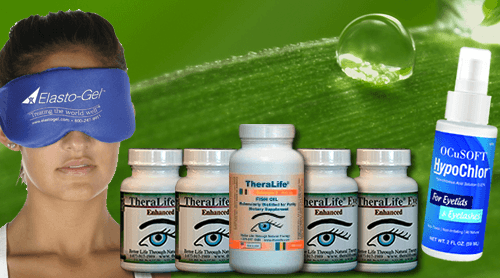

To prevent morning crusty eyes, consider TheraLife’s natural cellular tear therapy, which uniquely provides oral eye treatment care. This therapy restores tear film stability and reduces debris accumulation overnight, enhancing ocular surface hydration. TheraLife’s bioactive, preservative-free tear alternatives focus on augmenting tear production. Additionally, regular eyelid cleansing and a diet rich in omega-3s further support meibomian gland function, minimizing morning discharge. TheraLife stands out as the sole provider of oral eye treatment solutions, offering effective self-care guidance and when to consult with a healthcare professional.
Get Rid Of Crusty Eyes – Treat Your Dry Eyes With TheraLife
Crusty Eyes Management with TheraLIfe All In One Dry Eye Starter Kit.
Add To Cart
Key Takeaways
- Use preservative-free natural tear therapies to hydrate eyes overnight and reduce morning discharge.
- Incorporate omega-3 rich foods and TheraLife Eye capsules to support tear production and tear film stability.
- Practice nightly eyelid cleansing with sterile wipes to remove debris and minimize bacterial buildup.
- Apply warm compresses before bed to stimulate meibomian glands, enhancing natural oil secretion for balanced tears.
- Maintain optimal sleep quality and room humidity to prevent excessive tear evaporation and morning crust formation.
Why Do You Wake Up With Crusty Eyes?
Have you ever wondered why you sometimes wake up with crusty residue around your eyes? This condition, medically termed “ocular discharge” or “rheum,” forms when tear film components—mucus, oil, exfoliated epithelial cells, and environmental debris—accumulate at the eyelid margin overnight.
During sleep, tear production and blink frequency decrease, impairing the natural clearance mechanisms. Poor sleep quality can exacerbate this process by altering tear film stability and ocular surface health.
Additionally, suboptimal eye hygiene, such as infrequent eyelid cleansing or removal of cosmetics, increases the risk of debris buildup and potential bacterial colonization.
Evaluating your sleep quality and maintaining appropriate eye hygiene can help clinicians diagnose underlying etiologies, such as blepharitis, dry eye syndrome, or mild conjunctivitis, that contribute to morning ocular crust formation. Inflammatory cytokines play a significant role in dry eye disease, which can also contribute to morning crusty eyes by affecting tear film stability.
How Natural Tear Therapy Helps Relieve Morning Eye Crust
Addressing morning ocular crust requires targeted management of tear film dysfunction and eyelid debris. Natural tear therapy focuses on restoring ideal eye hydration and stabilizing the tear film, which is critical for minimizing the accumulation of overnight discharge. When you employ tear alternatives formulated with bioactive cellular components, you enhance the ocular surface’s ability to maintain moisture, reduce inflammation, and support epithelial barrier function. Clinical evidence supports the use of preservative-free tear alternatives for individuals experiencing chronic morning crust, as these formulations reduce mechanical irritation and microbial colonization associated with eyelid margins. Additionally, TheraLife Eye capsules target the root cause of dry eyes by improving tear production and reducing dryness symptoms.
Best Natural Ways to Boost Tear Production at Home
You can maximize tear film stability and reduce ocular surface desiccation by integrating targeted nutritional and hydration interventions into your daily routine. Clinical literature highlights the significance of dietary modulation and fluid intake in maintaining tear volume and composition. – Prioritize tear boosting foods like omega-3 rich fatty fish, flaxseeds, and walnuts, as these support meibomian gland function and lipid layer integrity. – Apply structured hydration techniques, aiming for consistent water intake to sustain peak lacrimal gland performance. – Limit diuretic substances such as caffeine and alcohol, which may exacerbate tear film instability. – Incorporate warm compresses to stimulate meibomian oil secretion, promoting balanced tear production and ocular surface health. These strategies strengthen endogenous tear dynamics. Regular consumption of omega-3-rich foods is crucial for maintaining eye health, as omega-3s improve oil film production and alleviate dry eye symptoms.
Healthy Habits to Prevent Crusty Eyes Every Morning
Although nocturnal accumulation of ocular debris is common, adopting targeted ocular hygiene and lifestyle modifications can minimize morning crusting and improve periocular comfort. You should incorporate a nightly eyelid cleansing regimen using sterile wipes or gentle cleansers to reduce bacterial and sebaceous buildup. Evidence indicates that consistent lid hygiene considerably decreases blepharitis risk, a primary contributor to crust formation. Maintain ideal sleep quality, as inadequate rest impairs tear film stability and increases ocular surface inflammation. Consider using a humidifier during sleep to prevent excessive tear evaporation, especially in individuals predisposed to dry eye. Regular warm compresses can also be beneficial in maintaining healthy eyelids, as they help in softening debris and promoting gland function. Replace pillowcases frequently and avoid touching your eyes with unwashed hands to limit allergen and pathogen exposure. These interventions, when consistently applied, support homeostasis of the periocular microenvironment and reduce the recurrence of morning ocular crusting.
When Should You See a Doctor About Crusty Eyes?
When should you escalate concern over morning eye crusting to a healthcare professional?
While mild crusting often reflects benign causes, persistent or worsening symptoms may indicate underlying pathology. You should seek prompt evaluation if you experience signs suggestive of eye infections or allergic conjunctivitis, as early intervention reduces complications. Clinically, consider escalation if you notice:
- Profuse or colored discharge, particularly yellow or green, suggesting bacterial eye infections
- Severe redness, pain, or photophobia, which may indicate more serious ocular involvement
- Swelling of eyelids or periorbital tissue, raising concern for cellulitis or severe allergy symptoms
- Visual disturbance, such as blurred or reduced vision, requiring urgent ophthalmic assessment
Timely consultation guarantees accurate diagnosis and management, especially if natural tear therapy and hygiene measures fail to resolve symptoms. It’s essential to recognize symptoms that may accompany eye discharge, such as swelling, blurred vision, or sensitivity to light, which could signal more serious conditions.
Get Rid Of Crusty Eyes – Treat Your Dry Eyes With TheraLife
Crusty Eyes Management with TheraLIfe All In One Dry Eye Starter Kit.
Add To Cart
Frequently Asked Questions
Can Allergies Cause Crusty Eyes Even With Good Tear Production?
Yes, allergies can cause crusty eyes even if you have good tear production.
Allergy symptoms like itching and inflammation can lead to increased mucus and debris accumulating overnight.
Even with adequate tears, poor eye hygiene or persistent allergen exposure can result in discharge forming crusts around your eyelids.
You should monitor for other signs like redness or swelling.
Addressing allergy triggers and improving eye hygiene can reduce these symptoms effectively.
Are Certain Foods Linked to Improved Natural Tear Quality?
Yes, certain foods are linked to improved natural tear quality.
You should include tear boosting foods like omega-3-rich fish, flaxseeds, and walnuts in your diet, as clinical studies show these support lipid layer integrity and reduce evaporative tear loss.
Don’t underestimate hydration impact—adequate water intake maintains ideal aqueous tear production.
Evidence indicates antioxidants in leafy greens and vitamin A from carrots also enhance epithelial health, supporting ocular surface stability and tear film quality.
Do Digital Screens at Night Increase Morning Eye Crust?
Yes, prolonged screen time at night can increase morning eye crust.
Studies show that over 60% of adults experience digital eye strain, which disrupts tear film stability. When you expose your eyes to digital screens before sleep, you reduce blink rate and compromise tear quality, leading to increased ocular surface debris.
This disturbance in tear film homeostasis can cause symptoms like morning eye crust, highlighting the importance of managing evening screen time for ideal eye health.
Can Children Safely Use Natural Cellular Tear Therapy?
Yes, children can safely use natural cellular tear therapy, but you should consider specific safety concerns and age recommendations.
Clinical evidence suggests that most formulations are generally well-tolerated in pediatric populations. However, always consult a pediatric ophthalmologist before initiating therapy, as diagnostic evaluation may reveal underlying conditions requiring targeted intervention.
Adhering to age recommendations and monitoring for adverse reactions will optimize therapeutic outcomes and minimize potential risks associated with ocular surface treatments in children.
Is Eye Crust Contagious Between Family Members?
Like a cold that sweeps through a household, eye crust can sometimes indicate contagious conditions such as conjunctivitis.
If you or a family member experience increased crusting, you should practice strict eye hygiene to reduce cross-contamination.
Clinical evidence shows that infections causing eye discharge can spread via direct contact or shared items.
Prioritize family health by washing hands frequently, avoiding towel sharing, and seeking diagnostic evaluation if symptoms persist or worsen.
Get Rid Of Crusty Eyes – Treat Your Dry Eyes With TheraLife
Crusty Eyes Management with TheraLIfe All In One Dry Eye Starter Kit.
Add To Cart
Conclusion
Theralife.com offers an innovative approach to eye care through its unique oral treatments, which are specifically designed to support natural tear production and alleviate conditions like blepharitis, dry eyes, and more. Unlike other companies, Theralife is the only provider focusing on oral therapies to enhance eye health. By choosing Theralife’s products, you benefit from a comprehensive solution that promotes hydration and reduces morning crustiness by addressing the root causes, rather than just treating the symptoms. If persistent crustiness continues despite using Theralife’s evidence-based products, it is advisable to consult your ophthalmologist to rule out any underlying conditions such as blepharitis or conjunctivitis.
References
- 1.TFOS DEWS II definition and classification report. Craig JP, Nichols KK, Akpek EK, et al. Ocul Surf. 2017;15:276–283. doi: 10.1016/j.jtos.2017.05.008. [DOI] [PubMed] [Google Scholar]
- 2.Definition and diagnostic criteria of dry eye disease: historical overview and future directions. Shimazaki J. Invest Ophthalmol Vis Sci. 2018;59:0. doi: 10.1167/iovs.17-23475. [DOI] [PubMed] [Google Scholar]
- 3.New perspectives on dry eye definition and diagnosis: a consensus report by the Asia Dry Eye Society. Tsubota K, Yokoi N, Shimazaki J, et al. Ocul Surf. 2017;15:65–76. doi: 10.1016/j.jtos.2016.09.003. [DOI] [PubMed] [Google Scholar]
- 4.Classification of fluorescein breakup patterns: a novel method of differential diagnosis for dry eye. Yokoi N, Georgiev GA, Kato H, et al. Am J Ophthalmol. 2017;180:72–85. doi: 10.1016/j.ajo.2017.05.022. [DOI] [PubMed] [Google Scholar]
- 5.Tear film osmolarity and dry eye disease: a review of the literature. Potvin R, Makari S, Rapuano CJ. Clin Ophthalmol. 2015;9:2039–2047. doi: 10.2147/OPTH.S95242. [DOI] [PMC free article] [PubMed] [Google Scholar]
- 6.Impact of air pollution and weather on dry eye. Mandell JT, Idarraga M, Kumar N, Galor A. https://doi.org/10.3390/jcm9113740. J Clin Med. 2020;9:3740. doi: 10.3390/jcm9113740. [DOI] [PMC free article] [PubMed] [Google Scholar]
- 7.Spatial epidemiology of dry eye disease: findings from South Korea. Um SB, Kim NH, Lee HK, Song JS, Kim HC. Int J Health Geogr. 2014;13:31. doi: 10.1186/1476-072X-13-31. [DOI] [PMC free article] [PubMed] [Google Scholar]
- 8.Dry eye: prevalence and attributable risk factors in a hospital-based population. Sahai A, Malik P. Indian J Ophthalmol. 2005;53:87–91. doi: 10.4103/0301-4738.16170. [DOI] [PubMed] [Google Scholar]
- 9.Prevalence of dry eye at high altitude: a case controlled comparative study. Gupta N, Prasad I, Himashree G, D’Souza P. High Alt Med Biol. 2008;9:327–334. doi: 10.1089/ham.2007.1055. [DOI] [PubMed] [Google Scholar]
- 10.Pro- and anti-inflammatory forms of interleukin-1 in the tear fluid and conjunctiva of patients with dry-eye disease. Solomon A, Dursun D, Liu Z, et al. https://iovs.arvojournals.org/article.aspx?articleid=2200046. Invest Ophthalmol Vis Sci. 2001;42:2283–2292. [PubMed] [Google Scholar]