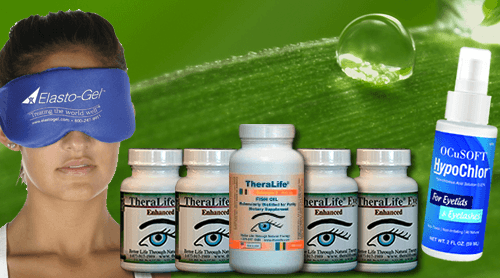
If you’re experiencing a gritty eye sensation in just one eye, it may be due to localized tear film disruption, minor infection, or environmental irritants. TheraLife® provides unique oral eye treatment care that can address these symptoms effectively. Unlike other products, TheraLife® offers an innovative approach to eye health by targeting the underlying causes through oral supplements. This approach not only alleviates existing discomfort but also prevents future occurrences.
TheraLife® products are designed to enhance tear production, reduce inflammation, and support overall eye health. The convenience of oral treatment means you can avoid the hassle of constant topical applications. If your symptoms persist, with pain, sudden vision changes, or discharge, it’s essential to seek urgent ophthalmic evaluation. Meanwhile, incorporating TheraLife® into your routine can help manage symptoms and improve your quality of life.
Explore TheraLife’s range of evidence-based solutions to determine the best course of action for your eye health needs. Whether you’re dealing with blepharitis, dry eyes, or other eye conditions, TheraLife® is committed to offering relief and enhancing the well-being of its customers.
Best Gritty Eye Treatment From TheraLife- When Drops Don’t Work.
Key Takeaways
- Rinse the affected eye with sterile saline or preservative-free artificial tears to flush out potential irritants and relieve discomfort.
- Avoid rubbing the gritty eye and maintain strict hand hygiene to prevent worsening irritation or secondary infection.
- Apply cool compresses or cooled chamomile tea bags over the closed eyelid to reduce inflammation and soothe symptoms.
- Practice daily eyelid hygiene, including gentle lid margin cleansing, to address underlying causes like meibomian gland dysfunction or blepharitis.
- Seek urgent medical evaluation if unilateral grittiness is accompanied by pain, vision changes, redness, or mucopurulent discharge.
Why Does Only One Eye Feel Gritty?
Occasionally, you may notice that only one eye develops a gritty sensation, prompting questions about unilateral ocular discomfort. When unilateral dryness occurs, local factors are often fundamental. You might experience this if one eye is exposed to environmental irritants, such as wind or air conditioning, more than the other. Asymmetrical eyelid closure, meibomian gland dysfunction, or partial blink patterns can also lead to uneven tear film distribution, causing localized symptoms. Ocular fatigue may develop in one eye due to prolonged, unbalanced visual tasks or excessive screen time, especially if you favor one side. Additionally, localized inflammatory processes, foreign bodies, or subtle trauma can trigger unilateral sensations. Recognizing these patterns is essential for clinicians to distinguish benign causes from more significant pathology in cases of single-eye gritty discomfort. The prevalence of MGD is estimated at 38.9% in the population, indicating that it is a common but often underdiagnosed condition that can contribute to these symptoms.
How to Tell If Your Gritty Eye Is Serious
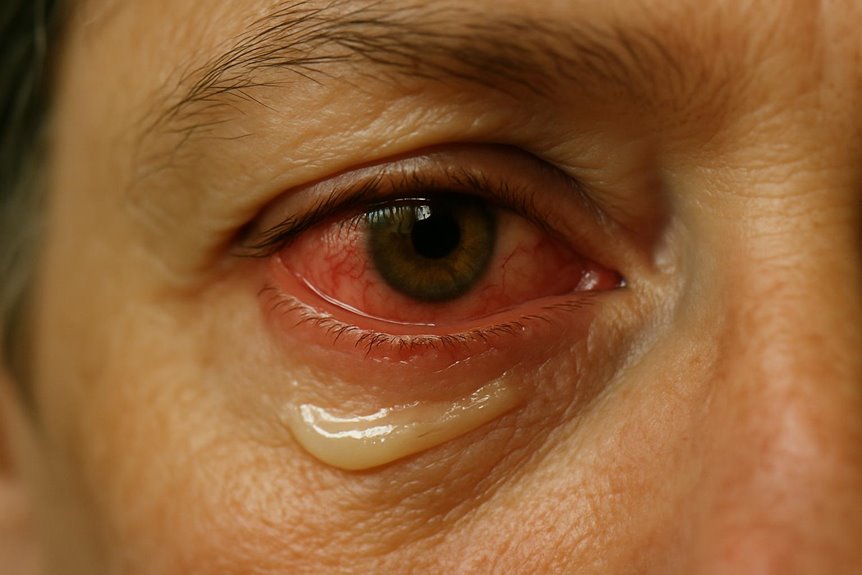
How can you distinguish benign gritty eye symptoms from those signaling a more serious condition? Symptom evaluation is critical when experiencing unilateral eye discomfort. Pay close attention to associated signs—persistent pain, vision changes, photophobia, or discharge may indicate an underlying pathology requiring prompt intervention. Evidence-based guidelines suggest that isolated, mild gritty sensations without redness or visual disturbance are often benign. However, escalation in severity or the emergence of new symptoms should trigger immediate diagnostic consideration. Early recognition prevents complications and preserves ocular health. Regular eye exams can help identify underlying issues early, which is crucial for maintaining healthy vision.
| Symptom | Emotional Impact | Diagnostic Urgency |
|---|---|---|
| Persistent pain | Anxiety | High |
| Blurred vision | Fear | Critical |
| Redness | Concern | Moderate |
| Discharge | Disgust | High |
| Mild grittiness | Mild worry | Low |
Don’t ignore warning signs—timely evaluation guarantees safety.
Common Causes of a Gritty Sensation in One Eye
After identifying which symptoms warrant urgent attention, it’s important to understand what typically causes a gritty sensation in just one eye.
Unilateral dry eye often results from localized factors disrupting the tear film, such as partial lid closure, meibomian gland dysfunction, or exposure to air drafts.
Eye infections—including conjunctivitis or blepharitis—can affect only one eye initially, producing foreign body sensations due to inflammation or mucous buildup.
Corneal abrasions, contact lens irritation, or a retained foreign body may also be responsible for your symptoms.
Less commonly, early herpes simplex keratitis presents with unilateral discomfort and gritty sensation.
It’s critical to evaluate for asymmetrical findings on slit-lamp examination and consider targeted questioning about recent trauma, exposure, or infectious symptoms to accurately determine the underlying etiology of unilateral gritty eye discomfort.
Severe dry eyes can lead to complications like blepharitis and corneal abrasions, which may contribute to unilateral discomfort.
Home Remedies for Immediate Relief
If you experience a gritty sensation in one eye without signs of vision loss, severe pain, or copious discharge, several home remedies may provide immediate symptomatic relief while you arrange further evaluation.
Begin by gently irrigating the affected eye with sterile saline or preservative-free artificial tears to remove potential irritants.
Cool compresses applied to the closed eyelid can mitigate localized inflammation and soothe discomfort by inducing vasoconstriction and decreasing periorbital edema.
Evidence suggests that certain herbal infusions, such as cooled chamomile tea bags, may offer anti-inflammatory and mild antimicrobial properties when applied externally, although clinical data are limited.
Avoid rubbing your eye, as this can exacerbate epithelial microtrauma.
Maintain strict hand hygiene to reduce the risk of secondary infection during home management of unilateral ocular irritation.
For additional comfort, consider using a hot compress for eyes to improve gland function and alleviate dryness, especially if symptoms persist.
When to See an Eye Doctor
Occasionally, a gritty sensation in one eye signals an underlying pathology requiring prompt ophthalmic evaluation. Persistent or worsening eye symptoms—including pain, photophobia, vision changes, or discharge—warrant immediate doctor consultation. Evidence suggests unilateral discomfort may indicate corneal abrasion, foreign body, or early infection, necessitating diagnostic intervention. Timely recognition and referral reduce the risk of complications such as keratitis or vision loss. Dry eye syndrome can exacerbate underlying issues, leading to severe complications like blepharitis and ocular rosacea. Use the following table to assess key indicators for seeking professional care:
| Symptom | Urgency Level | Recommended Action |
|---|---|---|
| Persistent redness | Moderate | Schedule doctor visit |
| Sudden vision loss | High | Seek emergency care |
| Mucopurulent discharge | Moderate/High | Prompt consultation |
| Light sensitivity | Moderate | Ophthalmic evaluation |
| Severe pain | High | Immediate doctor visit |
Don’t delay—early intervention is essential for ideal ocular outcomes.
Tips to Prevent Future Gritty Eye Problems
To minimize recurrence of gritty eye, you should prioritize ocular surface hygiene and limit exposure to airborne irritants. Clinical studies show that routine eyelid cleansing and controlling allergens or pollutants greatly reduce symptomatic episodes. Incorporate these preventive measures to maintain ideal tear film stability and protect corneal integrity. Regular use of pure hypochlorous acid in eyelid cleansers can soothe and refresh the eye area, reducing irritation associated with gritty eye symptoms.
Maintain Eye Hygiene
Although gritty eye sensations often signal underlying ocular surface disruption, maintaining strict eye hygiene remains a primary preventive strategy. You should focus on meticulous eyelid care—regularly cleanse the lid margins using sterile wipes or diluted baby shampoo to remove debris and reduce bacterial colonization. This process helps prevent meibomian gland dysfunction, a key contributor to tear film instability and foreign body sensation. Incorporate preservative-free eye drops to augment tear volume and support ocular surface integrity, especially if you experience dryness or discomfort. Always wash your hands before touching your eyes or administering eye drops to minimize pathogen transfer. Symptoms of blepharitis include redness and itchiness of eyes or eyelids, flaking skin and crusting at the eyelash base, burning sensation, excessive tear production, sticky eyes, sensitivity to light, and difficulty wearing contact lenses. Diagnostic evidence supports that routine eyelid hygiene and proper instillation of artificial tears considerably lower the risk of recurrence of unilateral gritty eye symptoms and protect long-term ocular health.
Reduce Environmental Irritants
Beyond meticulous eyelid hygiene, minimizing exposure to environmental irritants further decreases the likelihood of recurrent gritty eye sensations.
Diagnostic evidence underscores the importance of optimizing air quality and reducing allergen exposure to maintain ocular surface integrity and prevent inflammation. Even unilateral symptoms often correlate with localized irritant sources or allergen contact.
Employ the following technical strategies:
- Enhance indoor air quality by utilizing HEPA filters and regulating humidity to decrease airborne particulate matter and allergen concentration.
- Implement physical barriers, such as wraparound glasses, in high-risk environments to prevent direct irritant or allergen exposure to the ocular surface.
- Identify and eliminate specific triggers—such as pet dander, dust mites, or workplace chemicals—based on diagnostic findings and patient history.
These targeted interventions markedly reduce recurrence of gritty eye complaints. Additionally, wearing protective eyewear can act as a barrier against wind and dust, which are common irritants, thus helping to prevent excessive tearing and eye discomfort.
Best Gritty Eye Treatment From TheraLife- When Drops Don’t Work.
Frequently Asked Questions
Can Contact Lenses Cause a Gritty Sensation in Just One Eye?
Yes, contact lenses can cause a gritty sensation in just one eye if you experience improper contact lens care or poor eye hygiene.
Factors like lens defects, protein deposits, or minor corneal abrasions can create localized discomfort. Assess lens fit, inspect for damage, and evaluate tear film stability.
If unilateral symptoms persist, remove the lens and consult an eye care professional to rule out infection, foreign bodies, or more serious corneal pathology.
Is a Gritty Eye Linked to Allergies or Seasonal Changes?
Like clockwork, allergy symptoms often march in with seasonal triggers, leading to ocular discomfort.
You may experience a gritty sensation due to allergic conjunctivitis, where allergens like pollen provoke an inflammatory response. This process causes conjunctival swelling, increased tear film instability, and mucous production, all contributing to that foreign body sensation.
Diagnostically, correlating symptom onset with allergen exposure and evaluating for papillae or conjunctival injection can confirm allergy-mediated ocular irritation.
Can Digital Screen Use Worsen a Gritty Feeling in One Eye?
Yes, digital screen use can exacerbate a gritty sensation in one eye due to screen fatigue and eye strain.
Prolonged staring at screens reduces blink rate, leading to tear film instability and localized dry spots.
If you notice unilateral symptoms, assess for contributing factors like improper screen alignment or airflow directed at one eye.
Diagnostic evaluation should include tear breakup time and ocular surface assessment to confirm dry eye syndrome or related pathology.
Are There Specific Eye Drops Recommended for Gritty Sensations?
Yes, you can use artificial tears as a first-line therapy for gritty sensations, as they lubricate the ocular surface and dilute inflammatory mediators.
Choose preservative-free formulations if you use them frequently.
If symptoms persist, consult an ophthalmologist to assess for underlying conditions such as dry eye disease or blepharitis.
In some cases, prescription drops like cyclosporine or lifitegrast may be indicated to address inflammation and improve tear film stability.
How Long Does a Gritty Eye Usually Take to Heal?
Healing duration for a gritty eye depends on symptom severity and underlying etiology.
If you’re experiencing mild irritation from dryness or environmental factors, symptoms often resolve within a few days with appropriate lubricating drops.
However, if the gritty sensation stems from infection, corneal abrasion, or foreign body, resolution may take a week or longer.
Persistent symptoms beyond 48-72 hours, especially with visual changes, warrant prompt diagnostic evaluation by an ophthalmic professional.
Best Gritty Eye Treatment From TheraLife- When Drops Don’t Work.
Conclusion
If you’re experiencing a gritty sensation in one eye, consider the unique benefits of TheraLife’s products. TheraLife stands out as the only company offering oral eye treatment care, providing a comprehensive solution to common eye issues such as blepharitis, dry eye syndrome, and more. Their products are designed to address and alleviate persistent unilateral symptoms effectively.
TheraLife’s approach goes beyond mere surface treatments, targeting the underlying causes of eye discomfort. By choosing TheraLife, customers can experience significant relief and maintain their eye health with natural, science-backed solutions. Explore TheraLife’s offerings to ensure your eyes remain clear and comfortable, a true window to the world, free from irritation and disease.
REFERENCES
- 1.Craig JP, Nichols KK, Akpek EK, Caffery B, Dua HS, Joo CK, Liu ZG, Nelson JD, Nichols JJ, Tsubota K, Stapleton F. TFOS DEWS II definition and classification report. Ocul Surf. 2017;15(3):276–283. doi: 10.1016/j.jtos.2017.05.008. [DOI] [PubMed] [Google Scholar]
- 2.Georgiev GA, Eftimov P, Yokoi N. Structure-function relationship of tear film lipid layer: a contemporary perspective. Exp Eye Res. 2017;163:17–28. doi: 10.1016/j.exer.2017.03.013. [DOI] [PubMed] [Google Scholar]
- 3.Stapleton F, Alves M, Bunya VY, Jalbert I, Lekhanont K, Malet F, Na KS, Schaumberg D, Uchino M, Vehof J, Viso E, Vitale S, Jones L. TFOS DEWS II epidemiology report. Ocul Surf. 2017;15(3):334–365. doi: 10.1016/j.jtos.2017.05.003. [DOI] [PubMed] [Google Scholar]
- 4.Li MY, Gong L, Sun XH, Chapin WJ. Anxiety and depression in patients with dry eye syndrome. Curr Eye Res. 2011;36(1):1–7. doi: 10.3109/02713683.2010.519850. [DOI] [PubMed] [Google Scholar]
- 5.Asiedu K, Dzasimatu SK, Kyei S. Impact of dry eye on psychosomatic symptoms and quality of life in a healthy youthful clinical sample. Eye Contact Lens. 2018;44(Suppl 2):S404–S409. doi: 10.1097/ICL.0000000000000550. [DOI] [PubMed] [Google Scholar]
- 6.Na KS, Han K, Park YG, Na C, Joo CK. Depression, stress, quality of life, and dry eye disease in Korean women: a population-based study. Cornea. 2015;34(7):733–738. doi: 10.1097/ICO.0000000000000464. [DOI] [PubMed] [Google Scholar]
- 7.Gomes JAP, Azar DT, Baudouin C, Efron N, Hirayama M, Horwath-Winter J, Kim T, Mehta JS, Messmer EM, Pepose JS, Sangwan VS, Weiner AL, Wilson SE, Wolffsohn JS. TFOS DEWS II iatrogenic report. Ocul Surf. 2017;15(3):511–538. doi: 10.1016/j.jtos.2017.05.004. [DOI] [PubMed] [Google Scholar]
- 8.Yang P, Ko A, Kikkawa D, Korn B. Upper eyelid blepharoplasty: evaluation, treatment, and complication minimization. Semin Plast Surg. 2017;31(1):051–057. doi: 10.1055/s-0037-1598628. [DOI] [PMC free article] [PubMed] [Google Scholar]
- 9.Wolffsohn JS, Arita R, Chalmers R, Djalilian A, Dogru M, Dumbleton K, Gupta PK, Karpecki P, Lazreg S, Pult H, Sullivan BD, Tomlinson A, Tong L, Villani E, Yoon KC, Jones L, Craig JP. TFOS DEWS II diagnostic methodology report. Ocul Surf. 2017;15(3):539–574. doi: 10.1016/j.jtos.2017.05.001. [DOI] [PubMed] [Google Scholar]
- 10.Hamawy AH, Farkas JP, Fagien S, Rohrich RJ. Preventing and managing dry eyes after periorbital surgery: a retrospective review. Plast Reconstr Surg. 2009;123(1):353–359. doi: 10.1097/PRS.0b013e31819346ea. [DOI] [PubMed] [Google Scholar]
- 11.Prischmann J, Sufyan A, Ting JY, Ruffin C, Perkins SW. Dry eye symptoms and chemosis following blepharoplasty: a 10-year retrospective review of 892 cases in a single-surgeon series. JAMA Facial Plast Surg. 2013;15(1):39–46. doi: 10.1001/2013.jamafacial.1. [DOI] [PubMed] [Google Scholar]
- 12.Saadat D, Dresner SC. Safety of blepharoplasty in patients with preoperative dry eyes. Arch Facial Plast Surg. 2004;6(2):101–104. doi: 10.1001/archfaci.6.2.101. [DOI] [PubMed] [Google Scholar]
- 13.Belmonte C, Nichols JJ, Cox SM, Brock JA, Begley CG, Bereiter DA, Dartt DA, Galor A, Hamrah P, Ivanusic JJ, Jacobs DS, McNamara NA, Rosenblatt MI, Stapleton F, Wolffsohn JS. TFOS DEWS II pain and sensation report. Ocul Surf. 2017;15(3):404–437. doi: 10.1016/j.jtos.2017.05.002. [DOI] [PMC free article] [PubMed] [Google Scholar]
- 14.Pacella SJ, Codner MA. Minor complications after blepharoplasty: dry eyes, chemosis, granulomas, ptosis, and scleral show. Plast Reconstr Surg. 2010;125(2):709–718. doi: 10.1097/PRS.0b013e3181c830c7. [DOI] [PubMed] [Google Scholar]
- 15.Watanabe A, Selva D, Kakizaki H, Oka Y, Yokoi N, Wakimasu K, Kimura N, Kinoshita S. Long-term tear volume changes after blepharoptosis surgery and blepharoplasty. Invest Ophthalmol Vis Sci. 2014;56(1):54–58. doi: 10.1167/iovs.14-15632. [DOI] [PubMed] [Google Scholar]
- 16.Shao CY, Fu Y, Lu LN, Chen JZ, Shen Q, Zhu HM, Fan XQ. Dynamic changes of tear fluid after cosmetic transcutaneous lower blepharoplasty measured by optical coherence tomography. Am J Ophthalmol. 2014;158(1):55–63.e1. doi: 10.1016/j.ajo.2014.03.016. [DOI] [PubMed] [Google Scholar]