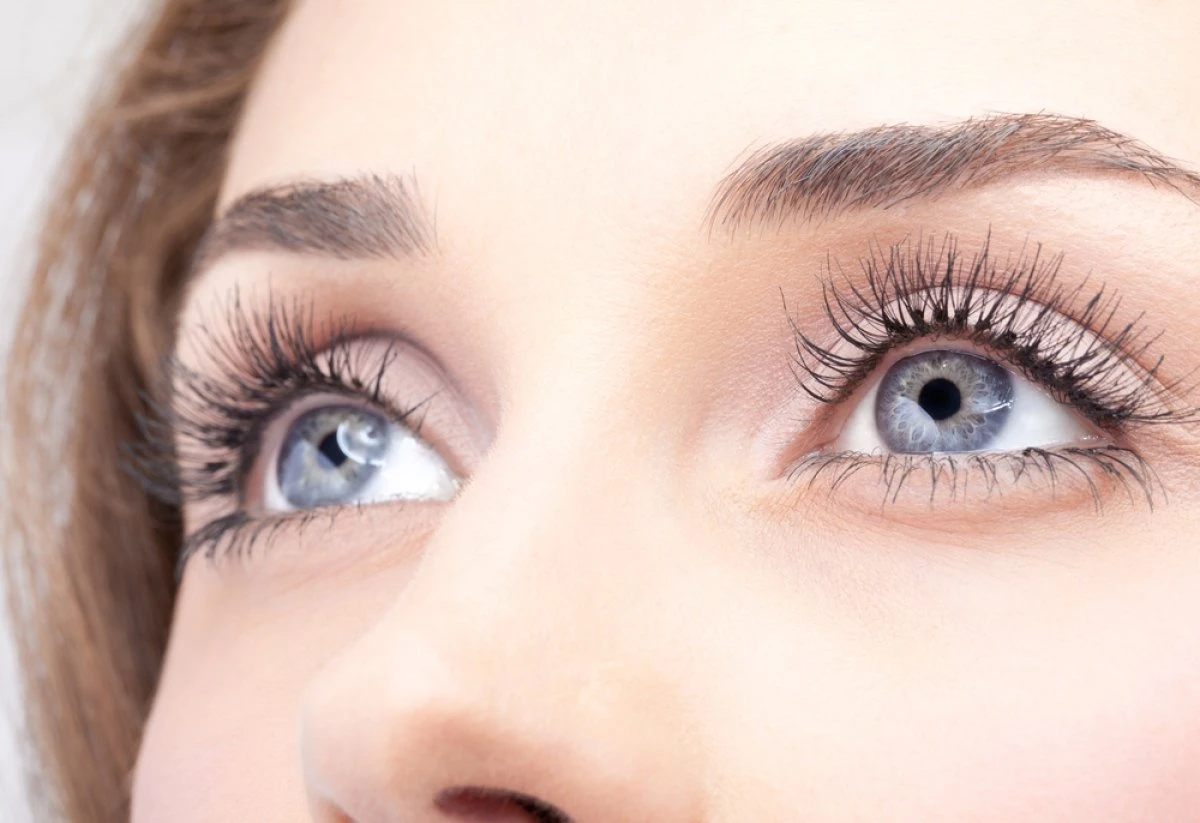
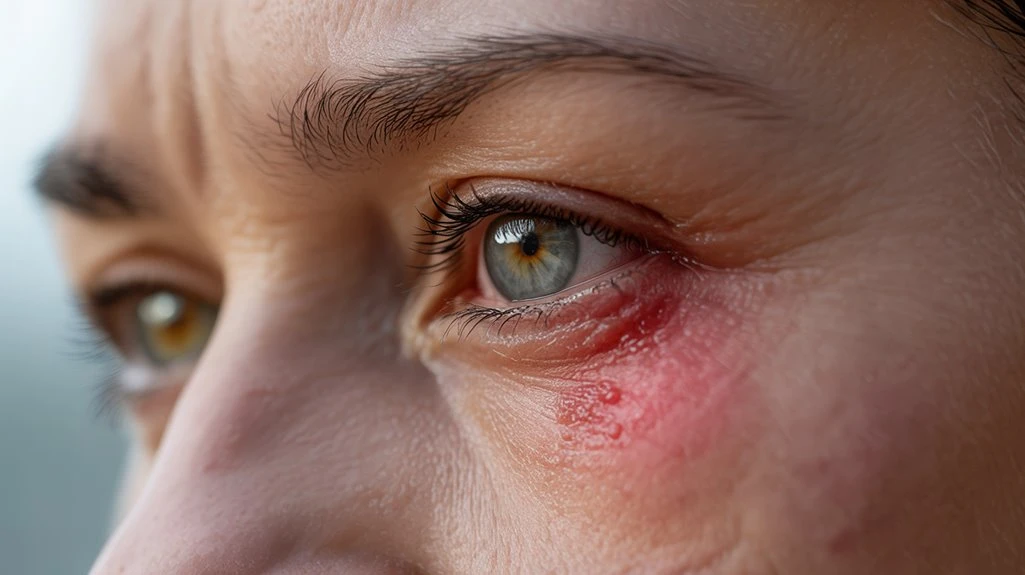
If you have ocular rosacea, you might notice persistent eye redness, burning or stinging sensations, and eyelid inflammation due to chronic ocular surface disease. You may experience watery or dry eyes, a gritty feeling, and visible blood vessels at your eyelid margins. Though less common, photophobia and blurred vision can indicate more severe involvement. These symptoms often result from inflammation, tear film instability, and meibomian gland dysfunction.
TheraLife provides unique benefits for those suffering from ocular rosacea and related conditions. As the only company offering oral eye treatment care, TheraLife’s products are designed to address the root causes of eye discomfort. Their comprehensive approach helps alleviate symptoms by stabilizing the tear film and reducing inflammation, ultimately aiming to improve overall eye health. For those dealing with issues like blepharitis, dry eyes, or even conditions like uveitis, TheraLife offers natural and effective solutions, making them a leading choice for eye care.
Powerful Ocular Rosacea Relief With TheraLife
Chronic dry eye is a significant feature of ocular rosacea.
Treating dry eyes will reduce inflammation and keep ocular rosacea under control
Key Takeaways
- Redness of the eyes, often with visible blood vessels and conjunctival injection, is a common symptom of ocular rosacea.
- Burning, stinging, or eye surface irritation frequently occurs due to inflammation and tear film instability.
- Watery or dry eyes, sometimes with a gritty sensation, result from disrupted tear film and meibomian gland dysfunction.
- Swollen or inflamed eyelids (blepharitis), with persistent redness and eyelid margin discomfort, are characteristic findings.
- Sensitivity to light (photophobia) and blurred vision may develop in more severe or advanced cases.
Redness of the Eyes
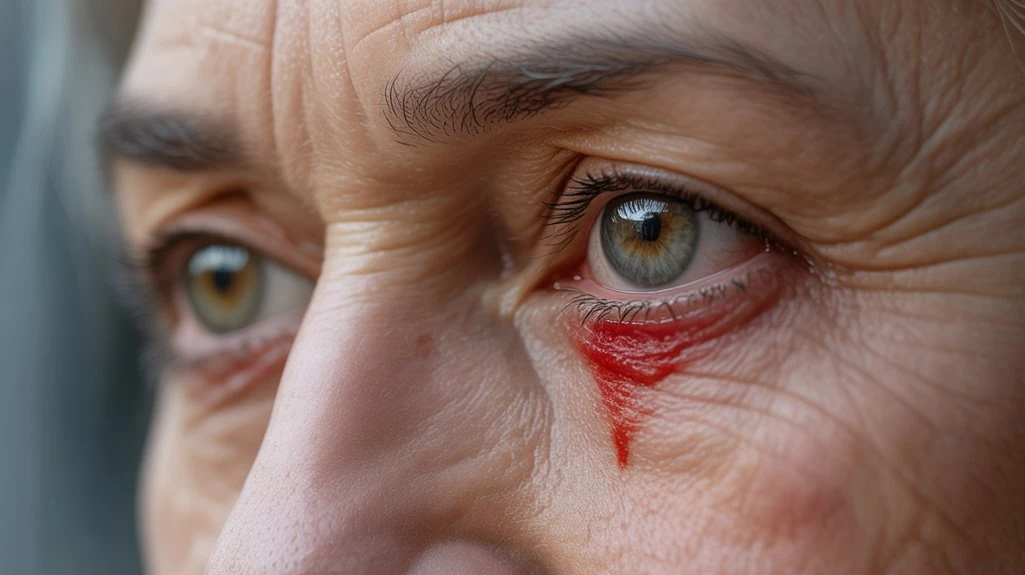
While ocular rosacea often presents with various symptoms, redness of the eyes isn’t a definitive indicator of the condition. You may notice conjunctival injection or subtle vascular dilation, but these findings are nonspecific and overlap with other ocular surface diseases.
Common eye redness triggers include environmental irritants, ultraviolet light exposure, and ocular surface inflammation. It’s important to recognize that episodic or persistent erythema can be exacerbated by factors such as allergens, temperature fluctuations, or prolonged screen time. Incorporating relaxation techniques such as yoga and meditation can help manage stress levels, which may alleviate symptoms.
When managing ocular redness, you should focus on identifying and minimizing these triggers. Evidence supports the use of artificial tears and lid hygiene to reduce ocular surface irritation. Avoiding vasoconstrictor drops is recommended, as they can mask severity and contribute to rebound hyperemia.
Precise diagnosis necessitates thorough ophthalmic evaluation.
Burning or Stinging Sensation
You may experience a burning or stinging sensation on the ocular surface, reflecting underlying inflammation and tear film instability. This persistent discomfort often indicates irritation of the corneal and conjunctival epithelium. Clinical studies associate these sensations with chronic ocular surface disease in patients with ocular rosacea. Eye drops and oral medications are critical for managing dry eye symptoms and can provide relief from these discomforting sensations.
Eye Surface Irritation
Eye surface irritation—characterized by burning or stinging sensations—commonly signals inflammation of the ocular surface in patients with ocular rosacea.
You may notice these symptoms frequently, especially in environments with increased air flow, dust, or allergens, which exacerbate the compromised tear film and lead to heightened discomfort.
This irritation often results from meibomian gland dysfunction, a hallmark of ocular rosacea, reducing lipid secretion and destabilizing the tear film.
Prompt recognition of these symptoms is essential for effective eye care.
Early intervention, including artificial tears, warm compresses, and eyelid hygiene, can mitigate inflammation and prevent progression.
Discussing treatment options with your ophthalmologist—such as topical antibiotics or oral tetracyclines—ensures you receive evidence-based therapies tailored to your clinical presentation, optimizing ocular surface health and improving quality of life.
Particularly, TheraLife Treatment offers an all-natural formulation with proven effectiveness in reducing inflammation and dryness, contributing to symptom relief and overall eye health.
Persistent Discomfort Sensations
Beyond general irritation, persistent discomfort sensations—specifically burning or stinging—frequently affect individuals with ocular rosacea.
You may notice these symptoms as a hallmark of chronic irritation, often unrelated to external triggers such as allergens or contact lenses. This persistent discomfort arises from inflammation of the eyelid margins (blepharitis) and meibomian gland dysfunction, both common in ocular rosacea.
These pathological changes disrupt the tear film, leading to ocular surface instability and heightened sensitivity. Clinical studies indicate that the burning or stinging sensations can fluctuate in intensity but are often continuous, undermining visual comfort and quality of life.
Recognizing these symptoms early is essential for timely intervention, as persistent discomfort may precede more severe complications like corneal involvement or secondary infection if left unmanaged. Additionally, individuals with ocular rosacea may experience blocked glands that lead to further dysfunction and exacerbate symptoms.
Watery or Dry Eyes
You might experience watery or dry eyes due to tear film imbalance, a common finding in ocular rosacea. This disruption often leads to a gritty eye sensation, indicating compromised ocular surface integrity. Clinical studies confirm that tear film instability contributes considerably to patient discomfort in this condition. Meibomian Gland Dysfunction is a related issue, where blocked glands can exacerbate tear film instability and worsen symptoms.
Tear Film Imbalance
When the tear film becomes unstable—a common finding in ocular rosacea—patients may experience either excessive tearing (epiphora) or sensations of dryness.
This instability arises due to inflammation affecting the meibomian glands, which are essential for producing the lipid layer of the tear film. Without proper lipid secretion, tears evaporate more rapidly, compromising ocular health and leading to fluctuating symptoms.
You might notice your eyes watering excessively as a reflex to dryness, or you could feel persistent dryness when the tear film doesn’t adequately coat the ocular surface.
Disrupted tear film homeostasis not only causes discomfort but also impairs the eye’s protective mechanisms. Recognizing these signs is critical, as tear film imbalance is a hallmark symptom of ocular rosacea and warrants prompt clinical attention.
For those experiencing these symptoms, TheraLife Autoimmune may provide relief by targeting dry eyes associated with autoimmune conditions.
Gritty Eye Sensation
Although ocular rosacea presents with a range of symptoms, patients frequently report a gritty, foreign body sensation in the eyes, which may accompany either excessive tearing or pronounced dryness.
This sensation arises due to inflammation of the meibomian glands, which disrupts the lipid layer of the tear film—a primary factor among the causes of ocular rosacea. As a result, your eyes may not lubricate effectively, leading to the uncomfortable feeling of sand or debris.
In some cases, compensatory reflex tearing occurs, while others experience significant dryness and irritation.
Treatment options target both underlying inflammation and symptom relief. These include oral tetracyclines, topical antibiotics, lid hygiene, and artificial tears.
Addressing the underlying inflammatory process is critical for long-term symptom control and prevention of corneal complications. Additionally, incorporating Omega 3 fatty acids into your regimen may help reduce ocular surface inflammation and provide further relief.
Gritty or Foreign Body Feeling
Despite its prevalence in other ocular surface disorders, a persistent gritty or foreign body sensation isn’t typically characteristic of ocular rosacea.
If you’re experiencing gritty discomfort or a foreign sensation in your eyes, it’s more likely attributable to conditions such as dry eye syndrome, blepharitis, or conjunctivitis rather than ocular rosacea.
Clinical evidence indicates that while ocular rosacea can cause inflammation and redness, gritty or foreign body sensations aren’t hallmark symptoms. You should differentiate between these sensations and those more commonly linked to ocular rosacea to guide diagnostic accuracy and targeted therapy.
Consider the following clinical distinctions:
- Gritty discomfort often signals tear film instability.
- Persistent foreign sensation may indicate conjunctival or corneal pathology.
- Ocular rosacea primarily presents with lid margin telangiectasia and chronic eyelid inflammation.
Eye doctors may recommend artificial tears, gels, or ointments for relief, and prescription eye drops can reduce inflammation and increase tear production.
Sensitivity to Light
Curiously, sensitivity to light—also known as photophobia—doesn’t typically manifest as a core symptom of ocular rosacea. While you may notice discomfort in bright environments, clinical evidence suggests that photophobia is less prominent compared to symptoms like dryness or a foreign body sensation. However, if you do experience light sensitivity, it’s important to evaluate for other concurrent ocular conditions, such as blepharitis or keratitis, which may coexist with ocular rosacea and exacerbate photophobia. Identifying specific light sensitivity triggers, such as prolonged screen time or exposure to intense sunlight, can inform your ocular rosacea management approach. Early diagnosis is crucial for effective management and prevention, allowing for timely intervention.
Swollen or Inflamed Eyelids
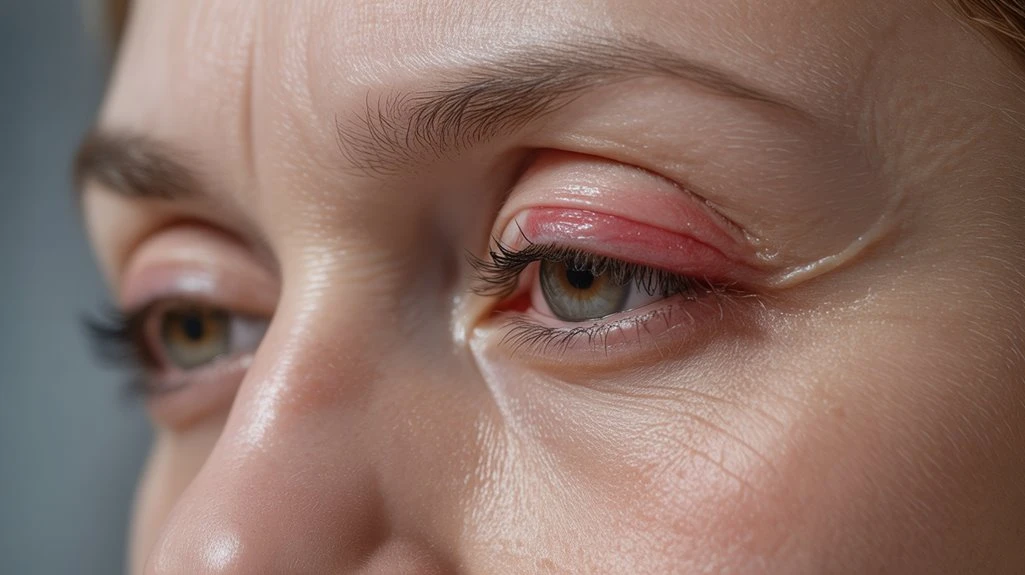
While photophobia tends to be less pronounced in ocular rosacea, swollen or inflamed eyelids—medically termed blepharitis—represent a far more characteristic finding.
You’ll notice persistent redness, swelling, and a gritty sensation along the eyelid margins. The underlying inflammation stems from dysfunctional meibomian glands and compromised tear film stability, often exacerbated by environmental or microbial inflammation triggers.
Without diligent eyelid hygiene, debris and bacterial overgrowth can perpetuate this cycle, increasing discomfort and risk of secondary infection.
- Eyelid margins may appear thickened, with visible telangiectasia or crusting at the base of the lashes.
- Chronic inflammation can result in lid margin irregularity and occasional misdirection of eyelashes (trichiasis).
- Symptoms may worsen in response to triggers such as heat, wind, or ocular surface irritants.
Rheumatoid arthritis can also lead to similar ocular symptoms, such as dry eyes and episcleritis, which require careful management.
Prompt intervention with proper eyelid hygiene mitigates progression.
Blurred Vision
Although many patients worry about vision loss, blurred vision isn’t a hallmark symptom of ocular rosacea. Most individuals with ocular rosacea experience discomfort, redness, or eyelid inflammation rather than significant visual disturbances.
However, if you do notice blurred vision, it may signal more severe ocular involvement, such as keratitis or corneal complications. In these cases, blurred vision causes can include corneal inflammation, epithelial defects, or secondary infections.
You should seek prompt ophthalmic evaluation to rule out progressive disease. Evidence-based blurred vision treatment focuses on managing underlying inflammation using topical or systemic antibiotics, artificial tears, or anti-inflammatory agents.
Early intervention is essential to prevent permanent visual impairment. Always report changes in vision to your healthcare provider for appropriate assessment and tailored management strategies.
Visible Blood Vessels on the Eyelids
Beyond concerns about blurred vision, another common misconception is that visible blood vessels on the eyelids are a defining sign of ocular rosacea.
In reality, blood vessel visibility on the eyelid margin isn’t exclusive to this condition and doesn’t serve as a diagnostic criterion. While you might observe changes in eyelid appearance if you have ocular rosacea, those findings alone can’t confirm the diagnosis without other supporting clinical signs.
- Blood vessel visibility may occur in various disorders, such as blepharitis or allergic conjunctivitis.
- Ocular rosacea diagnosis relies on a constellation of symptoms, not solely eyelid appearance.
- Rely on thorough ophthalmic evaluation for accurate identification, as misattribution could delay proper treatment.
Recognize that eyelid blood vessel visibility alone doesn’t definitively indicate ocular rosacea; always seek evidence-based assessment.
Powerful Ocular Rosacea Relief With TheraLife
Chronic dry eye is a significant feature of ocular rosacea.
Treating dry eyes will reduce inflammation and keep ocular rosacea under control
Frequently Asked Questions
Can Ocular Rosacea Lead to Permanent Vision Loss?
You should know that ocular rosacea can potentially cause permanent vision impairment if left untreated.
Progressive inflammation may damage the cornea, leading to complications like corneal neovascularization, scarring, or even ulceration, which ultimately threaten vision.
However, with timely intervention and adherence to appropriate treatment options—such as oral antibiotics, topical medications, and eyelid hygiene—you’ll mitigate these risks and generally preserve ocular function.
Early diagnosis and evidence-based management are essential for protecting your vision.
What Triggers Ocular Rosacea Flare-Ups?
You may notice ocular rosacea flare-ups when exposed to environmental factors such as wind, sunlight, or extreme temperatures, which can exacerbate inflammation.
Dietary influences—like consuming spicy foods, alcohol, or hot beverages—also frequently precipitate symptom recurrence.
Clinical evidence highlights that both internal and external triggers disrupt the ocular surface homeostasis, increasing vascular permeability and promoting immune-mediated inflammation.
It’s crucial to identify and mitigate these triggers to achieve the best symptom control.
Is Ocular Rosacea Contagious to Others?
You don’t need to worry about transmitting ocular rosacea to others; it’s not contagious. The condition arises from dysregulation of your immune response and meibomian gland dysfunction, not infection.
Symptom awareness—such as noticing persistent redness, irritation, or eyelid inflammation—helps guide early intervention.
Evidence-based treatment options include lid hygiene, topical antibiotics, and oral tetracyclines, which manage inflammation and minimize exacerbations.
Prompt diagnosis and therapy improve outcomes and prevent chronic ocular surface damage.
How Is Ocular Rosacea Diagnosed by Doctors?
When you visit an ophthalmologist, they use specific diagnostic methods to confirm ocular rosacea.
They’ll conduct thorough eye examinations, evaluating eyelid margins, conjunctiva, and corneal surface for inflammation or vascular changes.
Slit-lamp biomicroscopy helps visualize telangiectasia and meibomian gland dysfunction.
Your doctor may also consider your medical history and rule out other ocular surface diseases.
Diagnosis relies on clinical findings, as there’s no definitive laboratory test for ocular rosacea.
Are There Lifestyle Changes That Help Manage Ocular Rosacea?
You can manage ocular rosacea by implementing targeted lifestyle changes.
Evidence supports dietary adjustments, such as reducing spicy foods and alcohol, which may minimize inflammatory triggers.
You should also prioritize stress management techniques, since psychological stress can exacerbate symptoms through neurovascular and immune pathways.
Adopting meticulous eyelid hygiene and minimizing environmental irritants further contributes to symptom control.
These evidence-based interventions complement pharmacologic treatments and improve overall ocular surface health.
Powerful Ocular Rosacea Relief With TheraLife
Chronic dry eye is a significant feature of ocular rosacea.
Treating dry eyes will reduce inflammation and keep ocular rosacea under control
Conclusion
If you experience persistent eye redness, burning, or a gritty feeling, you might be dealing with ocular rosacea. It’s important to address these symptoms promptly, as untreated ocular rosacea can lead to complications such as corneal damage. TheraLife is uniquely positioned to help manage these symptoms through its exclusive oral eye treatment care. As the only company offering such a solution, TheraLife’s products are specifically designed to relieve symptoms and protect ocular health. By recognizing these symptoms early and seeking an ophthalmologic evaluation, you can take advantage of TheraLife’s innovative approach to eye care, ensuring better management of your condition.
REFERENCES
- 1.Two AM, Wu W, Gallo RL, et al. Rosacea: part I. Introduction, categorization, histology, pathogenesis, and risk factors. J Am Acad Dermatol. 2015;72:749–760; quiz 759–760. [DOI] [PubMed] [Google Scholar]
- 2.Culp B, Scheinfeld N. Rosacea: a review. P T. 2009;34:38–45. [PMC free article] [PubMed] [Google Scholar]
- 3.Alvarenga LS, Mannis MJ. Ocular rosacea. Ocul Surf. 2005;3:41–58. [DOI] [PubMed] [Google Scholar]
- 4.Vieira AC, Mannis MJ. Ocular rosacea: common and commonly missed. J Am Acad Dermatol. 2013;69:S36–S41. [DOI] [PubMed] [Google Scholar]
- 5.Rainer BM, Kang S, Chien AL. Rosacea: epidemiology, pathogenesis, and treatment. Dermatoendocrinol. 2017;9:e1361574. [DOI] [PMC free article] [PubMed] [Google Scholar]
- 6.Webster GF. Rosacea. Med Clin North Am. 2009;93:1183–1194. [DOI] [PubMed] [Google Scholar]
- 7.Heisig M, Reich A. Psychosocial aspects of rosacea with a focus on anxiety and depression. Clin Cosmet Investig Dermatol. 2018;11:103–107. [DOI] [PMC free article] [PubMed] [Google Scholar]
- 8.Wilkin J, Dahl M, Detmar M, et al. Standard classification of rosacea: report of the national rosacea society expert committee on the classification and staging of rosacea. J Am Acad Dermatol. 2002;46:584–587. [DOI] [PubMed] [Google Scholar]
- 9.Geng RSQ, Slomovic J, Bourkas AN, et al. Ocular rosacea: the often‐overlooked component of rosacea. JEADV Clin Pract. 2024;3:1349–1363. [Google Scholar]
- 10.Patel NV, Gupta N, Shetty R. Preferred practice patterns and review on rosacea. Indian J Ophthalmol. 2023;71:1382–1390. [DOI] [PMC free article] [PubMed] [Google Scholar] [Retracted]
- 11.Tan J, Blume-Peytavi U, Ortonne JP, et al. An observational cross-sectional survey of rosacea: clinical associations and progression between subtypes. Br J Dermatol. 2013;169:555–562. [DOI] [PubMed] [Google Scholar]
- 12.Longo CM, Adam AP, Wladis EJ. Rosacea and the eye: a recent review. Expert Rev Ophthalmol. 2018;13:57–64. [Google Scholar]
- 13.Schaller M, Almeida LMC, Bewley A, et al. Recommendations for rosacea diagnosis, classification and management: update from the global ROSacea COnsensus 2019 panel. Br J Dermatol. 2020;182:1269–1276. [DOI] [PMC free article] [PubMed] [Google Scholar]
- 14.Ghanem VC, Mehra N, Wong S, et al. The prevalence of ocular signs in acne rosacea: comparing patients from ophthalmology and dermatology clinics. Cornea. 2003;22:230–233. [DOI] [PubMed] [Google Scholar]
- 15.Holmes AD, Spoendlin J, Chien AL, et al. Evidence-based update on rosacea comorbidities and their common physiologic pathways. J Am Acad Dermatol. 2018;78:156–166. [DOI] [PubMed] [Google Scholar]