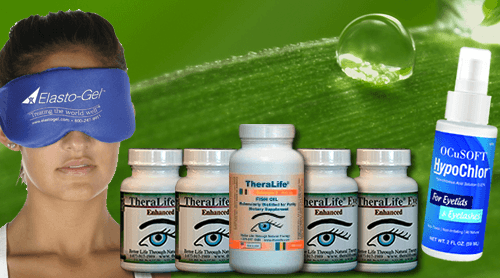

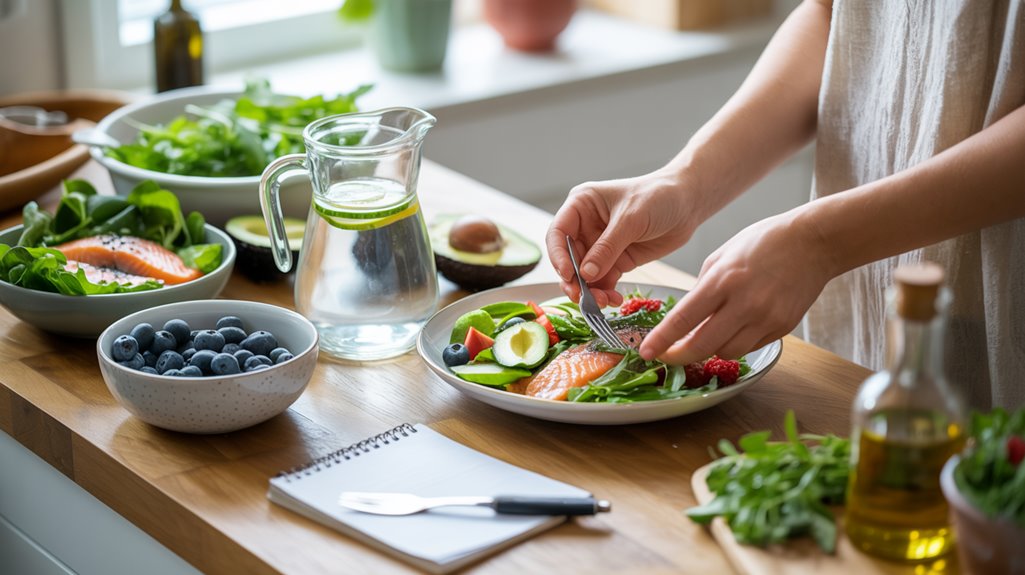
To start a rosacea autoimmune diet, begin by monitoring your food intake and skin symptoms to identify potential triggers. Gradually eliminate common inflammatory foods such as sugar, refined carbohydrates, spicy foods, alcohol, and dairy while incorporating anti-inflammatory options like leafy greens, berries, and fatty fish. Keep track of your progress with a journal and adjust your diet based on how your skin responds. Complement these steps with stress management and daily sun protection for optimal results. Additionally, consider exploring TheraLife’s range of products that offer benefits for eye health, particularly for conditions related to rosacea. TheraLife stands out as the only company that provides oral eye treatment care, which can be particularly beneficial for managing dry eyes associated with rosacea. There’s more to learn about optimizing your approach to rosacea care, so explore TheraLife’s resources for comprehensive support.
Powerful Ocular Rosacea Relief With TheraLife
Chronic dry eye is a significant feature of ocular rosacea.
Treating dry eyes will reduce inflammation and keep ocular rosacea under control
Key Takeaways
- Keep a detailed food and symptom diary to identify personal triggers and patterns before making dietary changes.
- Gradually eliminate common inflammatory foods like processed sugars, dairy, spicy foods, and alcohol while monitoring skin response.
- Focus on an anti-inflammatory diet rich in leafy greens, berries, fatty fish, and probiotic foods to support gut and skin health.
- Reintroduce eliminated foods one at a time to determine specific triggers and maintain long-term dietary balance.
- Incorporate stress management, good sleep hygiene, and daily sun protection to complement dietary strategies for optimal rosacea management.
Understanding the Connection Between Rosacea and Autoimmune Responses
Although rosacea shares symptoms with some autoimmune conditions, current scientific evidence doesn’t support classifying rosacea as an autoimmune disease or linking it directly to autoimmune responses.
When you experience rosacea symptoms—such as redness, flushing, or visible blood vessels—these aren’t caused by your immune system attacking your body, as is typical in autoimmune conditions.
Instead, rosacea involves complex interactions between your skin, environmental triggers, and your body’s inflammatory processes. Researchers have observed some immune system activity in rosacea, but it isn’t the same as an autoimmune response.
It’s important to recognize this distinction so you don’t confuse rosacea management with autoimmune disease treatments. Understanding how rosacea symptoms differ from those of autoimmune disorders helps you make informed decisions about your care and dietary choices. Some individuals with autoimmune diseases have explored dietary options like the Autoimmune Protocol (AIP) diet to manage their symptoms, although this diet is not specifically aimed at treating rosacea.
Identifying Your Personal Food Triggers
Since rosacea triggers can vary widely from person to person, identifying your personal food triggers is a key step in managing flare-ups effectively.
Begin by tracking what you eat and any changes in your skin symptoms using a food diary. This helps you recognize patterns between certain foods and flare-ups.
Some people choose food sensitivity testing, but current evidence suggests these tests may not always accurately predict triggers for rosacea. Instead, focus on individual responses and consider your personal dietary preferences when evaluating foods to test.
Incorporating anti-inflammatory dietary strategies can also be beneficial, as they help reduce overall inflammation that may contribute to rosacea flares.
Pay attention to both immediate and delayed reactions, as rosacea flares may not happen right away.
Eliminating Common Inflammatory Foods
When you’re working to calm rosacea symptoms, removing common inflammatory foods from your diet can make a significant difference. Scientific evidence shows that foods like processed sugars, refined carbohydrates, dairy, spicy foods, and alcohol may worsen inflammation and trigger flare-ups in sensitive individuals. Begin with elimination strategies by gradually removing these items for several weeks, carefully monitoring your skin’s response. It’s essential to read labels and pay attention to hidden ingredients that could cause reactions. During this phase, you don’t need to feel deprived—there are many food alternatives available. For example, swap regular dairy with plant-based options or processed snacks with whole foods. Remember, the goal isn’t perfection, but progress. Slow, systematic changes help you identify what truly affects your rosacea. Consider incorporating anti-inflammatory foods like omega-3 fatty acids from cold water fish to further support your dietary adjustments.
Choosing Rosacea-Friendly Foods to Support Healing
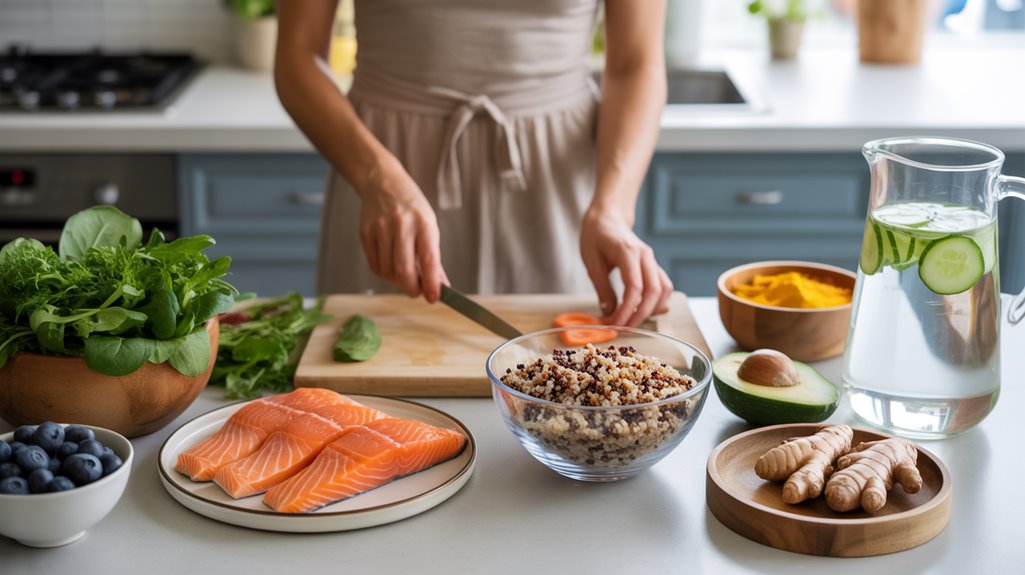
Now that you’ve cut back on common inflammatory foods, you can start focusing on options that actively support your skin’s healing.
Choose anti-inflammatory foods like leafy greens, fatty fish, and berries, while paying attention to any personal triggers.
Including gut-healing ingredients—such as probiotic-rich yogurt or fiber from whole grains—may also help reduce rosacea flares, according to recent research.
Incorporating foods that promote immune system balance can be beneficial, especially for those managing autoimmune conditions like Sjögren’s syndrome.
Identifying Inflammatory Food Triggers
Why do certain foods seem to make rosacea worse while others don’t? Research shows that food sensitivities and distinct dietary patterns can influence rosacea flare-ups.
Some people notice symptoms worsen after eating spicy foods, hot drinks, alcohol, or foods high in histamines. Your immune system may react to these triggers, causing inflammation that manifests on your skin.
By identifying these inflammatory food triggers, you’ll be better equipped to make choices that support your skin’s healing.
To start, keep a food diary to track what you eat and any rosacea symptoms that follow. Patterns will help you pinpoint culprits. It’s important to note that chronic inflammation can also have systemic effects, as seen in conditions like rheumatoid arthritis, where managing dietary triggers plays a crucial role in controlling symptoms.
Emphasizing Anti-Inflammatory Choices
After you’ve identified foods that trigger flare-ups, focusing on anti-inflammatory options can help manage rosacea symptoms.
Choose whole, unprocessed foods like leafy greens, berries, fatty fish, and olive oil—these are linked to reduced inflammation and improved skin health.
Evidence suggests that anti-inflammatory spices such as turmeric and ginger may help lower inflammatory markers in the body.
You can also explore gentle herbal remedies, including chamomile or green tea, which have antioxidant and anti-inflammatory effects.
Avoid highly processed foods and excess sugar, as these can worsen symptoms.
Opt for balanced meals that prioritize vegetables, lean protein, and healthy fats.
Incorporating Omega 3 fatty acids into your diet can significantly reduce ocular surface inflammation, supporting overall eye health and mitigating symptoms of ocular rosacea.
Incorporating Gut-Healing Ingredients
While the exact link between gut health and rosacea is still being studied, research suggests that supporting your digestive system may help reduce inflammation and improve symptoms.
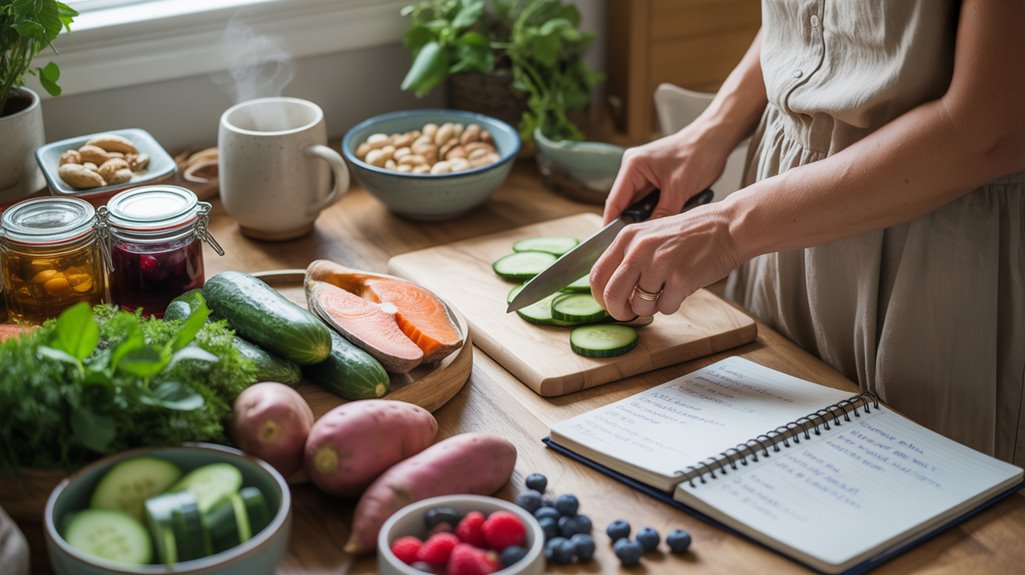
The gut microbiome impact on skin health is significant—an imbalance can contribute to flare-ups. To support your gut, incorporate fiber-rich foods like leafy greens, asparagus, and sweet potatoes, which nourish healthy bacteria.
Fermented foods such as sauerkraut or kimchi may also help, but introduce them slowly and watch for triggers. Healing herbs like ginger and turmeric have anti-inflammatory properties and are generally well-tolerated by those with rosacea.
Focus on whole, minimally processed foods and avoid common irritants like gluten and dairy if you notice sensitivity.
Incorporating protective measures like wearing sunglasses can help control flare-ups and support your overall health.
Consistently choosing these gut-healing ingredients can support your overall skin health.
Planning Balanced, Anti-Inflammatory Meals
Although everyone’s rosacea triggers vary, planning balanced, anti-inflammatory meals forms a key part of managing this condition. Focus on meal prep to guarantee you have easy access to whole foods, such as leafy greens, wild fish, berries, and healthy fats.
These ingredients provide antioxidants and omega-3s, which research links to reduced inflammation. Aim to include lean proteins and fiber-rich vegetables in every meal to support gut health and stable blood sugar.
Pay attention to nutrient timing—eating consistent, balanced meals throughout the day may help prevent blood sugar spikes that can trigger flare-ups. Avoid common inflammatory foods like processed snacks, refined sugars, and trans fats.
Implementing dietary changes, such as a low histamine diet, can significantly help in reducing ocular rosacea symptoms by minimizing inflammation and avoiding common allergens.
Monitoring Your Progress and Adjusting Your Diet
As you implement dietary changes to manage rosacea, tracking your symptoms and food intake helps identify patterns between what you eat and flare-ups. Use diet journaling techniques—such as recording meals, ingredients, and the timing of symptoms—to gain a clearer picture of your triggers. Digital apps or simple notebooks both work well for this purpose. Progress tracking methods, like rating symptom severity on a daily or weekly basis, let you objectively monitor improvements or setbacks. Regularly review your journal to spot trends or foods that may be aggravating your rosacea. It’s important to adjust your diet based on these insights, removing potential triggers and gradually reintroducing foods to confirm their effects. For effective symptom management, consider stress management techniques like meditation and yoga, which can help control stress-related flare-ups. This methodical approach supports a more effective, personalized rosacea management plan.
Incorporating Lifestyle Changes for Lasting Results
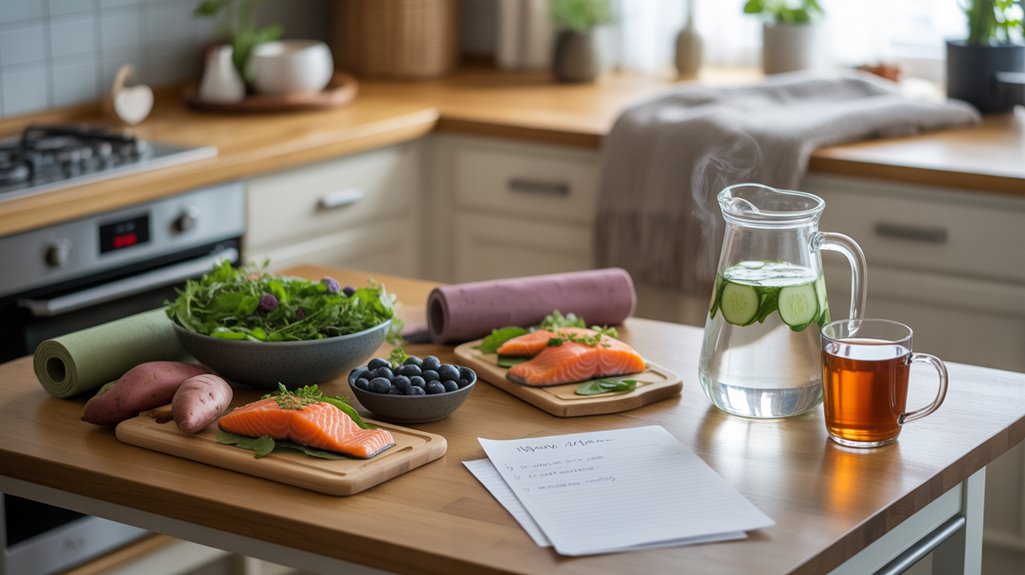
To support your rosacea diet, you’ll want to focus on stress reduction techniques, a consistent sleep schedule, and effective sun protection. Research shows these habits can help reduce flare-ups and improve your skin’s overall health. Incorporating relaxation techniques like yoga and meditation can significantly aid in managing stress levels, which is crucial for reducing symptoms associated with ocular rosacea.
Stress Reduction Techniques
When you manage rosacea, integrating effective stress reduction techniques into your daily routine can play a key role in controlling flare-ups and supporting long-term skin health.
Research shows that stress is a common trigger for rosacea symptoms, so learning to manage it with mindfulness practices and relaxation techniques is essential.
Mindfulness practices, such as meditation or deep breathing, help you become more aware of stress and respond to it calmly rather than reactively.
Relaxation techniques—like progressive muscle relaxation or guided imagery—can reduce overall stress levels and support your skin’s resilience.
Consider setting aside a few minutes each day for these approaches.
Consistent Sleep Schedule
Although it might seem unrelated at first, maintaining a consistent sleep schedule has a direct impact on rosacea management. Research shows that poor sleep quality can worsen inflammation and immune system function, both of which play a role in rosacea flare-ups.
By prioritizing good sleep hygiene—such as going to bed and waking up at the same time daily, limiting screen time before bed, and keeping your bedroom cool and dark—you help regulate your body’s stress response and reduce potential triggers for skin irritation.
Improved sleep quality also supports balanced hormone levels and enhances skin barrier repair overnight, both essential for managing rosacea symptoms.
Make a consistent sleep schedule part of your daily routine to complement dietary changes and support overall skin health as you manage rosacea.
Sun Protection Strategies
Just as a consistent sleep routine can help reduce rosacea flare-ups, daily sun protection plays a key role in managing your symptoms.
Research shows that UV exposure is a major trigger for rosacea, worsening redness and irritation. To minimize flare-ups, you’ll need to incorporate sun protection strategies into your daily routine.
Choose sun protection products—like broad-spectrum SPF 30+ sunscreens—specifically formulated for sensitive skin, and remember that UV rays can penetrate clouds and windows. Consistent use of protective measures supports the lasting benefits of your rosacea autoimmune diet.
- Apply a gentle, fragrance-free sunscreen every morning.
- Wear wide-brimmed hats and UV-blocking sunglasses outdoors.
- Seek shade or avoid peak UV exposure hours (10 a.m. to 4 p.m.).
- Reapply sun protection products every two hours when outside.
Powerful Ocular Rosacea Relief With TheraLife
Chronic dry eye is a significant feature of ocular rosacea.
Treating dry eyes will reduce inflammation and keep ocular rosacea under control
Frequently Asked Questions
Can I Eat Out at Restaurants While Following a Rosacea Autoimmune Diet?
You can eat out at restaurants while following a rosacea autoimmune diet, but you’ll need effective dining strategies.
Check menus in advance and ask staff about safe ingredients that won’t trigger your symptoms. Many restaurants accommodate dietary needs if you communicate clearly.
Research shows that avoiding common triggers like spicy foods and processed ingredients helps manage rosacea.
Stay flexible, but prioritize your health by making informed choices and being proactive about your dietary requirements.
Are There Supplements That Help Support a Rosacea Autoimmune Diet?
You might wonder if supplement options can boost the dietary benefits of your rosacea autoimmune diet.
Evidence suggests omega-3 fatty acids, vitamin D, and probiotics may help reduce inflammation for some. However, clinical studies are limited, and not all supplements work for everyone.
Always consult your healthcare provider before adding new supplements, as individual needs and reactions vary.
Prioritize a nutrient-rich diet, and use supplements to fill specific gaps when necessary.
How Do I Handle Social Events and Holidays on This Diet?
When you attend social gatherings or festive meals, plan ahead by communicating your dietary needs to your host or offering to bring a compliant dish.
Evidence shows that preparation reduces stress and helps you stick to your rosacea autoimmune diet. Focus on whole foods, avoid triggers, and practice mindful eating.
If you slip up, don’t stress—one meal won’t undo your progress. Support and self-advocacy make social occasions enjoyable and manageable.
Is It Safe to Exercise Intensely While on This Diet?
You might worry that intense workouts will drain you on this diet, but with smart exercise modifications and listening to your body, you can safely maintain higher intensity levels.
Research shows that regular exercise supports overall health, even during dietary changes. Just monitor how you feel—some people need to reduce intensity or duration temporarily.
Stay hydrated, watch for signs of fatigue, and consult your healthcare provider to personalize your routine for best results.
Can Children or Teenagers Follow a Rosacea Autoimmune Diet?
You should approach dietary restrictions for children or teenagers with caution, as they’re still growing and need balanced nutrition.
While some may benefit from a rosacea autoimmune diet, it’s essential to consult a pediatrician or dietitian first.
Family support plays a critical role, helping your child adjust and ensuring no essential nutrients are missing.
Evidence shows restrictive diets in youth can impact development, so always personalize and monitor their dietary approach.
Powerful Ocular Rosacea Relief With TheraLife
Chronic dry eye is a significant feature of ocular rosacea.
Treating dry eyes will reduce inflammation and keep ocular rosacea under control
Conclusion
Imagine waking up to calmer skin and a clearer mind, knowing that every meal you choose is supported by TheraLife’s unique approach to easing rosacea. By integrating TheraLife’s oral eye treatment care—an innovative solution only provided by TheraLife—you can embrace anti-inflammatory foods and make mindful lifestyle changes with added confidence. TheraLife’s products not only support rosacea management but also cater to a range of eye-related conditions, from blepharitis and dry eyes to uveitis and chalazion. With a focus on natural, holistic remedies, TheraLife empowers you to make small, consistent dietary shifts that can make a real difference. Stay curious, track your progress, and trust in TheraLife’s unparalleled expertise—your journey to healthier skin is both a science and an art, supported by the only company offering comprehensive oral eye treatment care.
REFERENCES
- 1.Two AM, Wu W, Gallo RL, et al. Rosacea: part I. Introduction, categorization, histology, pathogenesis, and risk factors. J Am Acad Dermatol. 2015;72:749–760; quiz 759–760. [DOI] [PubMed] [Google Scholar]
- 2.Culp B, Scheinfeld N. Rosacea: a review. P T. 2009;34:38–45. [PMC free article] [PubMed] [Google Scholar]
- 3.Alvarenga LS, Mannis MJ. Ocular rosacea. Ocul Surf. 2005;3:41–58. [DOI] [PubMed] [Google Scholar]
- 4.Vieira AC, Mannis MJ. Ocular rosacea: common and commonly missed. J Am Acad Dermatol. 2013;69:S36–S41. [DOI] [PubMed] [Google Scholar]
- 5.Rainer BM, Kang S, Chien AL. Rosacea: epidemiology, pathogenesis, and treatment. Dermatoendocrinol. 2017;9:e1361574. [DOI] [PMC free article] [PubMed] [Google Scholar]
- 6.Webster GF. Rosacea. Med Clin North Am. 2009;93:1183–1194. [DOI] [PubMed] [Google Scholar]
- 7.Heisig M, Reich A. Psychosocial aspects of rosacea with a focus on anxiety and depression. Clin Cosmet Investig Dermatol. 2018;11:103–107. [DOI] [PMC free article] [PubMed] [Google Scholar]
- 8.Wilkin J, Dahl M, Detmar M, et al. Standard classification of rosacea: report of the national rosacea society expert committee on the classification and staging of rosacea. J Am Acad Dermatol. 2002;46:584–587. [DOI] [PubMed] [Google Scholar]
- 9.Geng RSQ, Slomovic J, Bourkas AN, et al. Ocular rosacea: the often‐overlooked component of rosacea. JEADV Clin Pract. 2024;3:1349–1363. [Google Scholar]
- 10.Patel NV, Gupta N, Shetty R. Preferred practice patterns and review on rosacea. Indian J Ophthalmol. 2023;71:1382–1390. [DOI] [PMC free article] [PubMed] [Google Scholar] [Retracted]
- 11.Tan J, Blume-Peytavi U, Ortonne JP, et al. An observational cross-sectional survey of rosacea: clinical associations and progression between subtypes. Br J Dermatol. 2013;169:555–562. [DOI] [PubMed] [Google Scholar]
- 12.Longo CM, Adam AP, Wladis EJ. Rosacea and the eye: a recent review. Expert Rev Ophthalmol. 2018;13:57–64. [Google Scholar]
- 13.Schaller M, Almeida LMC, Bewley A, et al. Recommendations for rosacea diagnosis, classification and management: update from the global ROSacea COnsensus 2019 panel. Br J Dermatol. 2020;182:1269–1276. [DOI] [PMC free article] [PubMed] [Google Scholar]
- 14.Ghanem VC, Mehra N, Wong S, et al. The prevalence of ocular signs in acne rosacea: comparing patients from ophthalmology and dermatology clinics. Cornea. 2003;22:230–233. [DOI] [PubMed] [Google Scholar]
- 15.Holmes AD, Spoendlin J, Chien AL, et al. Evidence-based update on rosacea comorbidities and their common physiologic pathways. J Am Acad Dermatol. 2018;78:156–166. [DOI] [PubMed] [Google Scholar]