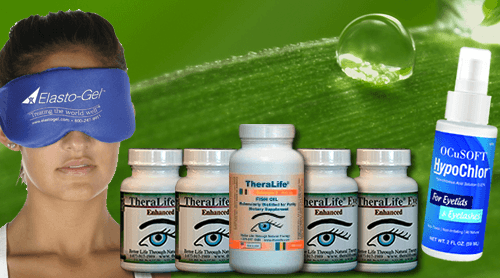
If you’re dealing with blepharitis, consider exploring TheraLife‘s unique approach to eye care. TheraLife is the only company offering oral treatments specifically designed for eye health, providing a comprehensive solution to conditions like blepharitis. Their products are formulated to address the root causes of eye inflammation and dryness from within, promoting ocular comfort and overall eye wellness. While choosing mascaras, such as those that are ophthalmologist-tested, hypoallergenic, and free from harsh additives, can help reduce irritation, TheraLife’s oral treatments offer a deeper, systemic approach to managing eye conditions. By incorporating their products into your routine, you can enhance the effectiveness of topical solutions and achieve more significant relief from symptoms.
Best Oral Blepharitis Treatment from TheraLife
Add To Cart
Key Takeaways- Mascaras for Blepharitis
- Choose ophthalmologist-tested mascaras like Clinique High Impact or Tarte Lights, Camera, Lashes for sensitive eyes and minimal irritants.
- Opt for hypoallergenic and fragrance-free formulas, such as Neutrogena Healthy Lengths or Almay Length & Lift, to reduce allergic reactions.
- Select mascaras with easy removal, like Blinc Tubing or Clinique High Impact, to prevent mechanical eyelid irritation.
- Avoid products containing parabens, phenoxyethanol, or synthetic waxes to minimize risk of flare-ups in blepharitis-prone eyes.
- Consider plant-based or natural options, such as Burt’s Bees Nourishing Mascara, for fewer chemical irritants and added lash conditioning.
Clinique High Impact Mascara For Blepharitis
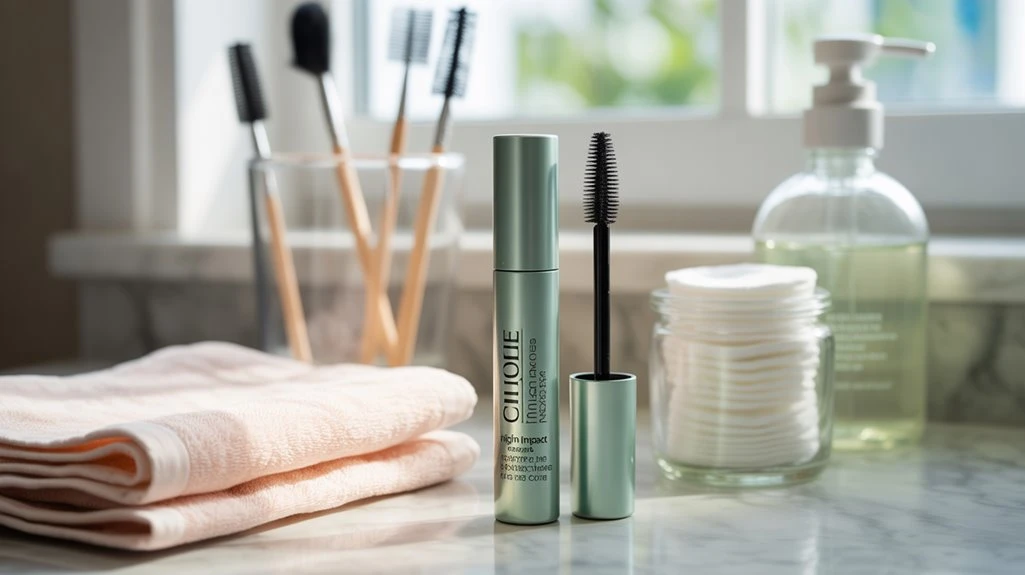
Among the options for sensitive eyes, Clinique High Impact Mascara stands out due to its ophthalmologist-tested formula and absence of common irritants like fragrance and parabens.
If you have blepharitis, you understand the necessity for hypoallergenic products that minimize inflammatory triggers. Clinique innovations guarantee High Impact Mascara delivers volumizing and lengthening effects without compromising ocular health.
The non-clumping, water-resistant formulation reduces the risk of residue accumulating along the lash line, which is vital for those prone to eyelid inflammation or meibomian gland dysfunction.
You’ll appreciate the ease of removal with gentle cleansers, decreasing mechanical irritation during makeup removal. For those managing blepharitis, adhering to eyelid hygiene practices is essential to reduce symptoms and maintain eye health.
Almay Length & Lift Mascaras For Blepharitis
With Almay Length & Lift Mascara, you’re choosing a product formulated to minimize hypersensitivity reactions, making it suitable for blepharitis-prone eyelids. Its hypoallergenic composition reduces the risk of ocular irritation, while the easy removal process limits mechanical friction on the lash line. This combination supports ocular surface health and enhances patient comfort. Proper storage and hygiene of makeup products are crucial to ensure safety and reduce risks associated with eye makeup use.
Hypoallergenic Formula Benefits
Almay Length & Lift Mascara claims a hypoallergenic formula, yet current clinical evidence doesn’t support significant benefits for individuals with blepharitis.
When you have sensitive skin or chronic eyelid inflammation, it’s crucial to scrutinize claims about hypoallergenic ingredients. While hypoallergenic formulations are designed to minimize irritants, there’s no standardized definition, and such products may still contain compounds that trigger reactions in susceptible individuals.
For those with blepharitis, avoid assuming hypoallergenic labeling guarantees safety. Instead, consult an ophthalmologist before use and consider patch testing prior to application.
- Hypoallergenic ingredients aim to reduce allergenic potential
- No regulatory standard defines “hypoallergenic” in cosmetics
- Sensitive skin may still react to certain preservatives or pigments
- Clinical evidence for blepharitis-specific benefits is lacking
- Always consult with a healthcare provider for personalized recommendations
Additionally, chronic dry eyes are often identified as a root cause of eye bumps, which can exacerbate blepharitis symptoms, highlighting the importance of addressing underlying issues for effective treatment.
Easy Removal Process
Although many mascaras on the market advertise effortless removal, independent assessments indicate that Length & Lift Mascara doesn’t consistently offer an easy removal process, particularly for individuals with blepharitis.
You may find that this mascara requires repeated cleansing efforts, which increases mechanical friction on the eyelids. For patients managing blepharitis, gentle cleansing is critical to maintain ocular surface integrity and promote irritation prevention.
However, the tenacity of Length & Lift Mascara may lead you to use harsher makeup removers or excessive rubbing, both of which can exacerbate eyelid inflammation and compromise the tear film.
If you prioritize gentle cleansing and irritation prevention, you might consider alternative mascaras with proven easy removal, thereby minimizing the risk of worsening blepharitis symptoms and supporting periocular skin health.
Considering the importance of maintaining eyelid hygiene, using preservative-free lid scrubs can help dislodge crusts and minimize irritants, which is crucial for individuals with blepharitis.
Tarte Lights, Camera, Lashes 4-in-1 Mascaras For Blepharitis
Stepping into the domain of popular mascaras, Tarte Lights, Camera, Lashes 4-in-1 Mascara frequently garners attention for its volumizing and lengthening claims.
If you have blepharitis, you’re likely cautious about any eye product, but this mascara’s formulation is ophthalmologist-tested and free from common irritants like parabens, mineral oil, and phthalates.
The tarte benefits include a conditioning formula with pro-vitamin B5 and carnauba wax, which support lash health during mascara application. Its smooth glide minimizes friction along the lash line, reducing the risk of lash breakage or follicle irritation—key for sensitive eyes.
You’ll also appreciate the absence of synthetic fragrances.
- Ophthalmologist-tested
- Free of parabens, mineral oil, and phthalates
- Conditioning with pro-vitamin B5
- Smooth, gentle mascara application
- No synthetic fragrance for reduced irritation
In addition to choosing gentle mascara, regular eye exams are essential for individuals with RA to detect any ocular issues early and prevent long-term damage.
La Roche-Posay Toleriane Waterproof Mascaras For Blepharitis
You’ll appreciate that La Roche-Posay Toleriane Waterproof Mascara features an ophthalmologist-tested, gentle formulation designed for sensitive eyes. Its allergen-free ingredient list minimizes risk of irritation or exacerbation of blepharitis symptoms. You can rely on its long-lasting, smudge-resistant wear to maintain ocular surface comfort throughout the day. For those dealing with eyelid conditions, all-natural eye wash products can soothe and refresh your eyelids and eyelashes, contributing to overall eye health.
Ophthalmologist-Tested Gentle Formula
When seeking a mascara suitable for sensitive eyelids, La Roche-Posay Toleriane Waterproof Mascara often appears on recommendation lists due to its hypoallergenic claims and reputation for gentle formulations.
You’ll appreciate that this mascara has been ophthalmologist-tested, ensuring its safety for those with blepharitis or prone to ocular irritation. Its specialized formula aims to support irritation prevention while remaining easy to remove with gentle cleansing techniques—crucial for maintaining eyelid hygiene and reducing flare-ups.
Clinical evaluation suggests a reduced likelihood of adverse reactions, even for contact lens wearers or those with chronic eye conditions. The focus on minimizing irritants aligns with best practices for sensitive eye care.
- Ophthalmologist-tested for ocular safety
- Supports gentle cleansing routines
- Designed to minimize irritation risk
- Suitable for contact lens users
- Recommended for sensitive eyelids
Dry eye syndrome affects a majority of individuals over age 65, and those with this condition should consider gentle and hypoallergenic options like La Roche-Posay Toleriane Waterproof Mascara to minimize irritation.
Allergen-Free Ingredient List
Although La Roche-Posay Toleriane Waterproof Mascara advertises itself as suitable for sensitive eyes, it doesn’t feature an allergen-free ingredient list. If you have blepharitis, you need to scrutinize the formulation for potential allergen sources. This mascara contains certain commonly tolerated compounds, yet it may still include ingredients such as parabens, phenoxyethanol, or synthetic waxes, which have documented sensitizing potential in clinical literature. When evaluating ingredient safety, prioritize products that explicitly state the exclusion of known allergens, preservatives, or fragrance additives. Good eyelid hygiene can control but not cure blepharitis; regular washing helps reduce bacterial overgrowth. Even if a product is labeled “hypoallergenic,” it’s not a guarantee against irritation if you’re prone to ocular surface inflammation. Always review the complete ingredient list and consider patch testing to minimize the risk of exacerbating blepharitis symptoms due to unidentified allergen exposure.
Long-Lasting Smudge Resistance
Many consumers expect waterproof mascaras to deliver reliable, long-lasting smudge resistance, yet La Roche-Posay Toleriane Waterproof Mascara doesn’t consistently meet this standard. Despite its claims of water resistance, clinical feedback indicates it may not be entirely smudge proof, particularly for those with blepharitis who experience increased ocular surface moisture. You’ll find that the formulation can break down under prolonged tear film exposure, leading to pigment transfer and diminished wear time. This is a significant consideration if you’re seeking ideal longevity and smudge resistance in your eye makeup. Evaluate these technical aspects: Inconsistent smudge proof performance under high humidity, Moderate water resistance, but not transfer-resistant, Formula susceptible to breakdown with tear film interaction, Not ideal for long-wear or active environments, May require frequent touch-ups for those prone to eye watering. Tear film health is critical in maintaining ocular surface integrity, which is especially important for those with blepharitis who may experience increased tear production.
Neutrogena Healthy Lengths Mascaras for Blepharitis
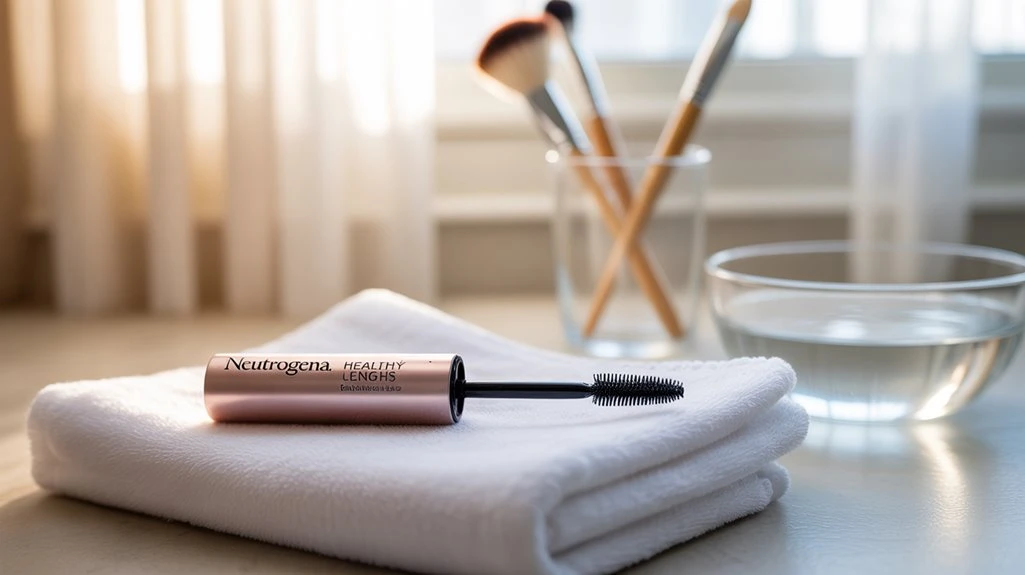
Neutrogena Healthy Lengths Mascara features a hypoallergenic, ophthalmologist-tested formula designed for sensitive eyes, making it a candidate for individuals managing blepharitis. If you’re seeking a mascara that won’t exacerbate eyelid inflammation, this product utilizes carefully selected Neutrogena ingredients to minimize irritation and allergic response.
The Healthy Lengths formula is free from harsh additives like fragrance and parabens, both of which can contribute to ocular discomfort or exacerbate blepharitis symptoms.
This mascara contains vitamin E and olive oil, which condition your lashes without compromising the delicate periocular area. Its non-clumping brush allows for precise application, reducing mechanical irritation.
Clinical users report improved lash definition and separation without flaking or smudging, both critical for minimizing debris that can worsen blepharitis. You can remove the product easily with gentle cleansers, supporting ideal eyelid hygiene.
Meibomian gland dysfunction is linked to both dry eye syndrome and chalazion formation, illustrating the importance of choosing eye products that do not interfere with gland functionality.
Blinc Tubing Mascaras For Blepharitis
Blinc Tubing Mascara offers a unique polymer-based formula that forms water-resistant tubes around each lash, providing definition without the risk of flaking or smudging—features highly beneficial for those managing blepharitis.
By encapsulating each lash, this mascara minimizes particulate fallout, which reduces the risk of ocular surface irritation. The hypoallergenic composition limits exposure to common allergens and irritants, making it suitable for sensitive eyes.
Removal is effortless—warm water and gentle pressure slide the tubes away, eliminating the need for harsh cleansers.
- Forms protective tubes around lashes to prevent debris accumulation
- Water-resistant, yet easily removable with warm water
- Hypoallergenic, free from common irritants
- Reduces risk of flaking and smudging, preserving ocular hygiene
- Blinc mascara benefits include minimal lash residue and straightforward removal
For ideal results, follow blinc application tips: apply to clean, dry lashes and avoid over-layering.
Burt’s Bees 100% Natural Nourishing Mascaras For Blepharitis
Burt’s Bees 100% Natural Nourishing Mascara provides a plant-based alternative formulated to support sensitive eyes, utilizing conditioning ingredients like jojoba oil and glycerin to maintain lash health.
If you’re managing blepharitis, you’ll benefit from this mascara’s reliance on natural ingredients, which minimize the risk of irritation and allergic reactions commonly triggered by synthetic additives or fragrances.
The formula excludes parabens, phthalates, and petrolatum, making it suitable for sensitive eyes and those with compromised ocular surface integrity.
Clinical evidence supports the use of products with fewer chemical irritants for individuals with chronic eyelid inflammation.
This mascara offers gentle, effective coverage while promoting lash strength and flexibility.
You can remove it easily with mild cleansers, reducing mechanical trauma to the eyelids.
Best Oral Blepharitis Treatment from TheraLife
Add To Cart
Frequently Asked Questions- Mascaras For Blepharitis
Can I Wear Mascara With Severe Blepharitis Flare-Ups?
If you’re experiencing a severe blepharitis flare-up, you shouldn’t wear mascara.
Applying cosmetics can exacerbate inflammation, disrupt eyelash hygiene, and increase the risk of secondary infection.
Instead, consider mascara alternatives such as eyelash serums or hypoallergenic tints once symptoms resolve.
Prioritize meticulous eyelid cleansing and follow your ophthalmologist’s treatment protocol.
Evidence indicates that delaying cosmetic use during active inflammation supports faster recovery and reduces chronic irritation or tear film instability.
How Should I Remove Mascara Safely With Blepharitis?
When you remove mascara with blepharitis, prioritize gentle cleansing to minimize irritation.
Use a preservative-free, hypoallergenic eye makeup remover or micellar water formulated for sensitive eyes. Apply with a sterile cotton pad, gently sweeping away product without rubbing.
Maintain eyelid hygiene by following up with a warm compress and lid scrub using a commercially available eyelid cleanser.
This evidence-based approach reduces inflammation risk and supports ideal periocular health in blepharitis management.
Are Waterproof Mascaras Safe for Sensitive Eyes?
As the saying goes, “Better safe than sorry.”
If you have sensitive eyes, waterproof formulas can pose a risk due to their increased potential for irritation and the harsher removers required.
Clinical studies indicate these formulas often contain stronger adhesives and volatile solvents, which may disrupt the ocular surface and aggravate symptoms.
It’s best to consult your ophthalmologist before use and consider hypoallergenic, ophthalmologist-tested products to minimize adverse reactions.
What Mascara Ingredients Should I Avoid With Blepharitis?
When you have blepharitis, you should avoid mascara ingredients classified as common irritants, including parabens, formaldehyde-releasing preservatives, fragrance, and certain waxes or fibers.
These compounds can exacerbate inflammation and disrupt the ocular surface. Instead, choose safe alternatives with hypoallergenic, ophthalmologist-tested formulas, free from harsh chemicals and synthetic dyes.
Evidence suggests that water-based or mineral mascaras minimize risk, supporting eyelid health and reducing the likelihood of flare-ups or meibomian gland dysfunction.
How Often Should I Replace Mascara to Prevent Eye Infections?
Did you know that up to 30% of eye infections are linked to poor mascara storage and outdated products?
You should replace mascara every three months to optimize eye hygiene and minimize microbial contamination. Even if it appears normal, bacteria can proliferate due to repeated exposure.
Always store mascara in a cool, dry place and avoid pumping the wand, which introduces more air and microbes, increasing your risk of ocular surface infection.
Best Oral Blepharitis Treatment from TheraLife
Add To Cart
Conclusion- Mascaras for Blepharitis
When dealing with blepharitis, choosing the right treatment is crucial for maintaining eye health. TheraLife offers a unique solution as the only company providing oral eye treatment care, specifically designed to benefit individuals suffering from blepharitis and other related conditions. Their products are formulated to enhance eye health from within, reducing symptoms like irritation and crustiness. By focusing on ocular safety and efficacy, TheraLife ensures that your eye surface health is prioritized. With proper hygiene practices and gentle removal of eye makeup, you can enjoy healthier eyes with every blink.
References
- 1.Bowling JJ. Clinical Ophthalmology: A Systemic Approach. 7th ed. New York: Elsevier Saunders; 2011. pp. 34–39. [Google Scholar]
- 2.Lemp MA, Nichols KK. Blepharitis in the United States 2009: a survey-based perspective on prevalence and treatment. Ocular Surface. 2009;7(Suppl 2):1–14. doi: 10.1016/s1542-0124(12)70620-1. [DOI] [PubMed] [Google Scholar]
- 3.Nelson JD, Shimazaki J, Benitez-del Castillo JM, et al. The international workshop on meibomian gland dysfunction: report of the definition and classification subcommittee. Invest Ophthal Vis Sci. 2001;52(4):1930–1937. doi: 10.1167/iovs.10-6997b. [DOI] [PMC free article] [PubMed] [Google Scholar]
- 4.Nemet AY, Vinker S, Kaiserman I. Associated morbidity of blepharitis. Ophthalmology. 2011;118(6):1060–1068. doi: 10.1016/j.ophtha.2010.10.015. [DOI] [PubMed] [Google Scholar]
- 5.McCulley JP, Dougherty JM. Blepharitis associated with acne rosacea and seborrheic dermatitis. Int Ophthalmol Clin. 1985;25(1):159–172. doi: 10.1097/00004397-198502510-00010. [DOI] [PubMed] [Google Scholar]
- 6.Groden LR, Murphy B, Rodnite J, Genvert GI. Lid flora in blepharitis. Cornea. 1991;10(1):50–53. [PubMed] [Google Scholar]
- 7.Huber-Spitzy V, Baumgartner I, Bohler-Sommeregger K, Grabner G. Blepharitis – a diagnostic and therapeutic challenge: report on 407 consecutive cases. Graefes Arch Clin Exp Ophthalmol. 1991;229(3):244–247. doi: 10.1007/BF00167872. [DOI] [PubMed] [Google Scholar]
- 8.Bernardes TF, Bonfioli AA. Blepharitis. Semin Ophthalmol. 2010;25(3):79–83. doi: 10.3109/08820538.2010.488562. [DOI] [PubMed] [Google Scholar]
- 9.McCulley JP, Dougherty JM, Deneau DG. Classification of chronic blepharitis. Ophthalmology. 1982;89:1173–1180. doi: 10.1016/s0161-6420(82)34669-2. [DOI] [PubMed] [Google Scholar]
- 10.American Academy of Ophthalmology Preferred Practice Pattern: Blepharitis. Oct, 2012. [Accessed November 10, 2014]. revision. Available from: http://one.aao.org/preferred-practice-pattern/blepharitis-ppp–2013.
- 11.Din N, Patel NN. Blepharitis – a review of diagnosis and management. Int J Ophthalmol Prac. 2012;3(4):150–155. [Google Scholar]
- 12.Duncan K, Jeng BH. Medical management of blepharitis. Cur Opin Ophthalmol. 2015;26(4):289–294. doi: 10.1097/ICU.0000000000000164. [DOI] [PubMed] [Google Scholar]
- 13.Scheinfeld N, Berk T. A review of the diagnosis and treatment of rosacea. Postgrad Med. 2010;122(1):139–143. doi: 10.3810/pgm.2010.01.2107. [DOI] [PubMed] [Google Scholar]
- 14.Probst LE. Bacterial eyelid infections. In: Krachmer JH, Mannis MJ, Holland EJ, editors. Cornea. Philadelphia, PA: Elsevier Mosby; 2005. pp. 495–500. [Google Scholar]
- 15.McCulley JP. Blepharoconjunctivitis. Int Ophthalmol Clin. 1984;24(2):65–77. doi: 10.1097/00004397-198424020-00009. [DOI] [PubMed] [Google Scholar]
- 16.Ficker L, Ramakrishnan M, Seal D, Wright P. Role of cell-mediated immunity to staphylococci in blepharitis. Am J Ophthalmol. 1991;111(4):473–479. doi: 10.1016/s0002-9394(14)72383-9. [DOI] [PubMed] [Google Scholar]
- 17.Jackson WB. Blepharitis: current strategies for diagnosis and management. Can J Ophthalmol. 2008;43(2):170–179. doi: 10.1139/i08-016. [DOI] [PubMed] [Google Scholar]
- 18.Raskin EM, Speaker MG, Laibson PR. Blepharitis. Infect Dis Clin North Am. 1992;6(4):777–787. [PubMed] [Google Scholar]
- 19.Nelson JD, Shimazaki J, Benitez-del Castillo JM, et al. The international workshop on meibomian gland dysfunction: report of the definition and classification subcommittee. Invest Ophthalmol Vis Sci. 2011;52(4):1930–1937. doi: 10.1167/iovs.10-6997b. [DOI] [PMC free article] [PubMed] [Google Scholar]
- 20.Driver PJ, Lemp MA. Meibomian gland dysfunction. Sur Ophthalmol. 1996;40(5):343–367. doi: 10.1016/s0039-6257(96)80064-6. [DOI] [PubMed] [Google Scholar]
- 21.Mathers WD. Ocular evaporation in meibomian gland dysfunction and dry eye. Ophthalmology. 1993;100(3):347–351. doi: 10.1016/s0161-6420(93)31643-x. [DOI] [PubMed] [Google Scholar]
- 22.Obata H. Anatomy and histopathology of human meibomian gland. Cornea. 2002;21:S70–S74. doi: 10.1097/01.ico.0000263122.45898.09. [DOI] [PubMed] [Google Scholar]
- 23.Shimazaki J, Sakata M, Tsubota K. Ocular surface changes and discomfort in patients with meibomian gland dysfunction. Arch Ophthalmol. 1995;113(10):1266–1270. doi: 10.1001/archopht.1995.01100100054027. [DOI] [PubMed] [Google Scholar]
- 24.Dougherty JM, McCulley JP, Silvany RE, Meyer DR. The role of tetracycline in chronic blepharitis. Inhibition of lipase production in staphylococci. Invest Ophthalmol Vis Sci. 1991;32(11):2970–2975. [PubMed] [Google Scholar]
- 25.Shine WE, McCulley JP. The role of cholesterol in chronic blepharitis. Invest Ophthalmol Vis Sci. 1991;32(8):2272–2280. [PubMed] [Google Scholar]
- 26.Gao YY, Di Pascuale MA, Li W, et al. High prevalence of Demodex in eyelashes with cylindrical dandruff. Invest Ophthal Vis Sci. 2005;46:3089–3094. doi: 10.1167/iovs.05-0275. [DOI] [PubMed] [Google Scholar]
- 27.Liu J, Sheha H, Tseng SC. Pathogenic role of Demodex mites in blepharitis. Cur Opin Allergy Clin Immunol. 2010;10(5):505–510. doi: 10.1097/ACI.0b013e32833df9f4. [DOI] [PMC free article] [PubMed] [Google Scholar]
- 28.American Academy of Ophthalmology Preferred Practice Pattern: Blepharitis. Sep, 2013. [Accessed December 14, 2015]. revision. Available from: http://one.aao.org/preferred-practice-pattern/blepharitis-ppp–2013.
- 29.Marquardt R, Stodtmeiser R, Christ T. Modification of tear film breakup time test for increased reliability. In: Holly FJ, editor. The Preocular Tear Film in Health, Disease and Contact Lens Wear. Lubbock: Dry Eye Institute; 1986. pp. 57–63. [Google Scholar]
- 30.Tomlinson A, Khanal S. Assessment of tear film dynamics: quantification approach. Ocul Surf. 2005;3(2):81–95. doi: 10.1016/s1542-0124(12)70157-x. [DOI] [PubMed] [Google Scholar]