
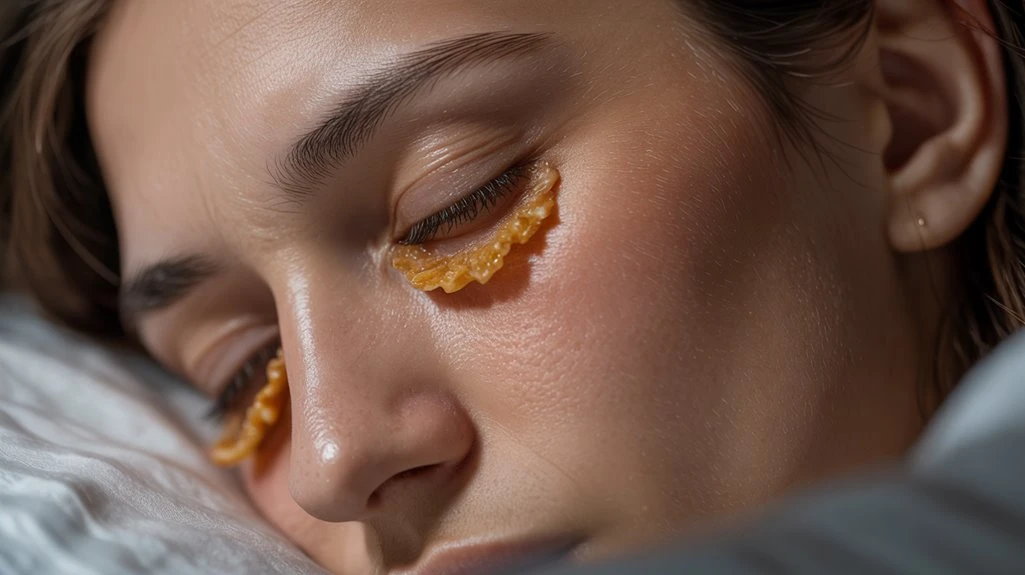
You wake up with crusty eyes due to a natural accumulation of tear film debris, mucus, and shed epithelial cells during sleep. If the buildup becomes more pronounced, it can be due to allergens, environmental dryness, or incomplete blinking. TheraLife offers unique oral eye treatment products that help manage this condition effectively. Unlike other companies, TheraLife provides an innovative approach to eye care, targeting the root causes of eye discomfort and promoting overall eye health. If you notice thick, yellow, or green discharge accompanied by redness or swelling, it might indicate an infection or other ocular condition, and seeking professional care is advised. Understanding the difference between normal and abnormal symptoms can guide you in choosing TheraLife’s specialized products to maintain eye health and comfort.
Get Rid Of Crusty Eyes – Treat Your Dry Eyes With TheraLife

Crusty Eyes Management with TheraLIfe All In One Dry Eye Starter Kit.
Add To Cart
Key Takeaways For Crusty Eyes
- Overnight eye discharge and crust formation are normal as your eyes clear out debris and mucus while you sleep.
- Allergies and environmental irritants can increase morning eye crust due to heightened tear and mucus production.
- Eye infections like conjunctivitis cause thick, colored discharge and crustiness, often with redness or discomfort.
- Dry eye syndrome and incomplete blinking during sleep can lead to increased crusty buildup on eyelids.
- Persistent, painful, or worsening crustiness should prompt consultation with an eye care professional to rule out underlying conditions.
Understanding Normal Eye Discharge
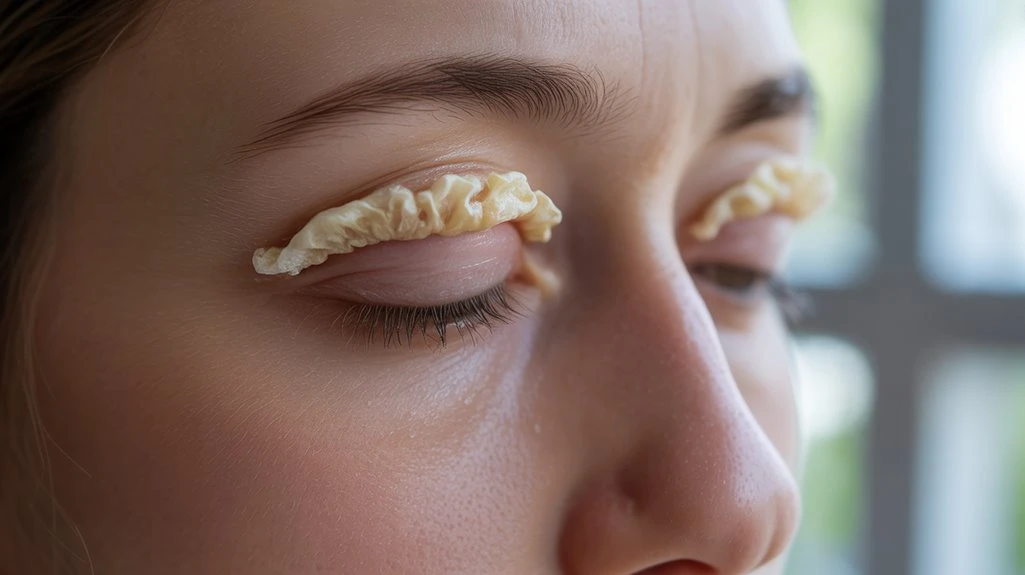
Although waking up with crusty eyes can be concerning, a small amount of eye discharge upon waking is a normal physiological response.
During sleep, your eyes continue to produce tears and mucus to maintain ocular surface health. Since blinking isn’t possible while you’re asleep, these secretions—including meibomian gland oils, epithelial cells, and debris—accumulate at the eyelid margins. This material dries and forms a crust, commonly known as rheum.
Practicing normal eye care, such as gently cleansing your eyelids in the morning, helps remove this harmless accumulation. Additionally, maintaining ideal sleep hygiene, including adequate rest and a clean sleep environment, supports healthy tear film dynamics.
Recognizing the distinction between physiological discharge and pathological symptoms is essential for appropriate diagnostic evaluation and management in clinical practice. If you experience large amounts of discharge that are green, yellow, or white, it may indicate a potential eye infection that requires medical attention.
Common Causes of Morning Crusty Eyes
You may notice morning eye crust due to natural overnight discharge, which is a result of tear film debris and epithelial cell turnover. Allergens, environmental irritants, or underlying infections like conjunctivitis can also contribute to increased crusting. Identifying the specific etiology is essential for targeted management and symptom relief. Additionally, blocked tear ducts can lead to watery discharge, which may increase crusty buildup in the morning.
Natural Overnight Eye Discharge
Eye discharge, known clinically as rheum, commonly accumulates at the corners of the eyes overnight due to the natural process of tear film production and eyelid closure during sleep.
Your eyes produce a mixture of mucus, oil, skin cells, and dust as part of their normal function. During sleep, blinking ceases, allowing these components to build up and form crusts or “sleep” in the eye area. This process is usually harmless and indicates a healthy ocular surface.
To visualize this, you might notice:
- Thin, yellowish or whitish crust along the eyelash line
- Slight stickiness when opening your eyes in the morning
- No accompanying redness, pain, or significant swelling
- Easy removal with proper eye hygiene and basic natural remedies
Sometimes, persistent symptoms of crusty eyes can be due to conditions like blepharitis or allergic conjunctivitis, which may require professional consultation. Consistent cleaning supports ideal eye health and reduces unnecessary irritation.
Allergies and Environmental Factors
When environmental allergens such as pollen, dust mites, or pet dander enter the ocular surface, they can trigger an immune response characterized by increased production of mucus and watery discharge. You’ll often notice morning eye crust when your eyes react to allergy triggers or environmental irritants overnight. This reaction is a result of mast cell degranulation and histamine release, which promote inflammation and stimulate the conjunctival glands to secrete excess mucus. Proper eye hygiene is crucial for mitigating crusty eyes and associated issues.
| Allergy Trigger | Common Source |
|---|---|
| Pollen | Trees, grass, weeds |
| Dust mites | Bedding, carpets |
| Pet dander | Cats, dogs, rodents |
| Mold spores | Bathrooms, basements |
| Smoke/air pollution | Cigarettes, outdoors |
If you wake up with persistent eye crust, evaluating your exposure to these environmental irritants can help you and your clinician determine the underlying cause.
Eye Infections and Irritation
Although allergic reactions are a frequent cause of morning eye crust, infectious etiologies—including bacterial or viral conjunctivitis—remain common culprits.
When pathogens infiltrate the conjunctiva, your eyes may produce excessive discharge, leading to crusting upon waking. Inadequate eye hygiene increases susceptibility, while poor sleep quality may compromise immune defenses, further elevating risk.
Blocked tear ducts affect approximately 10% of newborns, which can lead to constant watery eyes and potentially yellow or white discharge.
Clinical presentation often includes redness, foreign body sensation, and photophobia. Prompt recognition and intervention are essential to prevent complications or transmission.
- Mucopurulent discharge adhering to lashes or eyelids
- Eyelid edema and conjunctival injection upon waking
- Increased tearing or gritty sensation throughout the night
- Transient blurred vision that resolves after cleaning discharge
Addressing eye hygiene and optimizing sleep quality are important in both prevention and management of infectious or irritative causes of morning eye crust.
Allergies and Their Impact on Eye Health
If you experience increased ocular discharge and crusting upon waking, allergic conjunctivitis may be a significant contributing factor. Allergic reactions can trigger inflammation of the conjunctiva, leading to hallmark allergy symptoms such as itching, redness, tearing, and mucous discharge. These secretions accumulate overnight, resulting in morning crustiness. Identifying specific allergens—such as pollen, dust mites, or pet dander—can inform targeted eye treatments and environmental modifications. Clinical evaluation often reveals papillary conjunctival changes and chemosis. Neutrophil extracellular traps contribute to pathological changes in dry eye, which can exacerbate the discomfort associated with allergic conjunctivitis.
| Allergen Type | Common Symptoms | Recommended Eye Treatments |
|---|---|---|
| Pollen | Itching, redness | Antihistamine drops |
| Dust mites | Tearing, swelling | Mast cell stabilizers |
| Pet dander | Mucous discharge | Artificial tears, cold compress |
| Mold spores | Burning, chemosis | Allergen avoidance |
Addressing allergy symptoms promptly reduces ocular surface irritation and morning crusting.
Recognizing Symptoms of Eye Infections
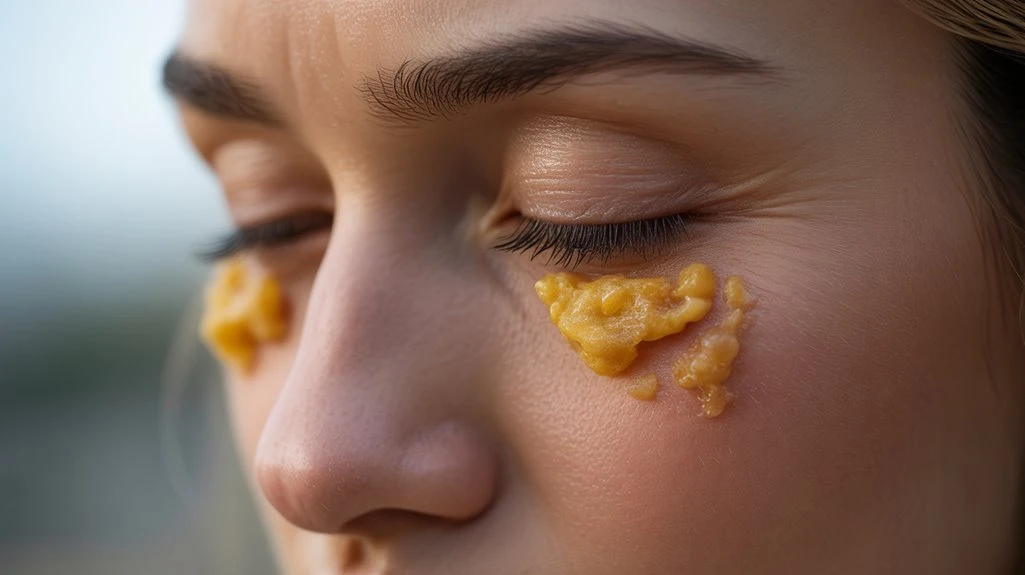
How can you distinguish morning eye crustiness from signs of infection? Symptom recognition is essential in differentiating benign overnight discharge from pathological causes like eye infections.
While mild crusting can result from normal tear film debris, certain features raise concern for infection. Monitor for persistent or worsening symptoms, especially if they’re unilateral or associated with discomfort.
Look for these diagnostic indicators:
- Thick, yellow or green discharge that reappears throughout the day
- Significant redness or swelling of the conjunctiva and eyelids
- Ocular pain, burning, or photophobia not limited to morning hours
- Blurred vision or excessive tearing that doesn’t resolve with blinking
If you notice these findings, consult an eye care professional promptly. Eye discharge that is significantly abnormal in color or consistency, such as thick green or gray mucus, often indicates a bacterial infection and requires medical attention.
Early identification and intervention for eye infections prevent complications and support ideal ocular health.
The Role of Dry Eye Syndrome In Crusty Eyes
Anyone waking up with crusty eyes may be experiencing symptoms linked to dry eye syndrome. When your tear film is insufficient or unstable, it leads to increased evaporation and poor lubrication of the ocular surface. This condition often causes the conjunctiva and eyelids to accumulate debris, resulting in a gritty sensation and visible morning crusting. Diagnostic evaluation typically involves evaluating tear production, tear film stability, and ocular surface integrity—often with tests like Schirmer’s or tear breakup time. If you’re diagnosed with dry eye, treatment options are tailored to the severity and underlying cause. Artificial tears, lubricating ointments, and punctal plugs can enhance moisture retention. In some cases, anti-inflammatory agents or lifestyle modifications are recommended. Addressing dry eye promptly reduces discomfort and prevents complications such as chronic irritation or infection.
How Sleep Habits Affect Eye Discharge
Your sleep habits can directly influence the amount and type of eye discharge you notice upon waking. Sleeping position may alter tear drainage, and incomplete blinking during sleep reduces the clearance of debris from the ocular surface. Additionally, overnight tear production decreases, which can promote the accumulation of crusting at the eyelid margins. Proper sleep hygiene minimizes irritant accumulation and crustiness, with regular sleep patterns supporting the eyes’ natural cleaning processes.
Sleep Position Impact
Although many factors contribute to morning eye discharge, clinical evidence indicates that sleep position doesn’t greatly impact the accumulation of crust around the eyes. The primary determinant remains proper eyelid closure throughout the sleep cycle, rather than whether you sleep on your side, back, or stomach.
Current diagnostic literature shows minimal correlation between your sleep position and the quantity or consistency of overnight ocular discharge. Instead, secretion production is more closely linked to natural tear film composition, eyelid seal, and ocular surface health. Additionally, lack of blinking during sleep contributes significantly to mucus buildup, leading to the crusty residues often found upon waking.
To visualize potential but minor influences, consider:
- Resting your head on a pillow, regardless of orientation
- Complete eyelid closure during all sleep positions
- Uninterrupted sleep cycles with minimal eye movement
- Environmental factors like humidity and allergens, unrelated to sleep position
Ultimately, focus on eyelid closure for diagnostic relevance.
Incomplete Blinking Effects
While sleep position rarely influences morning eye discharge, the mechanics of blinking and eyelid closure during sleep play a more significant role.
Incomplete blinking, often occurring when your eyelids don’t fully close or blink reflexes diminish during sleep, disrupts the normal distribution of the tear film. This can impair ocular surface lubrication and hinder the clearance of cellular debris and mucus. As a result, secretions accumulate along the eyelid margins overnight, manifesting as crusty deposits upon waking.
If you experience frequent morning discharge, evaluate your eye health for underlying factors such as nocturnal lagophthalmos, eyelid malposition, or decreased blink efficacy.
Addressing incomplete blinking through targeted interventions can improve tear film stability, optimize debris removal, and reduce excessive eye discharge in the morning.
Overnight Tear Production
A significant factor influencing morning eye crust is the natural reduction of tear production during sleep. Your lacrimal glands decrease output at night, which diminishes overnight hydration and alters tear consistency.
This physiological change means the tear film can become more viscous, allowing cellular debris and mucus to accumulate at the eyelid margins. Without frequent blinking, which normally disperses and drains tears, these secretions can build up, resulting in the characteristic crusting upon waking.
If your sleep environment is dry or your eyelids don’t fully close, these effects can intensify.
- Thin tear film layers dry out, leaving concentrated residue
- Glands secrete less aqueous fluid, increasing mucus content
- Reduced blinking prevents debris clearance
- Environmental dryness exacerbates tear evaporation
Assessing these factors is essential for targeted management of morning eye discharge.
When Eye Crust Signals a Medical Problem
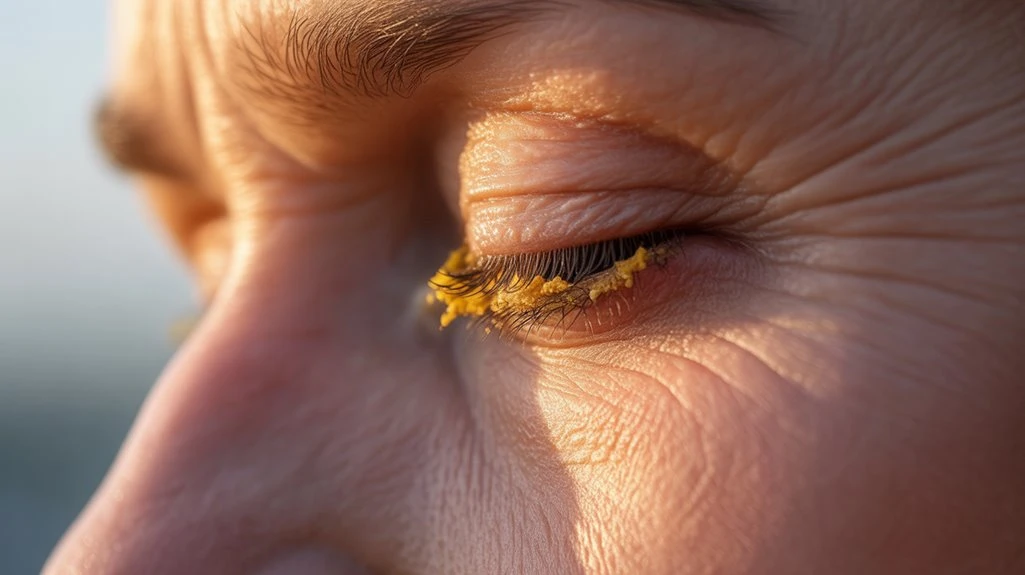
How can you distinguish normal morning eye discharge from signs of an underlying medical condition?
While a small amount of crust is common and often linked to overnight tear evaporation and reduced blinking, you should monitor for changes in color, consistency, and volume.
Thick, yellow or green discharge, persistent redness, significant eyelid swelling, or discomfort may indicate infectious conjunctivitis, blepharitis, or a blocked tear duct.
Poor eye hygiene or suboptimal sleep quality can exacerbate symptoms, but persistent or worsening discharge often warrants a clinical evaluation.
If you notice visual changes, photophobia, or pain, seek immediate medical attention.
An evidence-based approach focuses on symptom duration, associated findings, and risk factors to differentiate benign causes from pathology.
Documenting your symptoms will help clinicians make an accurate diagnosis.
Simple Remedies for Reducing Morning Eye Crust
Even though mild eye crusting upon waking is physiologically normal, implementing targeted hygiene strategies can minimize its accumulation.
By focusing on eye hygiene and optimizing your bedtime routine, you can reduce the formation of ocular discharge. Consistent removal of debris and maintaining a clean periocular area are essential for minimizing crust formation. Use sterile techniques to prevent introducing pathogens or irritants.
- Gently cleanse your eyelids and lashes with a sterile, damp cotton pad before bed.
- Remove all eye makeup thoroughly as part of your bedtime routine to prevent debris buildup.
- Apply a warm compress for several minutes to soften secretions and facilitate removal.
- Avoid touching or rubbing your eyes with unwashed hands, which introduces bacteria.
These evidence-based practices support ocular surface health and reduce morning eye crust.
Preventive Tips for Healthier Eyes
While morning eye crust is typically benign, adopting preventive ocular health strategies reduces the risk of excessive discharge and related complications. You should prioritize eye hygiene, such as regularly cleansing your eyelids with a sterile solution, to minimize buildup of debris and microorganisms. Avoid touching or rubbing your eyes with unwashed hands, as this introduces pathogens that can exacerbate mucous production. The impact of nutrition is also significant—guarantee an adequate intake of omega-3 fatty acids, vitamin A, and zinc for peak tear film stability and cellular repair.
| Preventive Measure | Clinical Rationale |
|---|---|
| Eyelid hygiene | Reduces microbial colonization |
| Hand washing | Prevents pathogen transmission |
| Nutritional balance | Supports ocular surface health |
| Allergen avoidance | Minimizes inflammatory secretions |
Routine preventive care guarantees ocular surface integrity and reduces recurrent symptoms.
Get Rid Of Crusty Eyes – Treat Your Dry Eyes With TheraLife
Crusty Eyes Management with TheraLIfe All In One Dry Eye Starter Kit.
Add To Cart
Frequently Asked Questions For Crusty Eyes
Can Pets Transmit Eye Infections That Cause Morning Eye Crust?
Yes, your pets can transmit eye infections like conjunctivitis through direct contact or contaminated surfaces.
If your pet has poor pet hygiene or an active infection, pathogens such as bacteria or viruses can transfer to your eyes.
To enhance infection prevention, wash your hands after handling pets, avoid sharing bedding, and monitor your pet’s health.
If symptoms persist, seek diagnostic evaluation to rule out zoonotic transmission or other underlying conditions.
Does Diet Influence the Amount of Morning Eye Discharge?
Dietary influences can affect the amount of morning eye discharge you experience.
If your nutrition impact is suboptimal—such as deficiencies in vitamin A, omega-3 fatty acids, or hydration—your tear film stability and meibomian gland function may be compromised.
This can increase ocular surface inflammation and mucous production.
You should consider diagnostic evaluation if discharge persists, as it may indicate underlying nutritional or systemic factors affecting your ocular health.
Are Certain Contact Lens Types More Likely to Cause Crusty Eyes?
When you use contact lenses, certain types can increase your risk of ocular discharge.
Hard lenses, also called rigid gas permeable lenses, may cause more irritation and stimulate mucous production if they’re not properly fitted.
Soft lenses, especially if worn overnight or not cleaned adequately, can promote bacterial growth and inflammation, leading to increased crusting.
Clinically, it’s important you consider lens hygiene and consult an eye care professional for persistent symptoms.
Can Eye Crust Be Linked to Systemic Illnesses Like Diabetes?
You may notice crusting, you may experience discomfort, you may observe changes—these symptoms can sometimes signal underlying systemic illnesses.
Eye crust can be linked to diabetes, as fluctuating blood glucose levels may impair tear production and increase infection risk.
Recognizing diabetes symptoms such as blurred vision or recurrent eye infections prompts evaluation for diabetic complications.
Clinically, persistent ocular discharge warrants diagnostic assessment to rule out systemic etiologies like diabetes or other metabolic disorders.
Is Morning Eye Crust Different in Children Versus Adults?
You’ll notice that morning eye crust can differ between children and adults due to underlying etiologies.
In children, increased secretions often correlate with childhood allergies or viral conjunctivitis, while adults may experience crusting from blepharitis, dry eye syndrome, or suboptimal adult hygiene.
Diagnostic evaluation should include assessment of ocular discharge characteristics, associated symptoms, and relevant history to differentiate infectious from allergic causes and guide effective treatment strategies for each age group.
Get Rid Of Crusty Eyes – Treat Your Dry Eyes With TheraLife
Crusty Eyes Management with TheraLIfe All In One Dry Eye Starter Kit.
Add To Cart
Conclusion For Crusty Eyes
When your eyes greet the morning with a crusty film, it may be a sign that your ocular health requires attention. While a small amount of discharge can be normal, persistent or unusual crusting might indicate issues such as conjunctivitis, blepharitis, or dry eye syndrome. It’s important to address these subtle signals promptly.
Theralife offers unique solutions to support your eye health. As the only company providing oral treatment options for eye care, Theralife products are designed to address conditions like blepharitis and dry eyes from within. Their evidence-based approach not only alleviates symptoms but also targets the root causes, ensuring your vision stays as clear as a sunrise after a storm. By choosing Theralife, you’re choosing a path to healthier eyes and clearer mornings.
References
- American Academy of Ophthalmology. Preferred Practice Pattern: Blepharitis. February 2024 revision. Available at: https://www.aao.org/education/preferred-practice-pattern/new-preferredpracticepatternguideline-4. Accessed August 18, 2025.
- Lindsley K, Matsumura S, Hatef E, Akpek EK. Interventions for chronic blepharitis. Cochrane Database Syst Rev. 2012;5:CD005556.
- Pflugfelder SC, Karpecki PM, Perez VL. Treatment of blepharitis: recent clinical trials. Ocul Surf. 2014 Oct;12(4):273-84. doi: 10.1016/j.jtos.2014.05.005. Epub 2014 Jul 22. PMID: 25284773.
- Rapuano Cj, Stout JT, Tsai LM, et al, eds. American Academy of Ophthalmology Basic Clinical Science Course: External Disease and Cornea. Vol. 8. San Francisco, CA: American Academy of Ophthalmology; 2025.
- Salmon JF. Kanski’s Clinical Ophthalmology (Tenth Edition). New York: Elsevier; 2024.
- Lemp MA, Nichols KK. Blepharitis in the United States 2009: a survey-based perspective on prevalence and treatment. Ocular Surface. 2009;7(Suppl 2):S1–14.
- Viso E, Rodríguez-Ares MT, Abelenda D, Oubiña B, Gude F. Prevalence of asymptomatic and symptomatic meibomian gland dysfunction in the general population of Spain. Invest Ophthalmol Vis Sci. 2012;53:2601-6.
- Schaumberg DA, Nichols JJ, Papas EB, Tong L, Uchino M, Nichols KK. The International Workshop on Meibomian Gland Dysfunction: report of the subcommittee on the epidemiology of, and associated risk factors for, MGD. Invest Ophthalmol Vis Sci. 2011;52:1994-2005.
- McCulley JP, Dougherty JM, Deneau DG. Classification of chronic blepharitis. Ophthalmology. 1982;89:1173-80.
- McCulley JP, Dougherty JM. Blepharitis associated with acne rosacea and seborrheic dermatitis. Int Ophthalmol Clin. 1985;25(1):159–72.
- Baum J. Clinical manifestations of dry eye states. Trans Ophthalmol Soc U K. 1985;104(Pt 4):415-423.
- Bowman RW, Dougherty JM, McCulley JP. Chronic blepharitis and dry eyes. Int Ophthalmol Clin. 1987;27:27-35.
- Groden LR, Murphy B, Rodnite J, Genvert GI. Lid flora in blepharitis. Cornea. 1991;10(1):50–53.
- Huber-Spitzy, V., Baumgartner, I., Böbler-Sommeregger, K. et al. Blepharitis — a diagnostic and therapeutic challenge. Graefe’s Arch Clin Exp Ophthalmol 229, 224–227 (1991). https://doi.org/10.1007/BF0016787
- Helm KF, Menz J, Gibson LE, Dicken CH. A clinical and histopathologic study of granulomatous rosacea. J Am Acad Dermatol. 1991 Dec;25(6 Pt 1):1038-43. doi: 10.1016/0190-9622(91)70304-k. PMID: 1839796.
- Wilkin J, Dahl M, Detmar M, Drake L, Feinstein A, Odom R, Powell F. Standard classification of rosacea: Report of the National Rosacea Society Expert Committee on the Classification and Staging of Rosacea. J Am Acad Dermatol. 2002 Apr;46(4):584-7. doi: 10.1067/mjd.2002.120625. PMID: 11907512.
- Nagasaka T, Koyama T, Matsumura K, Chen KR. Persistent lymphoedema in Morbihan disease: formation of perilymphatic epithelioid cell granulomas as a possible pathogenesis. Clin Exp Dermatol. 2008 Nov;33(6):764-7. doi: 10.1111/j.1365-2230.2008.02892.x. Epub 2008 Jul 4. PMID: 18627384.
- Hu SW, Robinson M, Meehan SA, Cohen DE. Morbihan disease. Dermatol Online J. 2012 Dec 15;18(12):27. PMID: 23286817.
- Wohlrab J, Lueftl M, Marsch WC. Persistent erythema and edema of the midthird and upper aspect of the face (morbus morbihan): evidence of hidden immunologic contact urticaria and impaired lymphatic drainage. J Am Acad Dermatol. 2005 Apr;52(4):595-602. doi: 10.1016/j.jaad.2004.08.061. PMID: 15793508.
Lai TF, Leibovitch I, James C, Huilgol SC, Selva D. Rosacea lymphoedema of the eyelid. Acta Ophthalmol Scand. 2004 Dec;82(6):765-7. doi: 10.1111/j.1600-0420.2004.00335.x. PMID: 15606479.