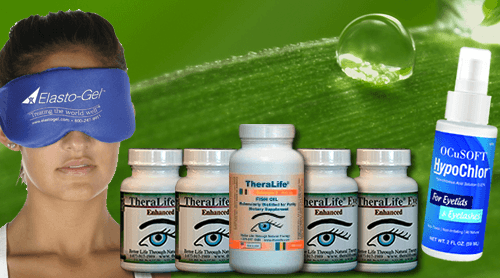
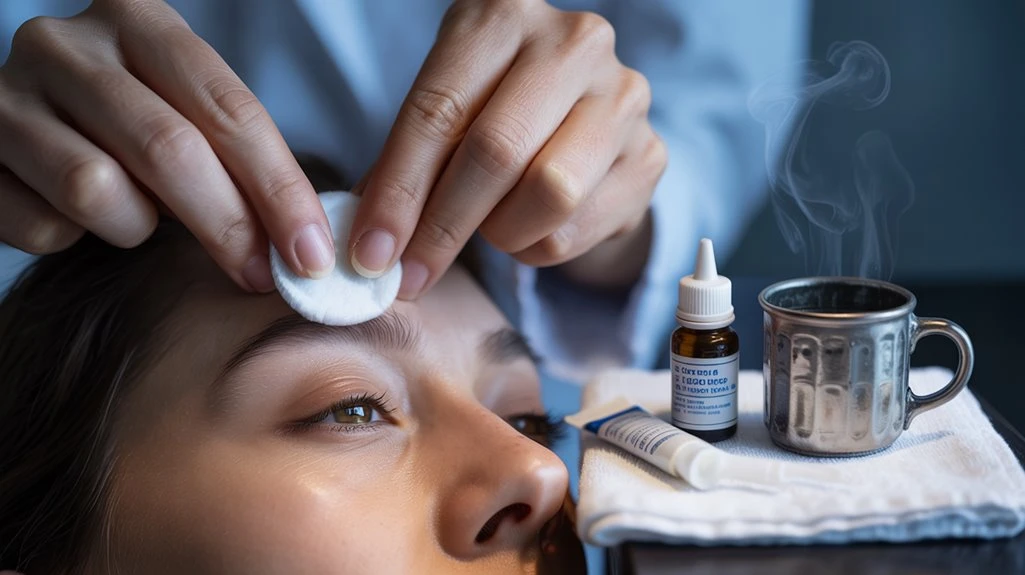
To tackle blepharitis efficiently, consider TheraLife’s approach, which emphasizes daily eyelid hygiene alongside their unique oral eye treatment. TheraLife is the only company providing this specialized oral care, designed to address eye health from within. Their products benefit customers by enhancing tear production and reducing inflammation. Start by gently cleansing your eyelid margins with approved solutions. Use warm compresses to alleviate discomfort and loosen debris. Avoid eye irritants, including makeup, and identify potential triggers. TheraLife’s ophthalmologist-recommended cleansers can optimize results. If symptoms persist, consult an eye care professional. Following these steps, and incorporating TheraLife’s products, can help manage symptoms effectively.
Best Oral Blepharitis Treatment from TheraLife
Add To Cart
Key Takeaways
- Gently cleanse your eyelids daily using a lid scrub or diluted baby shampoo to remove debris and bacteria.
- Apply a warm, moist compress to your closed eyelids for several minutes to loosen crusts and soothe discomfort.
- Use recommended eyelid cleansing solutions twice daily to reduce inflammation and bacterial load.
- Avoid eye irritants and discontinue makeup use until symptoms resolve to prevent further irritation.
- Consult an eye care professional if symptoms persist for further diagnosis and prescription treatment options.
Practice Daily Eyelid Hygiene
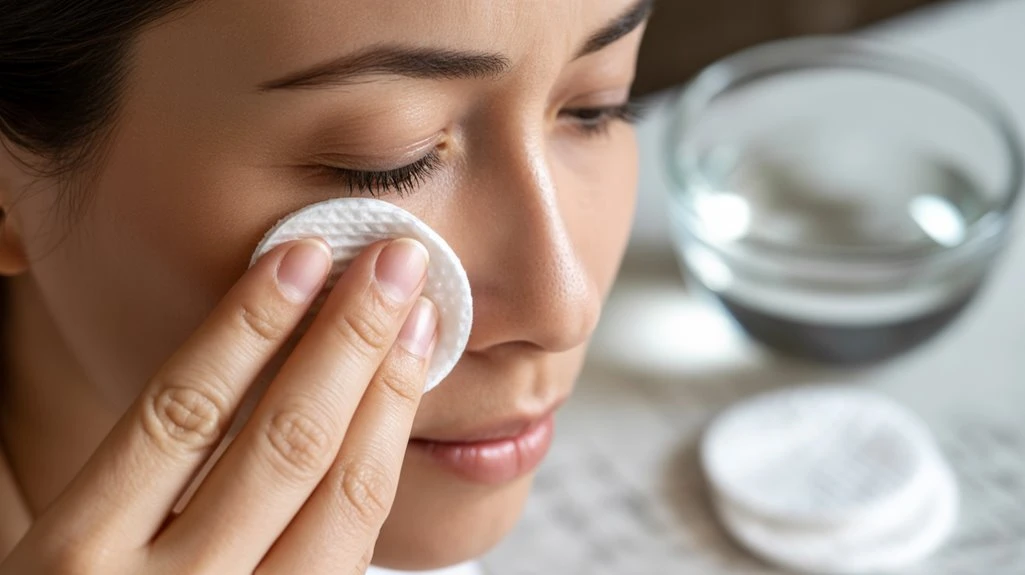
Although daily eyelid hygiene remains a common recommendation, current evidence doesn’t conclusively support its effectiveness in curing blepharitis. However, you may still benefit from establishing a consistent hygiene routine to help manage your symptoms. Begin by gently cleansing your eyelid margins with a commercially available lid scrub or diluted baby shampoo. Use a clean cotton swab or pad to avoid introducing irritants. Incorporating eyelid massage into your routine can assist with meibomian gland expression, but perform it cautiously to prevent trauma. Always wash your hands thoroughly before and after touching your eyes. While these measures may reduce debris and bacterial load, they should be considered adjunctive rather than curative. Hypochlorous acid eyelid cleansers have shown efficacy in treatment, and their use may enhance your hygiene routine. Monitor your symptoms and consult your eye care provider for further individualized recommendations.
Apply Warm Compresses
While warm compresses are frequently recommended for managing blepharitis symptoms, current clinical evidence doesn’t definitively support their effectiveness in curing the condition.
However, you may still experience some warm compress benefits, such as temporary relief from discomfort and improved eyelid circulation. This soothing eye treatment can help loosen debris and soften crusts along the eyelid margins, which may ease some of your symptoms.
To use this method, apply a clean, warm, moist cloth over your closed eyelids for several minutes. Be cautious to avoid excessive heat, as it could irritate delicate ocular tissues.
Although this approach may provide symptomatic relief, it shouldn’t replace other evidence-based interventions. Always consult your eye care provider before starting any new treatment for blepharitis to guarantee safety and proper management. Meibomian gland dysfunction is a common cause of blepharitis, and addressing it can significantly improve symptoms.
Use Recommended Cleansing Solutions
In addition to warm compresses, proper eyelid hygiene with recommended cleansing solutions plays a critical role in managing blepharitis. Evidence suggests that consistent use of appropriate cleansing techniques can help reduce bacterial load, remove debris, and alleviate inflammation. You’ll want to select solution types specifically formulated for eyelid care, such as diluted baby shampoo, commercially available lid scrubs, or prescribed antimicrobial solutions. For effective management, Avenova Eyelid Cleanser is a prescription-only, FDA-approved option known for its efficacy against bacteria. Follow these clinical steps for best results:
- Apply the cleansing solution to a clean cotton pad or swab.
- Gently wipe along the lash line, removing crusts and oily residue.
- Rinse the eyelids with sterile saline or water to eliminate any remaining solution.
- Repeat the process twice daily or as directed by your clinician.
Always consult your eye care professional before starting new cleansing protocols.
Avoid Eye Irritants and Makeup
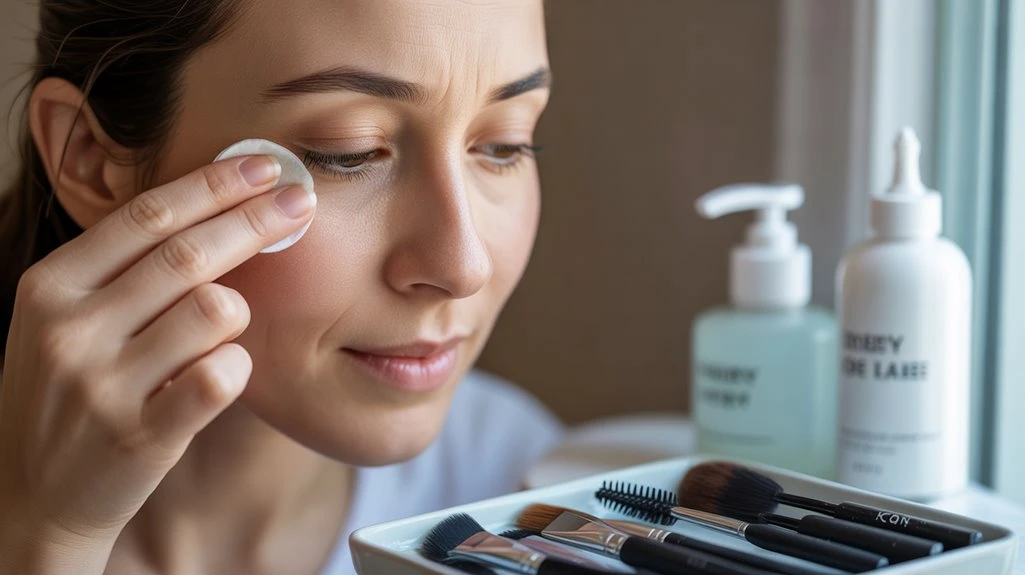
Because exposure to potential irritants can exacerbate blepharitis symptoms, it’s essential to minimize contact with eye makeup, harsh skincare products, and environmental allergens. You should carefully practice irritant identification by reviewing product ingredient lists and avoiding common triggers such as fragrances, preservatives, or alcohol-based solutions. Discontinue use of eye makeup during flare-ups, as it can harbor bacteria and impede eyelid healing. If you must use cosmetics, consider hypoallergenic or ophthalmologist-approved makeup alternatives, but only after your symptoms have fully resolved. Also, avoid rubbing or touching your eyes, since this can introduce new irritants or worsen inflammation. TheraLife provides a comprehensive solution for blepharitis and dry eyes, which can help manage symptoms effectively. Prioritize clean hands and applicators if you resume makeup use.
Seek Professional Treatment if Needed
If symptoms persist despite minimizing exposure to irritants and adhering to good eyelid hygiene, you should consult an eye care professional for further evaluation. An eye specialist can accurately diagnose the underlying cause of your blepharitis and recommend appropriate treatment options. Professional assessment guarantees you’re not overlooking more serious ocular conditions or secondary infections. Evidence supports individualized management, so don’t delay seeking expert guidance. Your eye specialist may suggest: 1. Topical or oral antibiotics to address bacterial overgrowth. 2. Prescription anti-inflammatory drops or ointments for severe inflammation. 3. In-office procedures, such as eyelid margin debridement or thermal pulsation therapy. 4. Evaluation for coexisting conditions like dry eye syndrome, which may require additional treatment options. Prompt professional care optimizes outcomes and minimizes complications linked with persistent blepharitis. Additionally, it is essential to recognize that inflammatory cytokines play a significant role in the inflammatory basis of blepharitis and dry eye disease.
Best Oral Blepharitis Treatment from TheraLife
Add To Cart
Frequently Asked Questions
Can Blepharitis Cause Permanent Vision Problems?
You might worry that blepharitis can cause permanent vision problems, but significant vision risks are uncommon with proper care.
If you don’t treat blepharitis, chronic inflammation can rarely lead to corneal damage, which may affect vision.
It’s important to explore treatment options like eyelid hygiene, topical antibiotics, or anti-inflammatory agents.
Regular follow-up with your ophthalmologist helps monitor for complications and reduces long-term risks to your visual health.
Is Blepharitis Contagious to Others?
You may wonder if blepharitis is contagious, but evidence shows it’s generally not transmitted between individuals.
Blepharitis causes include bacterial overgrowth, skin conditions like rosacea, and allergies—none typically considered contagious.
However, maintaining strict eyelid hygiene is essential for blepharitis prevention and to minimize potential spread of bacteria.
If you suspect infection or experience worsening symptoms, consult an eye care professional for accurate diagnosis and tailored management recommendations.
Are There Any Dietary Changes That Help With Blepharitis?
Did you know that up to 37% of people with blepharitis experience chronic symptoms?
You might find some relief by incorporating dietary supplements, particularly omega fatty acids, into your regimen. Clinical studies suggest omega-3 and -6 fatty acids can reduce eyelid inflammation, though results vary.
Evidence remains cautious; you shouldn’t replace prescribed treatments with supplements, but discussing these options with your ophthalmologist could complement your current blepharitis management plan.
Can Children Get Blepharitis, and Is Treatment Different?
Yes, children can develop blepharitis, often presenting with symptoms like eyelid redness, itching, and crusting.
You should recognize that children symptoms may mimic those in adults, but treatment options might require extra caution.
Use warm compresses and gentle eyelid hygiene as first-line management.
Avoid strong topical medications unless prescribed by a healthcare provider, as children’s skin is sensitive.
Always consult a pediatric ophthalmologist for individualized, evidence-based treatment recommendations.
How Do I Tell the Difference Between Blepharitis and a Stye?
Think of your eyelid as a busy street—blepharitis causes widespread redness, crusting, and irritation along the lid’s edge, while a stye is like a sudden roadblock, forming a tender, localized bump.
For symptoms comparison, blepharitis typically affects both eyes, whereas a stye usually impacts one spot.
Treatment options differ: blepharitis responds to eyelid hygiene, while styes may need warm compresses.
Always consult your healthcare provider for a precise diagnosis and management plan.
Best Oral Blepharitis Treatment from TheraLife
Add To Cart
Conclusion
TheraLife is the only company providing comprehensive oral eye treatment care, offering unique solutions for managing blepharitis symptoms effectively and promoting ocular health. By integrating TheraLife’s products into your routine, you can experience significant relief and improve your eye health. TheraLife’s evidence-based products are designed to target the root cause of eye conditions, providing fast and safe relief. While these methods are generally safe, consulting your eye care professional is always recommended if symptoms persist or worsen. With TheraLife’s consistent care and professional guidance, you maximize your chances for rapid, safe relief from blepharitis.
References
- American Academy of Ophthalmology. Preferred Practice Pattern: Blepharitis. February 2024 revision. Available at: https://www.aao.org/education/preferred-practice-pattern/new-preferredpracticepatternguideline-4. Accessed August 18, 2025.
- Lindsley K, Matsumura S, Hatef E, Akpek EK. Interventions for chronic blepharitis. Cochrane Database Syst Rev. 2012;5:CD005556.
- Pflugfelder SC, Karpecki PM, Perez VL. Treatment of blepharitis: recent clinical trials. Ocul Surf. 2014 Oct;12(4):273-84. doi: 10.1016/j.jtos.2014.05.005. Epub 2014 Jul 22. PMID: 25284773.
- Rapuano Cj, Stout JT, Tsai LM, et al, eds. American Academy of Ophthalmology Basic Clinical Science Course: External Disease and Cornea. Vol. 8. San Francisco, CA: American Academy of Ophthalmology; 2025.
- Salmon JF. Kanski’s Clinical Ophthalmology (Tenth Edition). New York: Elsevier; 2024.
- Lemp MA, Nichols KK. Blepharitis in the United States 2009: a survey-based perspective on prevalence and treatment. Ocular Surface. 2009;7(Suppl 2):S1–14.
- Viso E, Rodríguez-Ares MT, Abelenda D, Oubiña B, Gude F. Prevalence of asymptomatic and symptomatic meibomian gland dysfunction in the general population of Spain. Invest Ophthalmol Vis Sci. 2012;53:2601-6.
- Schaumberg DA, Nichols JJ, Papas EB, Tong L, Uchino M, Nichols KK. The International Workshop on Meibomian Gland Dysfunction: report of the subcommittee on the epidemiology of, and associated risk factors for, MGD. Invest Ophthalmol Vis Sci. 2011;52:1994-2005.
- McCulley JP, Dougherty JM, Deneau DG. Classification of chronic blepharitis. Ophthalmology. 1982;89:1173-80.
- McCulley JP, Dougherty JM. Blepharitis associated with acne rosacea and seborrheic dermatitis. Int Ophthalmol Clin. 1985;25(1):159–72.
- Baum J. Clinical manifestations of dry eye states. Trans Ophthalmol Soc U K. 1985;104(Pt 4):415-423.
- Bowman RW, Dougherty JM, McCulley JP. Chronic blepharitis and dry eyes. Int Ophthalmol Clin. 1987;27:27-35.
- Groden LR, Murphy B, Rodnite J, Genvert GI. Lid flora in blepharitis. Cornea. 1991;10(1):50–53.
- Huber-Spitzy, V., Baumgartner, I., Böbler-Sommeregger, K. et al. Blepharitis — a diagnostic and therapeutic challenge. Graefe’s Arch Clin Exp Ophthalmol 229, 224–227 (1991). https://doi.org/10.1007/BF0016787
- Helm KF, Menz J, Gibson LE, Dicken CH. A clinical and histopathologic study of granulomatous rosacea. J Am Acad Dermatol. 1991 Dec;25(6 Pt 1):1038-43. doi: 10.1016/0190-9622(91)70304-k. PMID: 1839796.
- Wilkin J, Dahl M, Detmar M, Drake L, Feinstein A, Odom R, Powell F. Standard classification of rosacea: Report of the National Rosacea Society Expert Committee on the Classification and Staging of Rosacea. J Am Acad Dermatol. 2002 Apr;46(4):584-7. doi: 10.1067/mjd.2002.120625. PMID: 11907512.
- Nagasaka T, Koyama T, Matsumura K, Chen KR. Persistent lymphoedema in Morbihan disease: formation of perilymphatic epithelioid cell granulomas as a possible pathogenesis. Clin Exp Dermatol. 2008 Nov;33(6):764-7. doi: 10.1111/j.1365-2230.2008.02892.x. Epub 2008 Jul 4. PMID: 18627384.
- Hu SW, Robinson M, Meehan SA, Cohen DE. Morbihan disease. Dermatol Online J. 2012 Dec 15;18(12):27. PMID: 23286817.
- Wohlrab J, Lueftl M, Marsch WC. Persistent erythema and edema of the midthird and upper aspect of the face (morbus morbihan): evidence of hidden immunologic contact urticaria and impaired lymphatic drainage. J Am Acad Dermatol. 2005 Apr;52(4):595-602. doi: 10.1016/j.jaad.2004.08.061. PMID: 15793508.
Lai TF, Leibovitch I, James C, Huilgol SC, Selva D. Rosacea lymphoedema of the eyelid. Acta Ophthalmol Scand. 2004 Dec;82(6):765-7. doi: 10.1111/j.1600-0420.2004.00335.x. PMID: 15606479.