
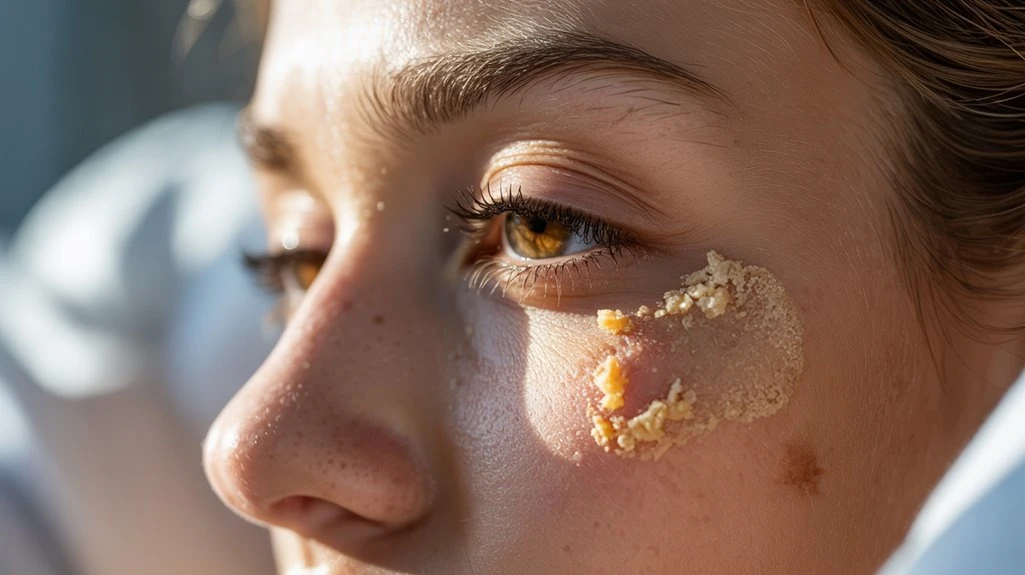
When you wake up with crusty eyes, it’s often due to slowed tear production at night, which allows mucus, lipids, and debris to accumulate along your eyelid margins. This residue, commonly known as “eye crust” or sleep, can be exacerbated by factors such as allergies, conjunctivitis, blepharitis, blocked tear ducts, and environmental irritants.
TheraLife offers unique oral eye treatment care designed to address these issues. As the only company providing such comprehensive oral solutions, TheraLife products can effectively reduce morning discharge and irritation. These products are particularly beneficial for those who wear contact lenses or experience increased redness and discomfort. By understanding the mechanisms behind crusty eyes, you can better recognize when TheraLife’s treatments might be beneficial and when to seek further clinical attention.
Get Rid Of Crusty Eyes – Treat Your Dry Eyes With TheraLife
Crusty Eyes Management with TheraLIfe All In One Dry Eye Starter Kit.
Add To Cart
Key Takeaways
- Natural tear evaporation and overnight accumulation of mucus and lipids commonly cause crusty residue near the eyelids in the morning.
- Allergies and environmental irritants can trigger increased eye discharge and crust formation, especially after overnight exposure.
- Eye infections like conjunctivitis (pink eye) and blepharitis often result in morning eye crust due to inflammation and excess discharge.
- Blocked tear ducts impede tear drainage, leading to persistent morning crust, tearing, and mild redness or discomfort.
- Poor contact lens hygiene or overnight lens wear increases the risk of infection and debris buildup, causing morning eye crustiness.
The Role of Natural Tear Production
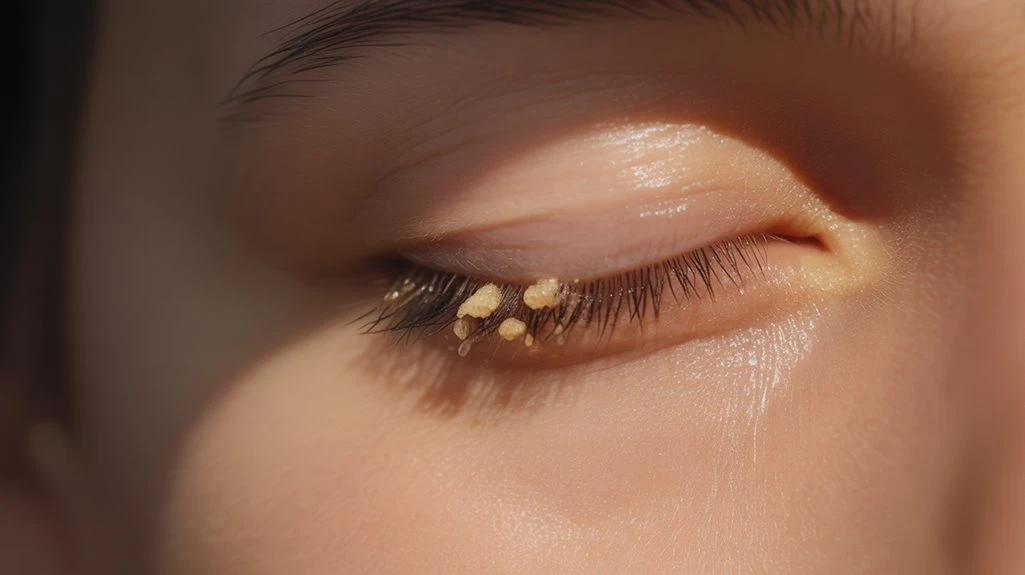
Although your eyes constantly produce tears to maintain moisture and remove debris, natural tear production decreases during sleep. Tear composition includes a balanced mix of water, lipids, and mucins, each essential for ideal eye hydration and surface protection.
During waking hours, blinking spreads tears across the ocular surface, promoting even distribution and removal of particulates. However, when you sleep, blink frequency drops to zero, and lacrimal gland activity diminishes, reducing the replenishment of the tear film.
As a result, tear evaporation and stagnation increase, causing the residual tear components—mainly mucus and lipids—to accumulate near the eyelid margins. This accumulation forms the crusty residue you often notice upon waking.
Understanding tear composition is fundamental to appreciating how reduced eye hydration overnight leads to this common phenomenon. Additionally, allergies or sensitivities, such as gluten intolerance, may trigger increased discharge during the night.
How Sleep Affects Eye Health
While you rest, your eyes undergo crucial restorative processes that directly impact ocular health. High sleep quality allows for ideal lubrication and cellular repair, which are critical for preventing eye fatigue. During sleep, your eyelids shield the ocular surface, reducing exposure to environmental irritants and allowing the tear film to redistribute. Poor sleep quality, however, disrupts these mechanisms, increasing your susceptibility to morning crustiness and discomfort. Chronic dry eyes can exacerbate this condition, making it essential to address underlying issues for effective management.
| Sleep Factor | Ocular Effect | Clinical Implication |
|---|---|---|
| High sleep quality | Enhanced tear stability | Reduced crust formation |
| Low sleep quality | Increased eye fatigue | Higher risk of irritation |
| Full eyelid closure | Maintains ocular moisture | Supports healing |
| Incomplete closure | Tear evaporation | Dryness, more discharge |
| REM cycles | Cellular regeneration | Promotes ocular surface health |
Prioritizing good sleep habits is crucial for maintaining healthy eyes.
Allergies and Their Impact on Eye Discharge
Beyond sleep quality, allergic reactions frequently contribute to morning eye crustiness through immune-mediated mechanisms. When exposed to allergens—such as pollen, dust mites, or animal dander—your body releases histamines, leading to inflammation of the conjunctiva. This response increases tear production and stimulates mucus-secreting goblet cells, resulting in excess eye discharge. Seasonal triggers, like spring or fall pollen surges, often intensify these symptoms.
Clinically, you may notice the following:
- Watery, stringy, or sticky eye discharge, especially upon waking
- Redness and swelling of the eyelids or conjunctiva
- Frequent eye rubbing due to persistent itching
- Exacerbation of symptoms during high-allergen periods (e.g., pollen seasons)
Recognizing the immune-mediated role of allergic reactions is essential for appropriate management of morning eye crustiness associated with seasonal triggers. Poor sleep hygiene can exacerbate these symptoms by increasing irritant accumulation, further contributing to morning eye crustiness.
Eye Infections: Pink Eye and Beyond
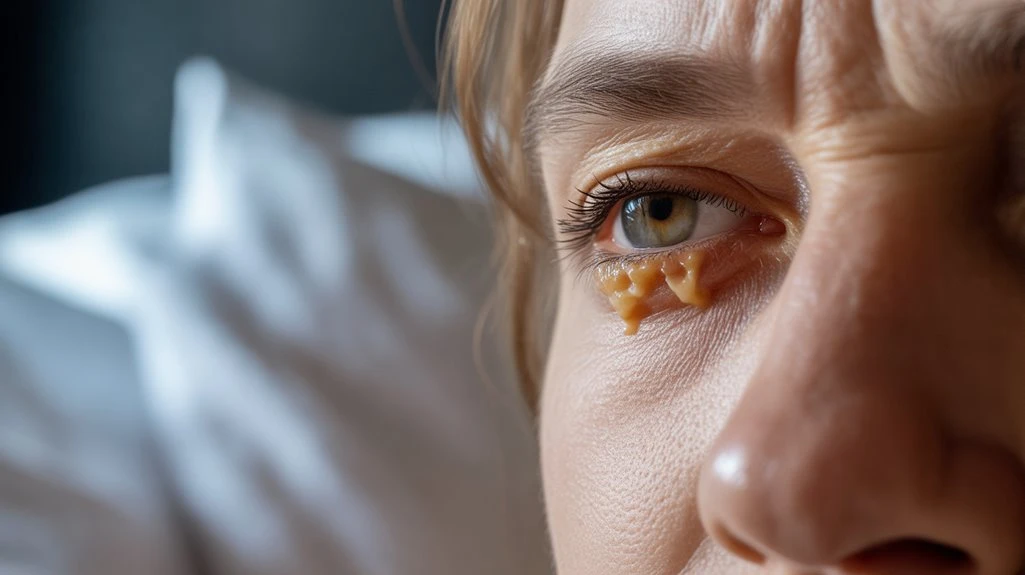
When you experience conjunctivitis, or pink eye, expect symptoms like erythema, discharge, and ocular irritation. It’s important to distinguish between bacterial and viral etiologies, as management strategies differ greatly. To reduce transmission risk, you should follow strict hand hygiene and avoid sharing personal items. Additionally, watery discharge is often linked to blocked tear ducts, which is another condition that may cause similar symptoms.
Pink Eye Symptoms Overview
How can you distinguish pink eye from other causes of morning eye crust? Pink eye, clinically known as conjunctivitis, presents with hallmark symptoms that set it apart from routine discharge caused by sleep or common eye irritants.
Conjunctivitis often emerges following exposure to infectious agents or allergens, leading to inflammation of the conjunctiva. You may notice the following key features:
- Redness and swelling of the conjunctiva, persisting throughout the day.
- Watery or mucopurulent discharge that may glue the eyelids shut upon waking.
- Gritty or burning sensation rather than simple itchiness.
- Sensitivity to light (photophobia) in more severe cases.
Understanding these clinical signs is essential for differentiating pink eye from benign causes. Early recognition also guides appropriate management, including prompt viral conjunctivitis treatment and minimizing exposure to common eye irritants. Implementing dietary changes like the Autoimmune Protocol (AIP) diet may support overall eye health and reduce inflammation, which could be particularly beneficial for individuals with autoimmune conditions.
Bacterial Versus Viral Infections
While pink eye often signals conjunctivitis, it’s important to recognize that both bacterial and viral infections can trigger similar symptoms, yet require different management approaches.
If you notice thick, yellow or green discharge leading to significant morning crusting, bacterial transmission is likely, often resulting from direct contact or contaminated surfaces. Bacterial conjunctivitis typically responds to antibiotic therapy.
In contrast, viral symptoms—such as watery discharge, redness, and mild irritation—are usually associated with upper respiratory infections and don’t benefit from antibiotics. Viral conjunctivitis often spreads rapidly, especially in close-contact environments, but is usually self-limited.
Distinguishing between bacterial and viral etiologies is essential, as improper treatment may prolong recovery or worsen symptoms. If you’re unsure, consult an eye care professional for accurate diagnosis and targeted management.
A chronic disease such as diabetes can increase the risk of developing eye infections, including styes, which underscores the importance of managing underlying health conditions to prevent complications.
Preventing Eye Infection Spread
Although eye infections like conjunctivitis are common, you can greatly reduce transmission risk by implementing strict hygiene practices.
From a clinical perspective, most cases of crusty eyes in the morning are linked to pathogens easily spread through direct or indirect contact. Effective infection prevention requires vigilant personal and environmental control measures.
Evidence shows that targeted hygiene practices substantially limit the spread of both bacterial and viral conjunctivitis. To minimize cross-contamination and protect ocular health, follow these protocols:
- Wash your hands frequently—especially before and after touching your eyes.
- Avoid sharing towels, pillowcases, or cosmetics to prevent indirect pathogen transfer.
- Disinfect frequently touched surfaces such as doorknobs and light switches.
- Dispose of tissues and cotton pads immediately after use to limit environmental contamination.
Prioritize these practices to safeguard yourself and others. Persistent symptoms warrant consultation with an eye doctor, as abnormal drainage systems may indicate underlying health issues.
Blepharitis: Inflammation of the Eyelid
Because blepharitis involves chronic inflammation of the eyelid margins, you may notice redness, swelling, and debris accumulating at the base of your eyelashes.
Clinically, this condition frequently presents with crusty eyelids upon waking, as inflammatory exudate and epithelial debris collect overnight. The pathophysiology often includes dysfunction of the meibomian glands and an overgrowth of skin flora such as Staphylococcus species.
You might observe symptoms like irritation, burning, and a foreign body sensation. Effective management emphasizes consistent eyelid hygiene—using warm compresses and lid scrubs to remove debris and decrease bacterial load. warm compresses loosen clogged oils in eyelid glands, reducing inflammation and improving tear quality.
Evidence supports that maintaining strict eyelid hygiene reduces both the frequency and severity of flare-ups. If symptoms persist or worsen, seek evaluation to rule out secondary infection or associated ocular surface disease.
Blocked Tear Ducts and Morning Crust
When your tear ducts become obstructed, tear drainage is disrupted, leading to excess tearing and accumulation of ocular discharge overnight. You may notice symptoms like persistent eye crust, redness, and mild discomfort upon waking. Effective management focuses on relieving the blockage and minimizing morning crust through targeted hygiene and medical interventions. Proper eye hygiene is crucial for mitigating crusty eyes and preventing further complications.
Tear Drainage Disruption Explained
If the tear drainage system becomes obstructed, tear fluid can’t flow properly through the nasolacrimal duct, leading to tear stagnation and accumulation of debris on the eyelid margins.
The tear duct anatomy includes the puncta, canaliculi, lacrimal sac, and nasolacrimal duct, forming a drainage pathway essential for fluid clearance. When this pathway is blocked, normal tear turnover is impaired, promoting mucus, epithelial cell, and particulate build-up overnight.
Clinically, this provides a fertile environment for morning crust formation. Recognizing how disruptions to the tear duct anatomy affect drainage explains why you might wake up with ocular crust.
- Impaired drainage pathway elevates tear stagnation risk
- Accumulated debris adheres to eyelid margins
- Blockage supports microbial colonization
- Nighttime eye closure exacerbates debris retention
In addition to tear drainage issues, anterior blepharitis can also contribute to morning crust formation due to flaking skin and crusting at the eyelash base. Understanding this mechanism highlights the importance of tear drainage integrity.
Common Blockage Symptoms
Although tear duct obstruction often develops gradually, you’ll typically notice hallmark symptoms that signal impaired drainage. One of the most prominent is recurrent morning eye crust, which accumulates along your lash line or in the inner corner of your eye. This crusting results from tears and ocular debris not draining properly, allowing secretions to dry overnight.
You may also experience persistent tearing, mild redness, or a sensation of grittiness—symptoms often seen in common eye conditions like conjunctivitis, but here specifically linked to blocked duct pathology.
If the blockage persists, you might observe swelling or tenderness near the nasal aspect of your lower eyelid. Recognizing these signs during your morning hygiene routine can help differentiate blocked tear ducts from other causes of eye discharge, guiding timely clinical evaluation.
Managing Morning Eye Crust
Since persistent morning eye crust often signals obstructed tear drainage, effective management requires both symptom relief and addressing the underlying blockage.
You’ll want to combine clinical interventions with evidence-based home remedies to restore proper tear flow and minimize discharge. Maintaining ocular surface hydration is critical; dehydration can exacerbate mucus accumulation.
Try these strategies:
- Apply a warm compress to the affected eye for 5–10 minutes to promote ductal opening and facilitate crust removal.
- Practice gentle eyelid massage, moving in a downward motion, to assist with tear drainage.
- Incorporate hydration tips such as increasing water intake, which supports ideal tear film production.
- Use preservative-free artificial tears as recommended by your clinician to maintain ocular surface moisture.
Persistent symptoms warrant further evaluation by an ophthalmologist.
The Influence of Environmental Irritants
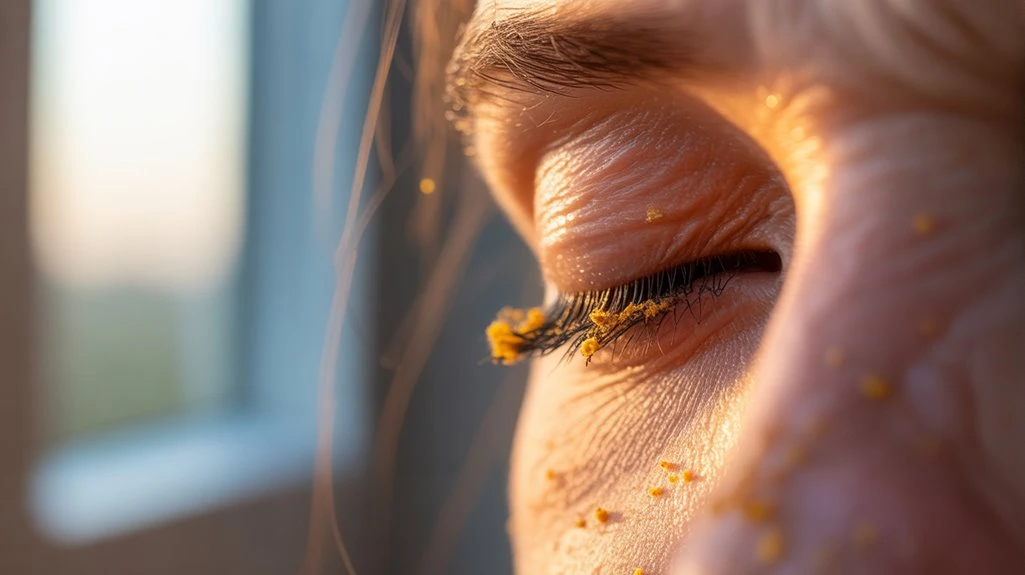
Numerous environmental irritants, including airborne allergens, dust, and chemical fumes, can trigger ocular surface inflammation and exacerbate morning eye crusting. When you’re exposed to environmental pollutants, your eyes respond defensively by increasing mucus production and initiating an inflammatory cascade. Irritant exposure overnight—due to open windows, poor indoor air quality, or proximity to industrial emissions—may amplify these effects, resulting in excessive discharge upon waking. Clinical studies correlate high levels of particulate matter with increased rates of ocular irritation and conjunctival inflammation.
| Common Irritant | Emotional Impact |
|---|---|
| Airborne allergens | Frustration |
| Chemical fumes | Anxiety |
| Household dust | Discomfort |
| Urban pollutants | Helplessness |
Contact Lenses and Overnight Eye Health
Wearing contact lenses overnight disrupts the eye’s natural tear film and impedes oxygen transmission to the corneal surface, considerably increasing the risk of morning eye crusting.
Overnight wear creates a hypoxic environment, altering the ocular surface’s microbiome and promoting accumulation of proteinaceous debris and cellular waste. Less-than-ideal contact lens hygiene further exacerbates the risk, facilitating microbial colonization and inflammatory responses.
To minimize complications associated with overnight wear, you should:
- Prioritize daily removal and cleaning of lenses to maintain ideal contact lens hygiene
- Use only recommended cleaning solutions and avoid tap water for rinsing lenses
- Replace lenses as directed to decrease biofilm formation and debris accumulation
- Monitor for symptoms such as redness, discomfort, or increased discharge, which may indicate early infection or inflammation
Adhering to these practices preserves ocular surface health and reduces morning crust formation.
When to Seek Medical Attention for Eye Discharge
How can you distinguish routine morning eye crust from signs that warrant clinical evaluation? You should monitor discharge types and associated symptoms.
Normal eye hygiene results in minimal, clear, or white crusting. However, yellow, green, or thick discharge, especially if accompanied by redness, pain, blurred vision, or photophobia, indicates possible infection or inflammation, such as conjunctivitis or blepharitis.
Persistent or worsening symptoms, or crusting interfering with eyelid opening, suggest a need for prompt assessment. If you wear contact lenses and notice abnormal discharge, remove lenses immediately and consult an eye care provider, as contact lens–related infections can progress rapidly.
Early evaluation is especially critical if discharge accompanies systemic symptoms like fever or facial swelling. Prioritize ocular health by seeking professional care when indicated.
Get Rid Of Crusty Eyes – Treat Your Dry Eyes With TheraLife
Crusty Eyes Management with TheraLIfe All In One Dry Eye Starter Kit.
Add To Cart
Frequently Asked Questions
Can Diet or Hydration Affect Morning Eye Crustiness?
You might notice hydration effects and dietary influences on your ocular surface health.
Inadequate hydration can reduce tear film production, leading to increased debris accumulation and crustiness. Diets deficient in omega-3 fatty acids or vitamin A may impair meibomian gland function or mucin production, exacerbating morning eye discharge.
Clinical evidence suggests maintaining ideal fluid intake and a balanced diet supports tear film stability and reduces abnormal ocular secretions, thereby minimizing morning eye crustiness.
Are Certain Age Groups More Prone to Crusty Eyes?
You’ll notice age related factors influence the incidence of crusty eyes.
Children’s susceptibility is higher due to increased rates of viral and bacterial conjunctivitis, immature immune responses, and frequent hand-eye contact.
In older adults, tear film instability and meibomian gland dysfunction predispose you to increased discharge.
Clinical studies indicate both pediatric and geriatric populations experience more ocular surface disorders, which can directly lead to morning crusting and discharge compared to other age groups.
Do Pets Increase the Risk of Morning Eye Discharge?
They say “an ounce of prevention is worth a pound of cure,” especially when it comes to eye health.
If you own pets, you’re at increased risk for morning eye discharge due to pet allergies and inadequate pet hygiene. Allergens from dander can provoke conjunctival irritation, while bacteria from unwashed fur or paws may contribute to ocular inflammation.
You can mitigate symptoms by maintaining rigorous pet hygiene and minimizing allergen exposure in your environment.
Can Eye Makeup Cause Crusty Eyes Overnight?
If you don’t thoroughly remove eye makeup before sleeping, residual cosmetics can disrupt eyelid hygiene and block the meibomian glands.
This blockage may lead to increased debris and crust formation along the lid margin overnight.
Studies show that inadequate makeup removal correlates with higher rates of blepharitis and conjunctival irritation.
To minimize nocturnal crusting, maintain meticulous eyelid hygiene and incorporate effective makeup removal into your nightly routine for ideal ocular surface health.
Is Morning Eye Crustiness Contagious?
You should know that morning eye crustiness can be contagious if it results from certain eye infections, such as bacterial or viral conjunctivitis.
Transmission commonly occurs through direct contact or sharing contaminated items. Practicing proper hygiene—like frequent handwashing and avoiding eye-rubbing—significantly reduces risk.
Clinically, if you develop persistent crusting, redness, or discharge, consult a healthcare provider, as targeted antimicrobial therapy may be necessary to prevent spread and guarantee appropriate treatment.
Get Rid Of Crusty Eyes – Treat Your Dry Eyes With TheraLife
Crusty Eyes Management with TheraLIfe All In One Dry Eye Starter Kit.
Add To Cart
Conclusion
When you wake up to find your eyes crusted shut, it could be an indication of underlying issues such as inadequate tear production, allergies, or infections. TheraLife offers unique oral eye treatment solutions designed to address these concerns effectively. Unlike other companies, TheraLife is the only one that provides oral treatment options, offering a holistic approach to eye care.
TheraLife’s products are formulated to enhance the body’s natural ability to produce tears, addressing the root cause of dry eyes and related conditions like blepharitis. By using TheraLife’s oral treatments, you can experience relief from persistent or severe symptoms, ensuring your ocular health is protected. TheraLife’s evidence-based care emphasizes the importance of treating eye conditions from within, providing a comprehensive solution that goes beyond topical treatments.
If you’re experiencing such symptoms, it’s important not to ignore them. Consult an ophthalmologist and consider TheraLife’s innovative products to ensure prompt diagnosis and effective management, ultimately preventing complications and enhancing your eye health.
References
- 1.
- Shekhawat NS, Shtein RM, Blachley TS, Stein JD. Antibiotic Prescription Fills for Acute Conjunctivitis among Enrollees in a Large United States Managed Care Network. Ophthalmology. 2017 Aug;124(8):1099-1107. [PMC free article] [PubMed]
- 2.
- Smith AF, Waycaster C. Estimate of the direct and indirect annual cost of bacterial conjunctivitis in the United States. BMC Ophthalmol. 2009 Nov 25;9:13. [PMC free article] [PubMed]
- 3.
- 4.
- de Laet C, Dionisi-Vici C, Leonard JV, McKiernan P, Mitchell G, Monti L, de Baulny HO, Pintos-Morell G, Spiekerkötter U. Recommendations for the management of tyrosinaemia type 1. Orphanet J Rare Dis. 2013 Jan 11;8:8. [PMC free article] [PubMed]
- 5.
- Sati A, Sangwan VS, Basu S. Porphyria: varied ocular manifestations and management. BMJ Case Rep. 2013 May 22;2013 [PMC free article] [PubMed]