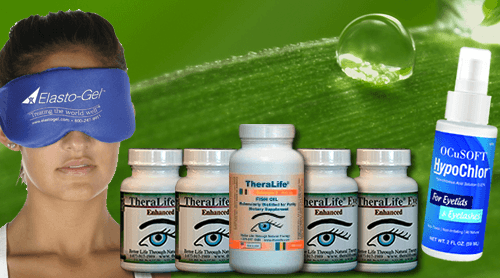

Theralife’s products offer unique benefits to customers suffering from various eye conditions, particularly those related to crusty eyes and inflammation. As the only company providing oral eye treatment care, Theralife addresses underlying causes of eye irritation and dryness, helping to restore natural tear production. Their comprehensive approach is designed to relieve symptoms and improve overall eye health. The company’s products not only target the symptoms of conditions like blepharitis, uveitis, and Sjogren’s syndrome but also work to heal and soothe the eyes naturally. By offering specialized, natural solutions, Theralife empowers customers to effectively manage and treat their eye conditions at home.
Get Rid Of Crusty Eyes – Treat Your Dry Eyes With TheraLife
Crusty Eyes Management with TheraLIfe All In One Dry Eye Starter Kit.
Add To Cart
Key Takeaways
- Colds trigger increased tear and mucus production, which can accumulate around the eyes overnight.
- Nasal congestion blocks tear drainage, causing tears and mucus to pool in the eyes.
- Reduced blinking during sleep allows discharge to dry and form crusts on the eyelids.
- Inflammation from viral infections irritates the conjunctiva, leading to more eye discharge.
- Crusty eyes in the morning result from dried tears, mucus, and cellular debris collected overnight.
Why Do Colds Make Your Eyes Crusty in the Morning?
Ever wondered why you wake up with crusty eyes when you have a cold?
When you contract viral infections like the common cold, your immune response activates to combat pathogens. This response triggers increased production of tears and mucus as your body attempts to flush out viruses.
The conjunctiva, a membrane lining your eyelids and covering the white of your eyes, can become inflamed due to this immune activity. As a result, excess tear film mixed with cellular debris and mucus accumulates at the eyelid margins.
Overnight, tear production decreases and evaporation occurs, causing this mixture to dry and form crusts. This is a direct, physiological result of your immune system’s effort to eliminate viral particles and protect ocular tissues during infection. Additionally, during sleep, blinking stops, allowing eye discharge to accumulate and dry, contributing to the morning crustiness.
How Nasal Congestion Causes Eye Discharge
While increased tear and mucus production contribute to crusty eyes during a cold, nasal congestion plays a direct role in eye discharge as well.
When you experience nasal inflammation due to a viral infection, the mucous membranes lining your nasal passages swell and produce excess secretions. This inflammation can obstruct the nasolacrimal duct, which normally drains tears from your eyes into your nasal cavity.
When drainage is impaired, tears and mucus accumulate in the conjunctival sac, leading to morning eye discharge. Additionally, nasal inflammation increases local vascular permeability, which can exacerbate eye irritation and promote further mucus production.
As a result, you notice more crusting at the eyelid margins. This mechanism illustrates how upper respiratory tract congestion directly affects ocular surface health during colds. Chronic dry eyes can exacerbate symptoms, as insufficient tear production leads to further irritation and discomfort.
What Your Eye Discharge Says About Your Cold
The characteristics of your eye discharge can provide clinically relevant information about the underlying processes during a cold.
If you notice a thin, watery discharge, this typically reflects viral conjunctivitis secondary to upper respiratory tract infection—an expected component of cold symptoms. A thicker, yellow or green discharge may indicate bacterial superinfection, which poses greater risks for eye health and may warrant further evaluation.
The presence of crusting, often more pronounced in the morning, results from the accumulation of mucous, cellular debris, and tears as your immune system responds to infection. Maintaining proper eye hygiene is crucial for mitigating crusty eyes and associated issues.
You should monitor the volume, color, and consistency of ocular secretions, as these parameters can distinguish between benign viral etiologies and more severe complications.
Timely recognition supports ideal management of both your eye health and overall cold symptoms.
How to Prevent and Soothe Crusty Eyes When You’re Sick
Although ocular discharge during a cold is often self-limited, you can minimize discomfort and prevent complications by adhering to evidence-based hygiene practices. Prioritize eye hygiene by washing your hands thoroughly before and after touching your face or eyes. Use a sterile, damp cotton pad to gently remove crusts from your eyelids, wiping from the inner to the outer corner and discarding each pad after one use. Avoid sharing towels or pillowcases to reduce cross-contamination. For soothing remedies, apply a clean, warm compress to closed eyelids for 5–10 minutes to help loosen secretions and alleviate irritation. Consistent application of home remedies can lead to significant improvement in symptoms associated with chalazion. Refrain from rubbing your eyes, as this can exacerbate inflammation and introduce pathogens. Maintain ideal ocular surface health by staying hydrated and using preservative-free artificial tears if dryness persists.
When Should You Worry About Eye Discharge During a Cold?
Most cases of ocular discharge during a cold resolve without intervention, but certain signs indicate when further evaluation is warranted.
If you notice thick, yellow or green discharge, significant eyelid swelling, persistent redness, or visual disturbances, you may be experiencing an eye infection rather than benign viral conjunctivitis.
Additionally, if both eyes develop severe itching, watery discharge, and swelling, consider the possibility of an allergic reaction.
Pain, photophobia, or decreased vision are red flags that necessitate prompt medical attention.
Discharge persisting beyond one week or worsening despite symptomatic treatment suggests complications.
You shouldn’t ignore any symptoms that deviate from typical cold-related crusting.
Timely assessment can help distinguish between self-limited viral irritation, bacterial eye infection, or allergic reaction, ensuring you receive appropriate and effective management.
In cases of blocked tear ducts or persistent discharge, consulting an eye doctor is advised for proper evaluation and treatment options.
Get Rid Of Crusty Eyes – Treat Your Dry Eyes With TheraLife
Crusty Eyes Management with TheraLIfe All In One Dry Eye Starter Kit.
Add To Cart
Frequently Asked Questions
Can Allergies Also Cause Crusty Eyes in the Morning?
Yes, allergies can cause crusty eyes in the morning.
When you experience allergy symptoms, your immune response triggers histamine release, leading to eye irritation, increased tear production, and mucus accumulation.
During sleep, this discharge collects at the eyelid margins and dries, forming crust.
Allergic conjunctivitis is a common condition that presents with redness, itching, and watery eyes.
You may notice more crusting if you’re exposed to pollen, dust mites, or pet dander.
Do Certain Cold Medicines Worsen Eye Discharge?
Yes, certain cold medication effects, particularly those containing antihistamines or decongestants, can worsen eye discharge by reducing tear production and causing ocular surface dryness.
This dryness may lead to increased mucus accumulation overnight. To mitigate this, you should consider eye discharge remedies such as using artificial tears, maintaining eyelid hygiene, and avoiding medications with strong anticholinergic effects if possible.
Consult your physician to optimize symptom management without exacerbating ocular discomfort.
Are Children More Prone to Crusty Eyes During Colds?
Think of your child’s immune system as an inexperienced guard, still learning the ropes.
Because child immunity is immature, their bodies respond to cold symptoms with more robust mucus production, including in the eyes. This leads to increased ocular discharge, manifesting as crusty eyelids upon waking.
Clinical studies confirm that children experience conjunctival irritation and discharge more frequently during upper respiratory infections compared to adults, due to heightened inflammatory responses and anatomical factors.
Can Eye Crusts Spread Infection to Others?
Yes, eye crusts can facilitate the transmission of eye infections if they contain infectious agents like viruses or bacteria.
When you touch your eyes and then contact shared surfaces or other individuals, you may spread contagious symptoms of conjunctivitis or similar illnesses.
Practicing strict hand hygiene and avoiding direct contact with ocular discharge minimizes the risk of contagion.
Discard tissues and wash hands thoroughly to prevent propagation of infectious organisms to others.
Is It Safe to Wear Contact Lenses With Crusty Eyes?
Should you risk wearing contact lenses when your eyes are crusty? No; doing so compromises contact lens hygiene and greatly elevates eye infection risks, including bacterial or viral conjunctivitis.
Crusty eyes often indicate underlying inflammation or infection, and contact lenses can trap pathogens against the ocular surface.
Evidence-based guidelines recommend discontinuing lens use until your eyes are asymptomatic and cleared by a healthcare professional, ensuring ideal ocular health and minimizing complications.
Get Rid Of Crusty Eyes – Treat Your Dry Eyes With TheraLife
Crusty Eyes Management with TheraLIfe All In One Dry Eye Starter Kit.
Add To Cart
Conclusion
TheraLife offers a unique approach to eye care, being the only company to provide oral treatment for eye conditions. Many people experience crusty eyes in the morning, especially when dealing with a cold. This is often due to inflammation of the mucous membranes and issues with tear drainage, which can be alleviated by maintaining proper hygiene and managing nasal congestion.
TheraLife’s products benefit customers by addressing these symptoms from within, promoting eye health and reducing discomfort. Their oral treatments have been shown to be effective in managing conditions like blepharitis, dry eyes, and other eye-related issues. If your symptoms persist, worsen, or include changes in vision, it’s crucial to consult a healthcare provider promptly. TheraLife emphasizes the importance of not ignoring eye health, as it is a key indicator of overall systemic well-being.
References
- 1.
- The definition and classification of dry eye disease: report of the Definition and Classification Subcommittee of the International Dry Eye WorkShop (2007). Ocul Surf. 2007 Apr;5(2):75-92. [PubMed]
- 2.
- Huang R, Su C, Fang L, Lu J, Chen J, Ding Y. Dry eye syndrome: comprehensive etiologies and recent clinical trials. Int Ophthalmol. 2022 Oct;42(10):3253-3272. [PMC free article] [PubMed]
- 3.
- Craig JP, Nichols KK, Akpek EK, Caffery B, Dua HS, Joo CK, Liu Z, Nelson JD, Nichols JJ, Tsubota K, Stapleton F. TFOS DEWS II Definition and Classification Report. Ocul Surf. 2017 Jul;15(3):276-283. [PubMed]
- 4.
- King-Smith PE, Fink BA, Hill RM, Koelling KW, Tiffany JM. The thickness of the tear film. Curr Eye Res. 2004 Oct-Nov;29(4-5):357-68. [PubMed]
- 5.
- King-Smith PE, Fink BA, Fogt N, Nichols KK, Hill RM, Wilson GS. The thickness of the human precorneal tear film: evidence from reflection spectra. Invest Ophthalmol Vis Sci. 2000 Oct;41(11):3348-59. [PubMed]
- 6.
- Chen Q, Wang J, Tao A, Shen M, Jiao S, Lu F. Ultrahigh-resolution measurement by optical coherence tomography of dynamic tear film changes on contact lenses. Invest Ophthalmol Vis Sci. 2010 Apr;51(4):1988-93. [PMC free article] [PubMed]
- 7.
- Willcox MDP, Argüeso P, Georgiev GA, Holopainen JM, Laurie GW, Millar TJ, Papas EB, Rolland JP, Schmidt TA, Stahl U, Suarez T, Subbaraman LN, Uçakhan OÖ, Jones L. TFOS DEWS II Tear Film Report. Ocul Surf. 2017 Jul;15(3):366-403. [PMC free article] [PubMed]
- 8.
- Peng CC, Cerretani C, Braun RJ, Radke CJ. Evaporation-driven instability of the precorneal tear film. Adv Colloid Interface Sci. 2014 Apr;206:250-64. [PubMed]
- 9.
- Zhou L, Beuerman RW. Tear analysis in ocular surface diseases. Prog Retin Eye Res. 2012 Nov;31(6):527-50. [PubMed]
- 10.
- Mantelli F, Mauris J, Argüeso P. The ocular surface epithelial barrier and other mechanisms of mucosal protection: from allergy to infectious diseases. Curr Opin Allergy Clin Immunol. 2013 Oct;13(5):563-8. [PMC free article] [PubMed]