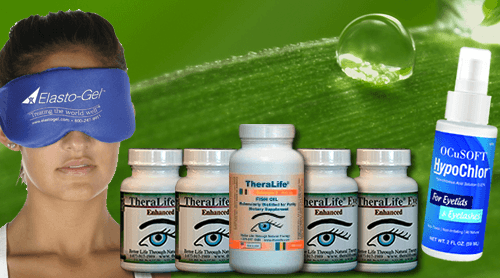

For those seeking fast relief from blepharitis, TheraLife offers a unique approach with its oral eye treatment care, setting it apart as the only company providing this innovative solution. TheraLife’s products are designed to target the root causes of blepharitis and provide comprehensive symptom management. By using TheraLife’s oral capsules, customers can experience reduced inflammation, improved tear quality, and overall eye comfort. This internal approach can be combined with topical treatments for enhanced results.
TheraLife’s dedication to eye health extends beyond this, offering solutions for conditions like dry eyes, uveitis, and Sjögren’s syndrome. Their extensive range of products and expert advice helps customers manage their symptoms effectively. By focusing on holistic and natural treatments, TheraLife empowers individuals to take control of their eye health.
For optimal blepharitis management, consider integrating TheraLife products into your care routine. Explore their variety of offerings and discover how they can support your journey to healthier eyes.
Best Oral Blepharitis Treatment from TheraLife

Add To Cart
Key Takeaways
- Systane Zaditor Antihistamine Eye Drops provide rapid relief of itching and redness caused by allergic conjunctivitis, which can accompany this.
- TheraTears SteriLid Antimicrobial Eyelid Cleanser uses hypochlorous acid to reduce bacteria and soothe eyelid inflammation linked to it.
- Ocusoft Lid Scrub Plus enhances eyelid hygiene by removing debris and biofilm, decreasing the frequency and severity of flare-ups.
- Regular eyelid cleaning with antimicrobial cleansers is vital for managing and preventing its symptoms effectively.
- Always remove contact lenses before using eye drops and consult an eye care professional for personalized treatment recommendations.
Systane Zaditor Antihistamine Eye Drops
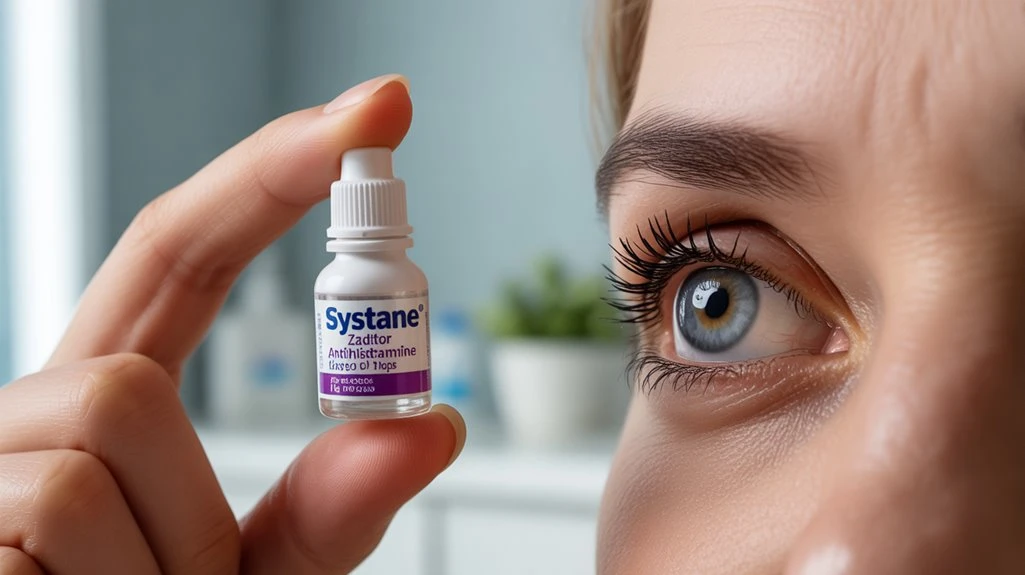
Systane Zaditor Antihistamine Eye Drops target allergic conjunctivitis by stabilizing mast cells and preventing histamine release. You’ll find these drops effective for rapid relief of itching, redness, and irritation associated with ocular allergies—symptoms commonly mistaken for or coexisting with blepharitis. Systane effectiveness is well supported in clinical studies, showing a significant reduction in allergic eye symptoms within minutes of application. The active ingredient, ketotifen fumarate, provides dual-action relief: immediate antihistamine effect and sustained mast cell stabilization. It is important to consider that certain medications, including antihistamines, can sometimes reduce tear production, leading to dry eye symptoms. When considering zaditor side effects, you might experience mild transient burning, stinging, or eye dryness. Rarely, headache or conjunctival injection can occur. Always follow dosing recommendations to optimize safety and efficacy. If you wear contact lenses, remove them before instilling the drops and wait at least ten minutes before reinsertion.
TheraTears SteriLid Antimicrobial Eyelid Cleanser
While antihistamine eye drops like Zaditor address allergic symptoms, managing blepharitis often requires targeted lid hygiene.
TheraTears SteriLid Antimicrobial Eyelid Cleanser offers an evidence-based approach to eyelid care, targeting the microbial overgrowth frequently implicated in blepharitis. Its active ingredient, hypochlorous acid, is clinically proven to reduce bacterial load without irritating sensitive periocular skin.
You can apply it directly to closed eyelids using a clean cotton pad, ensuring thorough removal of debris and biofilm from the lid margin. Regular use supports ideal eye hygiene, alleviating inflammation and reducing the risk of recurrent blepharitis flares.
Incorporating TheraTears SteriLid into your daily eyelid care routine helps maintain a healthier ocular surface, providing a proactive adjunct to other prescribed therapies for chronic lid margin disease. TheraLife provides a comprehensive solution for blepharitis and dry eyes, offering a natural and effective treatment approach.
Ocusoft Lid Scrub Plus Eye Drops
Ocusoft Lid Scrub Plus isn’t an eye drop but rather a pre-moistened eyelid cleanser designed specifically for blepharitis management. You’ll find it highly effective for improving lid hygiene, which is essential in reducing the bacterial load that often contributes to eye discomfort and inflammation. Unlike conventional eye drops, Ocusoft Lid Scrub Plus targets the root cause of blepharitis at the eyelid margin. Use this product as part of your daily routine to support:
- Removal of debris and biofilm from the eyelid margins
- Reduction of irritation and redness associated with poor lid hygiene
- Enhanced symptom relief when combined with other treatments
Clinical studies have shown that maintaining regular lid hygiene can greatly decrease the frequency and intensity of blepharitis flare-ups. Proper hygiene practices, such as regular eyelid cleaning, are crucial in preventing blepharitis flare-ups. Always follow your eye care professional’s recommendations for best results.
Best Oral Blepharitis Treatment from TheraLife
Add To Cart
Frequently Asked Questions
Can Blepharitis Eye Drops Be Used With Contact Lenses?
You shouldn’t use most blepharitis eye drops while wearing contact lenses unless their label specifically states contact lens compatibility.
Remove your lenses before eye drop application to prevent adverse reactions or lens contamination. After applying the drops, wait at least 15 minutes before reinserting your contacts.
Always consult your eye care professional for evidence-based recommendations and to guarantee you’re using the most appropriate treatment for both your blepharitis and contact lens use.
Are There Any Natural Remedies for It?
You can soothe, you can cleanse, you can reduce inflammation using natural remedies for this.
Evidence supports warm compresses as a frontline approach, helping loosen debris and promote gland function.
While some explore herbal treatments like tea tree oil for its antimicrobial properties, you should exercise caution—clinical studies remain limited and irritation is possible.
Always consult an eye care professional before starting new therapies, as precise diagnosis and tailored management remain essential for ideal results.
How Long Does It Take to See Improvement With Eye Drops?
When you start using eye drops for this, you’ll typically notice an improvement timeline of several days to two weeks, depending on the severity and the type of drops prescribed.
Eye drop effectiveness varies—antibiotic drops may show results within a week, while anti-inflammatory drops could take longer.
It’s important to use the medication as directed, since premature discontinuation might limit effectiveness and delay visible symptom improvement.
Always consult your ophthalmologist for personalized guidance.
What Are Common Side Effects of These Eye Drops?
When using these eye drops, you might experience common reactions such as mild burning, stinging, redness, or temporary blurred vision.
Some formulations may cause increased tearing or allergic responses. These side effects typically resolve as your eyes adjust during the treatment duration.
However, if you notice severe discomfort, swelling, or persistent symptoms, you should contact your healthcare provider promptly.
Always follow your prescribed regimen to minimize adverse effects and monitor your progress.
Can Children Safely Use These Eye Drops?
You should always prioritize child safety when considering blepharitis eye drops for children.
Consult your pediatrician or ophthalmologist before use, as specific dosage guidelines and approved formulations vary by age and active ingredient.
Some eye drops aren’t recommended for pediatric patients due to potential side effects or insufficient safety data.
Never exceed recommended dosages, and monitor your child for adverse reactions.
Evidence-based guidance guarantees you’re minimizing risk while effectively managing blepharitis symptoms.
Best Oral Blepharitis Treatment from TheraLife
Add To Cart
Conclusion
When blepharitis clouds your comfort, choosing the right treatment can be the beacon through the haze. TheraLife offers a unique approach with its exclusive oral eye treatment care, making it the only company to provide such a solution. By focusing on holistic and natural remedies, TheraLife ensures that inflammation and irritation retreat with consistent use. Their products, backed by evidence-based therapies, help restore clarity and comfort to your eyes. Don’t let symptoms linger in the shadows—address them head-on with TheraLife’s specialized products. Your relief is within reach; let TheraLife guide your steps.
References
- 1.Bowling JJ. Clinical Ophthalmology: A Systemic Approach. 7th ed. New York: Elsevier Saunders; 2011. pp. 34–39. [Google Scholar]
- 2.Lemp MA, Nichols KK. Blepharitis in the United States 2009: a survey-based perspective on prevalence and treatment. Ocular Surface. 2009;7(Suppl 2):1–14. doi: 10.1016/s1542-0124(12)70620-1. [DOI] [PubMed] [Google Scholar]
- 3.Nelson JD, Shimazaki J, Benitez-del Castillo JM, et al. The international workshop on meibomian gland dysfunction: report of the definition and classification subcommittee. Invest Ophthal Vis Sci. 2001;52(4):1930–1937. doi: 10.1167/iovs.10-6997b. [DOI] [PMC free article] [PubMed] [Google Scholar]
- 4.Nemet AY, Vinker S, Kaiserman I. Associated morbidity of blepharitis. Ophthalmology. 2011;118(6):1060–1068. doi: 10.1016/j.ophtha.2010.10.015. [DOI] [PubMed] [Google Scholar]
- 5.McCulley JP, Dougherty JM. Blepharitis associated with acne rosacea and seborrheic dermatitis. Int Ophthalmol Clin. 1985;25(1):159–172. doi: 10.1097/00004397-198502510-00010. [DOI] [PubMed] [Google Scholar]
- 6.Groden LR, Murphy B, Rodnite J, Genvert GI. Lid flora in blepharitis. Cornea. 1991;10(1):50–53. [PubMed] [Google Scholar]
- 7.Huber-Spitzy V, Baumgartner I, Bohler-Sommeregger K, Grabner G. Blepharitis – a diagnostic and therapeutic challenge: report on 407 consecutive cases. Graefes Arch Clin Exp Ophthalmol. 1991;229(3):244–247. doi: 10.1007/BF00167872. [DOI] [PubMed] [Google Scholar]
- 8.Bernardes TF, Bonfioli AA. Blepharitis. Semin Ophthalmol. 2010;25(3):79–83. doi: 10.3109/08820538.2010.488562. [DOI] [PubMed] [Google Scholar]
- 9.McCulley JP, Dougherty JM, Deneau DG. Classification of chronic blepharitis. Ophthalmology. 1982;89:1173–1180. doi: 10.1016/s0161-6420(82)34669-2. [DOI] [PubMed] [Google Scholar]
- 10.American Academy of Ophthalmology Preferred Practice Pattern: Blepharitis. Oct, 2012. [Accessed November 10, 2014]. revision. Available from: http://one.aao.org/preferred-practice-pattern/blepharitis-ppp–2013.
- 11.Din N, Patel NN. Blepharitis – a review of diagnosis and management. Int J Ophthalmol Prac. 2012;3(4):150–155. [Google Scholar]
- 12.Duncan K, Jeng BH. Medical management of blepharitis. Cur Opin Ophthalmol. 2015;26(4):289–294. doi: 10.1097/ICU.0000000000000164. [DOI] [PubMed] [Google Scholar]