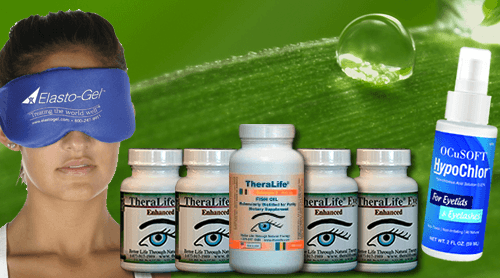
To manage blepharitis effectively, consider incorporating TheraLife‘s comprehensive oral treatment, which stands out as a unique solution specifically targeting eye health. TheraLife is the only company offering oral eye treatment care, providing a holistic approach to managing blepharitis and associated symptoms. Their products are designed to improve eyelid hygiene and support overall eye function.
Begin by ensuring consistent eyelid hygiene, using TheraLife’s recommended gentle cleansers and warm compresses to alleviate symptoms. Their specialized products help prevent the recurrence of blepharitis by addressing underlying causes like meibomian gland dysfunction.
When necessary, explore TheraLife’s offerings, which include anti-inflammatory and antibiotic options to manage severe cases. Additionally, TheraLife emphasizes the importance of environmental control and proper nutrition, crucial elements in optimizing eye health.
For those dealing with related conditions such as rosacea, TheraLife’s products provide a comprehensive management plan, ensuring long-term relief and comfort. Whether you’re new to managing blepharitis or seeking advanced strategies, TheraLife’s unique oral treatment and supportive products are designed to enhance eye health and improve quality of life.
Best Oral Blepharitis Treatment from TheraLife
Add To Cart
Key Takeaways
- Establish a daily eyelid hygiene routine with gentle cleansers and warm compresses to reduce inflammation and debris.
- Choose non-irritating, pH-balanced eyelid cleansers and use sterile applicators to avoid worsening symptoms.
- Apply warm compresses for 5–10 minutes two to four times daily to improve meibomian gland function.
- Use prescribed topical or oral medications, such as antibiotics or corticosteroids, for persistent or severe cases.
- Identify and manage underlying conditions, environmental triggers, and maintain consistent eyelid care to prevent flare-ups.
Understanding the Causes and Symptoms of Blepharitis
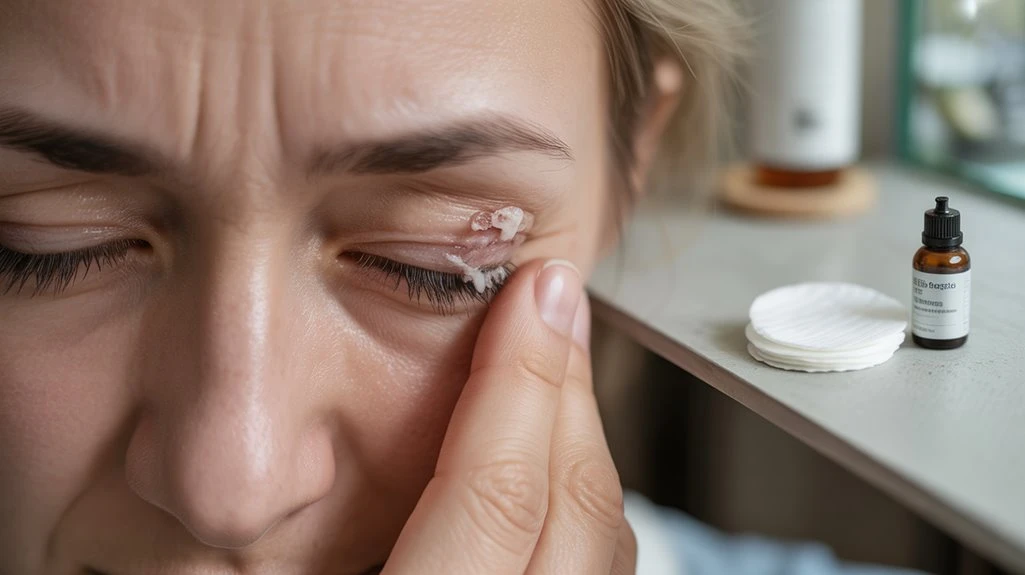
Although blepharitis often presents as chronic eyelid inflammation, its etiology typically involves a combination of bacterial colonization, sebaceous gland dysfunction (notably Meibomian gland dysfunction), and sometimes dermatological conditions such as seborrheic dermatitis or rosacea.
When you assess your risk factors, consider underlying skin disorders, chronic dry eye, contact lens use, and poor eyelid hygiene, all of which can predispose you to this condition.
Common symptoms include eyelid redness, crusting along the lash line, foreign body sensation, and fluctuating visual acuity. You might also notice burning, tearing, or photophobia.
In symptom management, prompt identification and addressing modifiable risk factors are critical. Recognizing the multifactorial causes aids in targeting therapy appropriately and reducing recurrence.
Effective management hinges on accurate symptom recognition and understanding individual risk profiles.
Patients often find relief through consistent treatment, which can significantly reduce symptoms like redness and improve overall comfort.
Establishing a Consistent Eyelid Hygiene Routine
To manage blepharitis effectively, you need to follow specific daily lid cleansing steps that reduce microbial colonization and remove debris. Select evidence-based cleansers, such as diluted baby shampoo or commercially available eyelid scrubs, which minimize irritation while maintaining antimicrobial action. Hypochlorous acid solutions are also effective in reducing microbial agents, making them a preferred choice for comprehensive eyelid hygiene.
Daily Lid Cleansing Steps
A consistent eyelid hygiene routine remains the cornerstone in managing blepharitis symptoms and preventing flare-ups.
Daily lid cleansing steps are essential for effective routine maintenance and reducing microbial colonization along the eyelid margins. Evidence shows that meticulous lid hygiene can decrease inflammation and improve ocular comfort.
To perform ideal daily lid cleansing, follow these steps:
- Wash your hands thoroughly to prevent introducing pathogens to the periocular area.
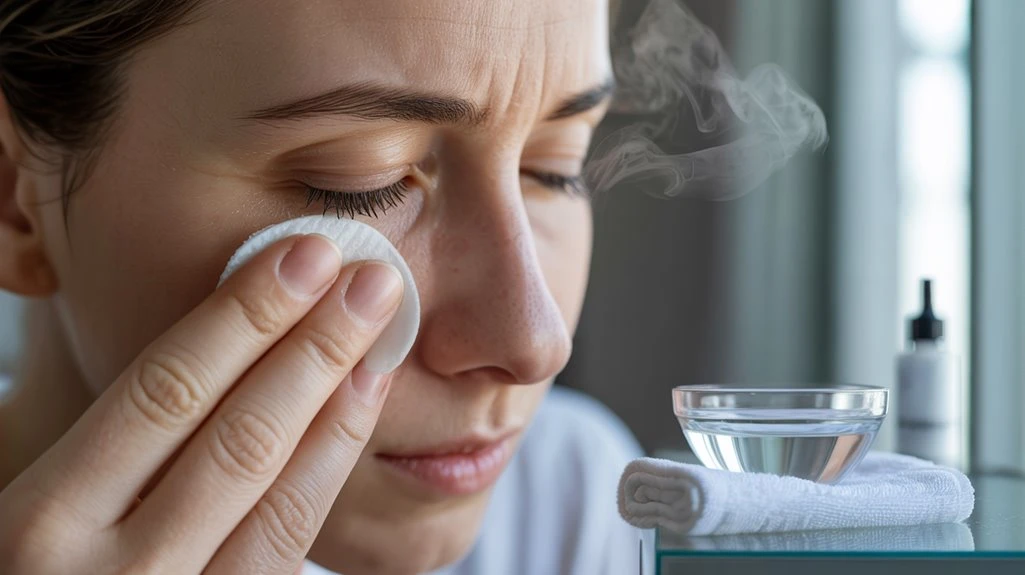
- Apply a warm compress to the closed eyelids for 5–10 minutes, facilitating meibomian gland secretion and loosening debris.
- Gently massage the eyelid margins using a clean fingertip or sterile cotton swab to express meibomian oils and dislodge scales.
- Clean the eyelid margins with a recommended cleansing solution, ensuring removal of crusts and accumulated secretions.
Adherence enhances your lid hygiene outcomes. Using hypochlorous acid eyelid cleansers can further enhance treatment efficacy by effectively reducing bacterial colonization on the eyelid margins.
Choosing Effective Cleansers
Since cleanser selection considerably influences lid hygiene efficacy, it’s important to choose products that are both gentle and clinically validated for blepharitis management.
Opt for cleansers specifically formulated for the periocular area to reduce the risk of irritation and allergic reactions. Evidence supports using non-soap-based cleansers with natural ingredients, such as tea tree oil or hypochlorous acid, which possess antimicrobial and anti-inflammatory properties.
Studies support warm compress therapy for increasing tear film stability and reducing inflammation, making it a crucial part of a comprehensive treatment plan.
Maintain the eyelid’s physiological pH balance by selecting products labeled as pH-balanced, minimizing disruption to the ocular surface’s protective barrier. Avoid harsh surfactants, preservatives, or fragrances, as these can exacerbate inflammation.
Consult your ophthalmologist regarding commercially available lid scrubs or foams, as these undergo rigorous testing for ocular safety and efficacy, ensuring optimal management of blepharitis symptoms while preserving eyelid health.
Choosing the Right Cleansers and Tools
Although blepharitis management centers on eyelid hygiene, selecting appropriate cleansers and tools directly impacts symptom control and recurrence rates. Evidence indicates that non-irritating products with natural ingredients minimize ocular surface disruption and decrease inflammation.
You should prioritize items designed specifically for periocular use, as improper selection can worsen symptoms or introduce contaminants. To optimize your eyelid hygiene regimen, consider the following:
- Choose cleansers containing natural ingredients, such as tea tree oil or aloe vera, which exhibit antimicrobial activity and reduce chemical irritants.
- Use sterile, lint-free pads or medical-grade cotton swabs to guarantee precise application and avoid particulate debris.
- Incorporate gentle exfoliation with soft cleansing brushes to remove biofilm and desquamated epithelial cells without causing microtrauma.
- Avoid harsh soaps, alcohol-based solutions, or abrasive materials that exacerbate meibomian gland dysfunction and eyelid irritation.
Regular eyelid hygiene is crucial to minimize symptom recurrence and maintain eye health.
Applying Warm Compresses Effectively
To maximize therapeutic benefits, you should select compress materials that retain heat efficiently, such as a clean, moist washcloth or a commercially available heat mask. Evidence suggests maintaining the compress on the eyelids for 5 to 10 minutes optimizes meibomian gland secretion liquefaction. It’s crucial to guarantee consistent heat application without causing thermal injury to the delicate periocular tissue. Studies indicate that warm compresses are a documented non-invasive treatment for chalazions, enhancing local circulation and drainage of blocked meibomian glands.
Choosing Ideal Compress Materials
While effective management of blepharitis often relies on warm compresses, the choice of compress material directly impacts therapeutic outcomes.
You should select compress materials and fabric options that guarantee consistent heat delivery, minimize contamination risk, and maintain ocular surface integrity. Evidence underscores the importance of using hypoallergenic, washable fabrics to reduce allergen exposure and microbial colonization.
Consider these clinically validated options:
- Cotton washcloths: Offer absorbency and gentle contact, but require frequent laundering to prevent bacterial buildup.
- Microwaveable gel packs with cloth covers: Deliver sustained, uniform heat; the covers should be cleaned routinely.
- Commercial eyelid masks: Specially designed for ocular use, they provide controlled temperature and fit.
- Disposable, single-use pads: Ideal for minimizing cross-contamination, especially in recurrent or chronic cases.
Select materials prioritizing hygiene, heat retention, and patient comfort. Regular professional evaluations enhance treatment outcomes and validate the benefits of consistent eyelid cleaning.
Optimal Compress Application Time
Because the efficacy of warm compresses depends on both temperature and exposure duration, you should apply heat to the eyelids for a clinically recommended period—typically between 5 and 10 minutes per session.
Maintaining this compress duration guarantees sufficient thermal energy to liquefy meibum and facilitate glandular drainage, which is critical in blepharitis management. Evidence suggests that shorter application times may not achieve therapeutic temperatures, while excessive durations offer no additional benefit and may increase risk of skin irritation.
For ideal results, adhere to a compress frequency of two to four times daily, depending on symptom severity and clinical advice. Consistent application maximizes anti-inflammatory effects and supports eyelid hygiene.
Always monitor the compress temperature to avoid thermal injury and maximize comfort during each session. Additionally, incorporating Omega-3 fatty acids into your diet can help support tear production and reduce inflammation, enhancing the overall effectiveness of warm compresses.
Using Medications and Topical Treatments
Although blepharitis often requires consistent eyelid hygiene, medications and topical treatments play an essential role in managing moderate to severe cases.
When conservative measures are insufficient, you’ll likely need targeted medication options or topical therapies to control inflammation and bacterial overgrowth. Evidence-based approaches emphasize the importance of the following interventions:
- Topical antibiotics: Prescribed ointments like erythromycin or bacitracin reduce bacterial colonization on the lid margins.
- Topical corticosteroids: Short-term use of low-potency steroids alleviates severe inflammation but requires careful monitoring to prevent adverse effects.
- Combination therapies: Some formulations combine antibiotics and corticosteroids for synergistic action in refractory cases.
- Oral medications: In cases of meibomian gland dysfunction, oral tetracyclines such as doxycycline modulate inflammatory responses and improve glandular function.
Blepharitis is a chronic condition that can have periods of exacerbation and remission, necessitating ongoing management strategies. Always follow your clinician’s guidance for optimal therapeutic outcomes.
Managing Associated Conditions and Triggers

Since blepharitis often coexists with other ocular or dermatologic conditions, addressing associated diseases and identifying individual triggers is essential for sustained symptom control. You’ll need to engage in careful trigger identification, as factors such as seborrheic dermatitis, rosacea, or allergic conjunctivitis can exacerbate blepharitis. Assess your medical history for condition correlation—systemic illnesses like diabetes or dermatologic disorders may worsen eyelid inflammation. Consider environmental triggers, such as exposure to dust, pollen, or cosmetic products, which can initiate or perpetuate symptoms. Document patterns of flare-ups in relation to these variables. It’s important to recognize that chronic dry eyes can contribute to the inflammation cycle, making management more challenging. Collaborate with your healthcare provider to screen for and manage concurrent conditions.
Adopting Lifestyle Changes for Long-Term Relief
While medical management remains essential, integrating targeted lifestyle modifications greatly enhances long-term control of blepharitis. Evidence supports that adopting specific daily habits can mitigate symptom recurrence and severity.
Focus on these core strategies to optimize ocular surface health:
- Implement dietary adjustments: Increase intake of omega-3 fatty acids (e.g., flaxseed, fish oil) to reduce meibomian gland inflammation and improve tear film stability.
- Engage in regular stress management: Chronic stress can exacerbate inflammatory pathways; practice techniques such as mindfulness or controlled breathing.
- Maintain stringent eyelid hygiene: Cleanse the eyelid margins daily with recommended non-irritating cleansers to limit biofilm build-up and bacterial colonization.
- Limit environmental irritants: Avoid smoke, dust, and allergens that can trigger ocular surface inflammation.
Consistent application of these evidence-based measures offers durable relief and diminishes flare-ups.
Knowing When to Seek Professional Help
How do you determine when self-care isn’t enough for managing blepharitis? Recognize the signs of severity—persistent redness, swelling, pain, or visual disturbances indicate it’s time to escalate care.
If your symptoms don’t improve with diligent eyelid hygiene and over-the-counter interventions after several weeks, that’s when to consult an ophthalmologist.
Also, seek professional help if you notice eyelash loss, ulceration, or discharge, as these may suggest secondary infection or underlying systemic conditions.
Clinical evaluation can identify complications like corneal involvement or chronic meibomian gland dysfunction, requiring prescription therapies such as topical antibiotics, corticosteroids, or oral medications.
Don’t ignore worsening symptoms; prompt intervention reduces the risk of permanent eyelid or ocular surface damage.
Early professional guidance guarantees evidence-based, targeted treatment for ideal outcomes.
Best Oral Blepharitis Treatment from TheraLife
Add To Cart
Frequently Asked Questions
Can Blepharitis Affect My Vision Permanently?
Blepharitis typically causes discomfort, redness, and eyelid inflammation, but it rarely leads to permanent vision impairment.
However, if you don’t manage it properly, chronic inflammation can result in long term effects like corneal damage or scarring, which may impact your vision.
Evidence shows that complications such as ulceration or recurrent infections can occur in severe cases, so it’s essential to recognize symptoms early and adhere to recommended treatment protocols.
Is Blepharitis Contagious to Others?
They say, “An ounce of prevention is worth a pound of cure.”
When it comes to blepharitis transmission, you’ll be relieved to know it’s generally not contagious. Most cases arise from chronic inflammation, not direct person-to-person spread.
However, maintaining meticulous eye hygiene is essential since bacterial or parasitic involvement can rarely pose a risk. Proper cleansing of eyelids, avoiding shared towels, and frequent handwashing will help minimize any potential transmission and maintain ocular health.
Are There Any Natural Remedies for Blepharitis?
You may consider natural remedies for blepharitis, but evidence remains limited.
Some patients use herbal treatments like chamomile or calendula compresses for their anti-inflammatory properties.
Essential oils, such as tea tree oil, can reduce Demodex mite infestation when diluted and applied with care.
However, improper use may cause irritation or allergic reactions.
Always consult your ophthalmologist before starting any alternative therapies to guarantee safety and to integrate with conventional medical management.
Can Diet or Supplements Help With Blepharitis?
You can improve blepharitis symptoms by making dietary changes and considering supplement benefits.
Research shows increasing omega-3 fatty acids, found in fish or flaxseed oil supplements, can enhance meibomian gland function and reduce eyelid inflammation.
Additionally, maintaining good hydration and limiting processed foods may support ocular surface health.
Some patients find relief with vitamin A or D supplementation, but always consult your ophthalmologist before starting any supplements to guarantee safety and efficacy.
Does Blepharitis Increase the Risk of Other Eye Diseases?
When you have blepharitis, you increase your risk of several eye health complications.
Chronic inflammation can lead to issues like dry eye syndrome, recurrent conjunctivitis, or even corneal ulcers if left untreated. These eye health risks arise because blepharitis disrupts the tear film and can allow bacteria to proliferate.
You should monitor symptoms closely since managing blepharitis reduces the likelihood of developing more serious ocular surface diseases or vision-threatening complications.
Best Oral Blepharitis Treatment from TheraLife
Add To Cart
Conclusion
Think of your eyelids as a delicate garden—consistent care keeps inflammation at bay. Theralife, the only company providing oral eye treatment care, offers unparalleled support to customers in managing blepharitis. With their innovative products, you can commit to daily lid hygiene using evidence-based cleansers, and employ warm compresses to disrupt the biofilm and reduce microbial load. By incorporating Theralife’s prescribed medications, customers can address underlying triggers for sustained remission. Early intervention with Theralife’s unique solutions can prevent complications, restoring ocular comfort and preserving visual health for the long haul. Conquer blepharitis step by step with Theralife and experience the benefits of their specialized eye care products.
References
- 1.
- Putnam CM. Diagnosis and management of blepharitis: an optometrist’s perspective. Clin Optom (Auckl). 2016;8:71-78. [PMC free article] [PubMed]
- 2.
- Huggins AB, Carrasco JR, Eagle RC. MEN 2B masquerading as chronic blepharitis and euryblepharon. Orbit. 2019 Dec;38(6):514-518. [PubMed]
- 3.
- Dietrich-Ntoukas T. [Chronic Blepharitis]. Klin Monbl Augenheilkd. 2022 Nov;239(11):1381-1393. [PubMed]
- 4.
- Rodriguez-Garcia A, Loya-Garcia D, Hernandez-Quintela E, Navas A. Risk factors for ocular surface damage in Mexican patients with dry eye disease: a population-based study. Clin Ophthalmol. 2019;13:53-62. [PMC free article] [PubMed]
- 5.
- Choi FD, Juhasz MLW, Atanaskova Mesinkovska N. Topical ketoconazole: a systematic review of current dermatological applications and future developments. J Dermatolog Treat. 2019 Dec;30(8):760-771. [PubMed]
- 6.
- Tavassoli S, Wong N, Chan E. Ocular manifestations of rosacea: A clinical review. Clin Exp Ophthalmol. 2021 Mar;49(2):104-117. [PubMed]
- 7.
- Lin A, Ahmad S, Amescua G, Cheung AY, Choi DS, Jhanji V, Mian SI, Rhee MK, Viriya ET, Mah FS, Varu DM., American Academy of Ophthalmology Preferred Practice Pattern Cornea/External Disease Panel. Blepharitis Preferred Practice Pattern®. Ophthalmology. 2024 Apr;131(4):P50-P86. [PubMed]
- 8.
- Ozkan J, Willcox MD. The Ocular Microbiome: Molecular Characterisation of a Unique and Low Microbial Environment. Curr Eye Res. 2019 Jul;44(7):685-694. [PubMed]
- 9.
- Khoo P, Ooi KG, Watson S. Effectiveness of pharmaceutical interventions for meibomian gland dysfunction: An evidence-based review of clinical trials. Clin Exp Ophthalmol. 2019 Jul;47(5):658-668. [PubMed]
- 10.
- Soh Qin R, Tong Hak Tien L. Healthcare delivery in meibomian gland dysfunction and blepharitis. Ocul Surf. 2019 Apr;17(2):176-178. [PubMed]
- 11.
- Fromstein SR, Harthan JS, Patel J, Opitz DL. Demodex blepharitis: clinical perspectives. Clin Optom (Auckl). 2018;10:57-63. [PMC free article] [PubMed]
- 12.
- Romanowski JE, Nayyar SV, Romanowski EG, Jhanji V, Shanks RMQ, Kowalski RP. Speciation and Antibiotic Susceptibilities of Coagulase Negative Staphylococci Isolated from Ocular Infections. Antibiotics (Basel). 2021 Jun 16;10(6) [PMC free article] [PubMed]
- 13.
- Wolf R, Orion E, Tüzün Y. Periorbital (eyelid) dermatides. Clin Dermatol. 2014 Jan-Feb;32(1):131-40. [PubMed]
- 14.
- Chioveanu FG, Niculet E, Torlac C, Busila C, Tatu AL. Beyond the Surface: Understanding Demodex and Its Link to Blepharitis and Facial Dermatoses. Clin Ophthalmol. 2024;18:1801-1810. [PMC free article] [PubMed]
- 15.
- Sandford EC, Muntz A, Craig JP. Therapeutic potential of castor oil in managing blepharitis, meibomian gland dysfunction and dry eye. Clin Exp Optom. 2021 Apr;104(3):315-322. [PubMed]
- 16.
- Rhee MK, Yeu E, Barnett M, Rapuano CJ, Dhaliwal DK, Nichols KK, Karpecki P, Mah FS, Chan A, Mun J, Gaddie IB. Demodex Blepharitis: A Comprehensive Review of the Disease, Current Management, and Emerging Therapies. Eye Contact Lens. 2023 Aug 01;49(8):311-318. [PMC free article] [PubMed]
- 17.
- Lemp MA, Nichols KK. Blepharitis in the United States 2009: a survey-based perspective on prevalence and treatment. Ocul Surf. 2009 Apr;7(2 Suppl):S1-S14. [PubMed]
- 18.
- Schaumberg DA, Nichols JJ, Papas EB, Tong L, Uchino M, Nichols KK. The international workshop on meibomian gland dysfunction: report of the subcommittee on the epidemiology of, and associated risk factors for, MGD. Invest Ophthalmol Vis Sci. 2011 Mar;52(4):1994-2005. [PMC free article] [PubMed]
- 19.
- Viso E, Rodríguez-Ares MT, Abelenda D, Oubiña B, Gude F. Prevalence of asymptomatic and symptomatic meibomian gland dysfunction in the general population of Spain. Invest Ophthalmol Vis Sci. 2012 May 04;53(6):2601-6. [PubMed]
- 20.
- Rim TH, Kang MJ, Choi M, Seo KY, Kim SS. Ten-year incidence and prevalence of clinically diagnosed blepharitis in South Korea: a nationwide population-based cohort study. Clin Exp Ophthalmol. 2017 Jul;45(5):448-454. [PubMed]
- 21.
- Yeotikar NS, Zhu H, Markoulli M, Nichols KK, Naduvilath T, Papas EB. Functional and Morphologic Changes of Meibomian Glands in an Asymptomatic Adult Population. Invest Ophthalmol Vis Sci. 2016 Aug 01;57(10):3996-4007. [PubMed]
- 22.
- Marcon C, Simeon V, Savignano C, Barillari G. Staphylococcus pasteuri isolated in extracorporeal photopheresis product in a patient affected by chalazion blepharitis. Transpl Infect Dis. 2024 Aug;26(4):e14320. [PubMed]
- 23.
- Kudasiewicz-Kardaszewska A, Grant-Kels JM, Grzybowski A. Meibomian gland dysfunction and blepharitis: A common and still unsolved ophthalmic problem. Clin Dermatol. 2023 Jul-Aug;41(4):491-502. [PubMed]
- 24.
- Rocha KM, Farid M, Raju L, Beckman K, Ayres BD, Yeu E, Rao N, Chamberlain W, Zavodni Z, Lee B, Schallhorn J, Garg S, Mah FS., From the ASCRS Cornea Clinical Committee. Eyelid margin disease (blepharitis and meibomian gland dysfunction): clinical review of evidence-based and emerging treatments. J Cataract Refract Surg. 2024 Aug 01;50(8):876-882. [PubMed]
- 25.
- Sharma N, Martin E, Pearce EI, Hagan S, Purslow C. Demodex Blepharitis: A Survey-Based Approach to Investigate Knowledge, Attitudes, and Practices Among Optometrists in India. Clin Optom (Auckl). 2023;15:55-64. [PMC free article] [PubMed]